How to Book Drone Photography Near You: The Short Answer
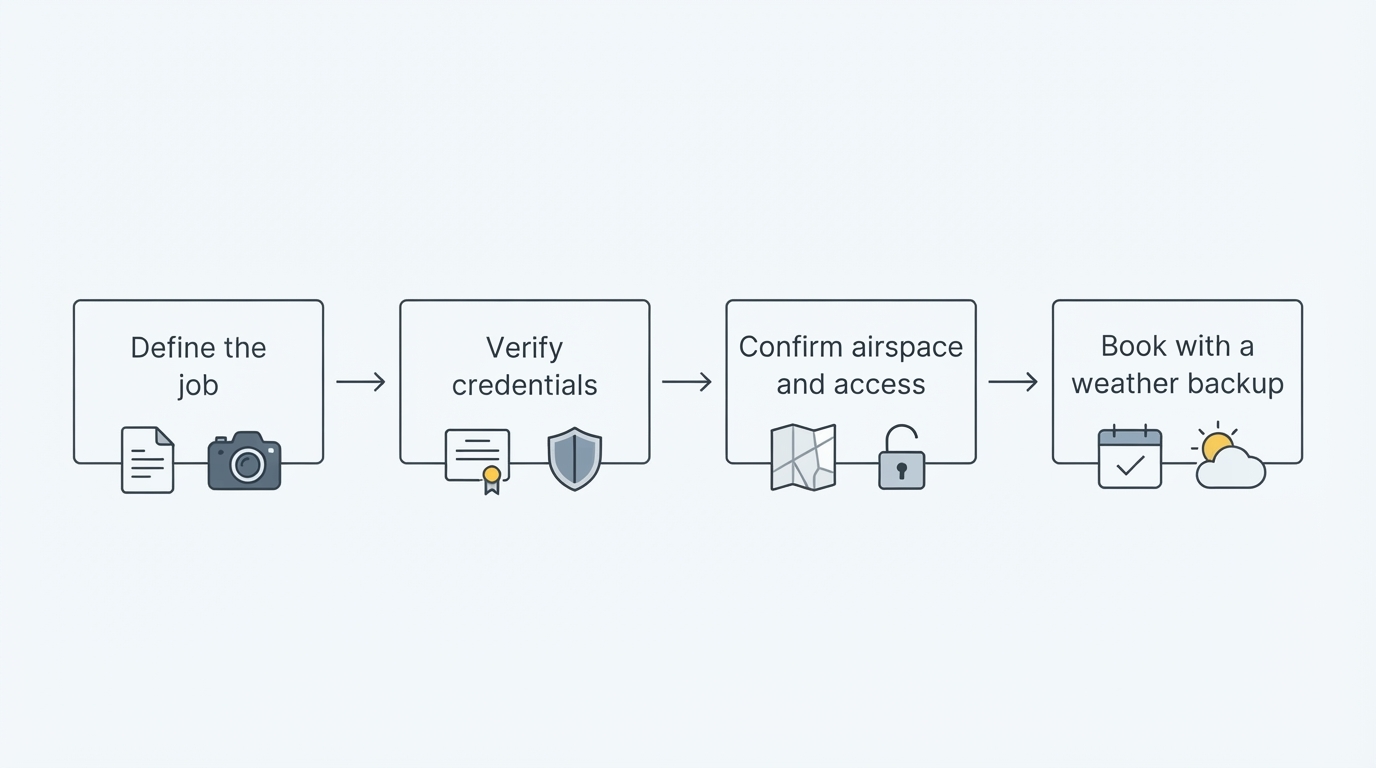
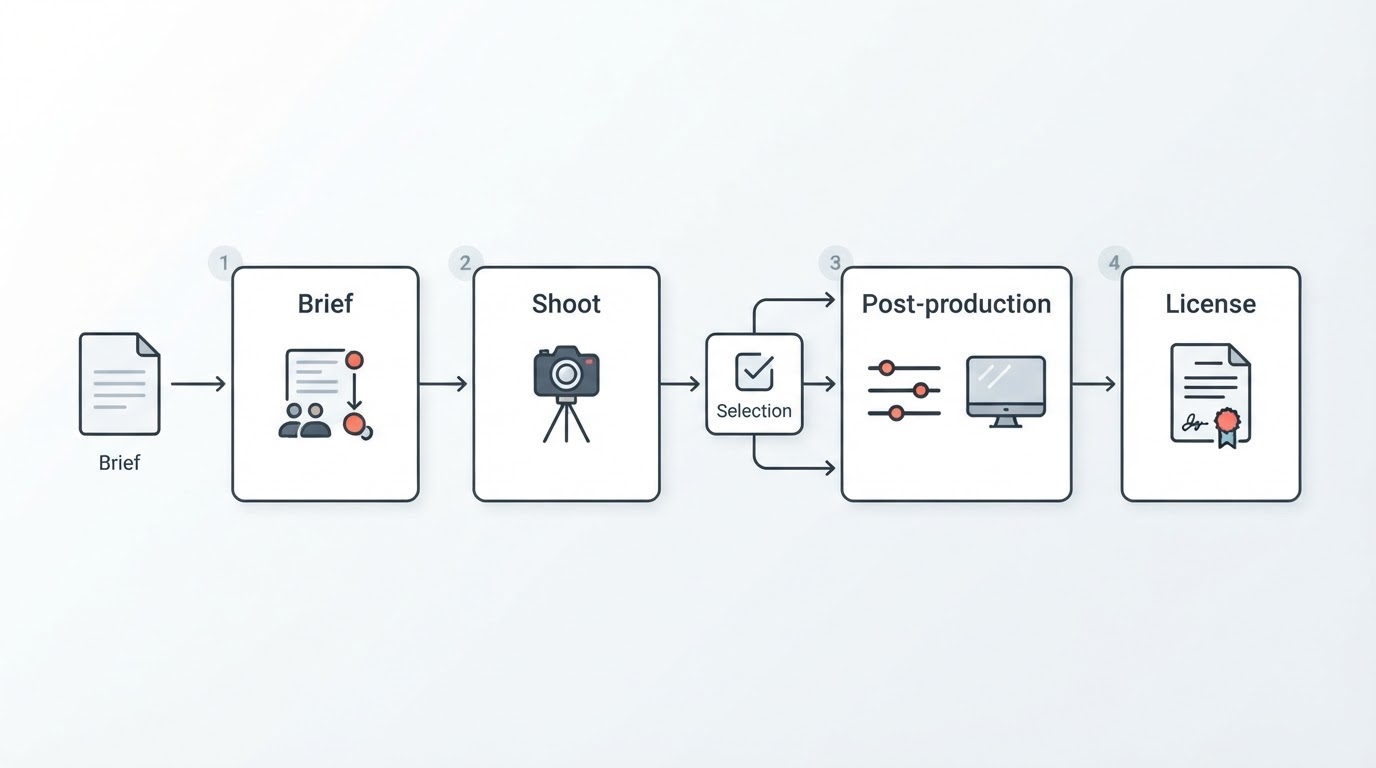
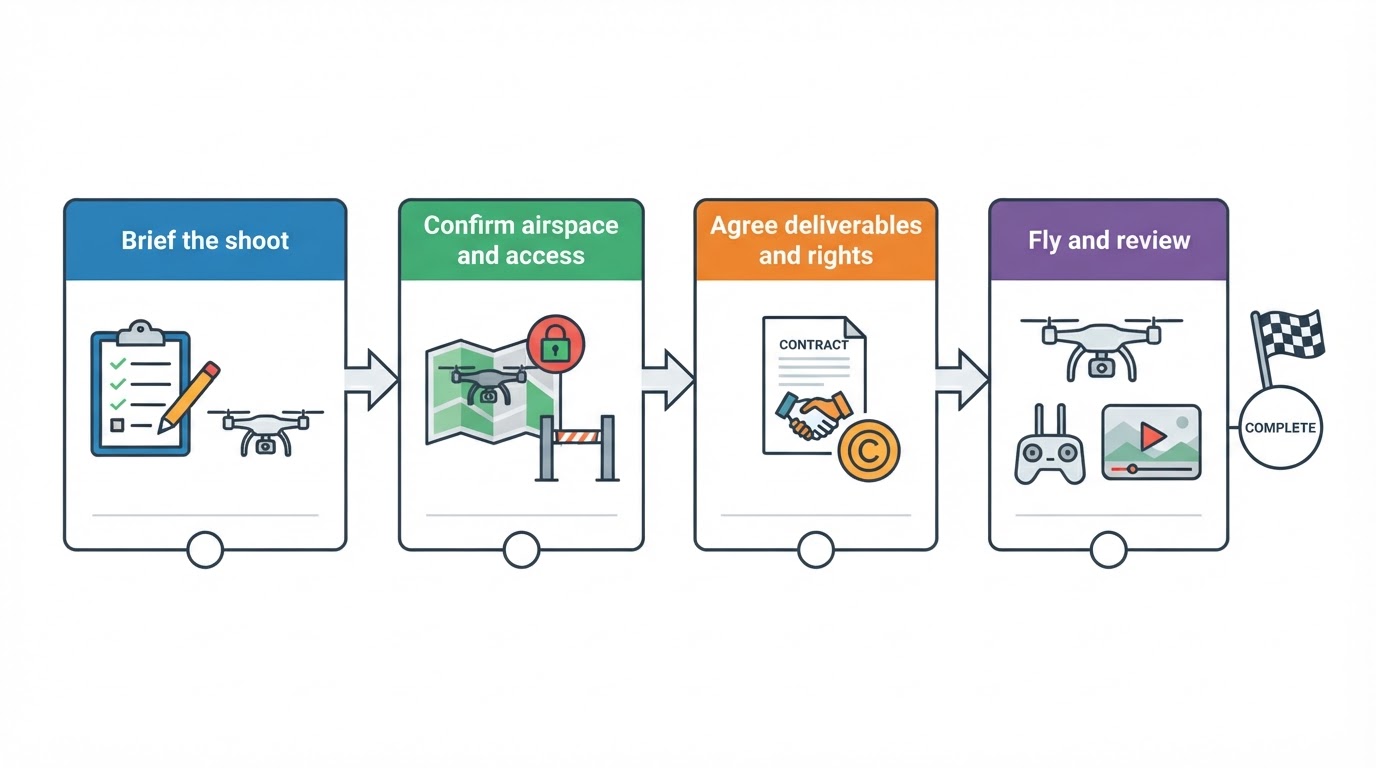
Book the shoot in three steps: define exactly what you need, confirm that your specific site can be flown at the time you want, and agree on deliverables, usage rights, and weather plans in writing before anyone flies. Finding a provider is the easy part; the rest decides whether the shoot works.
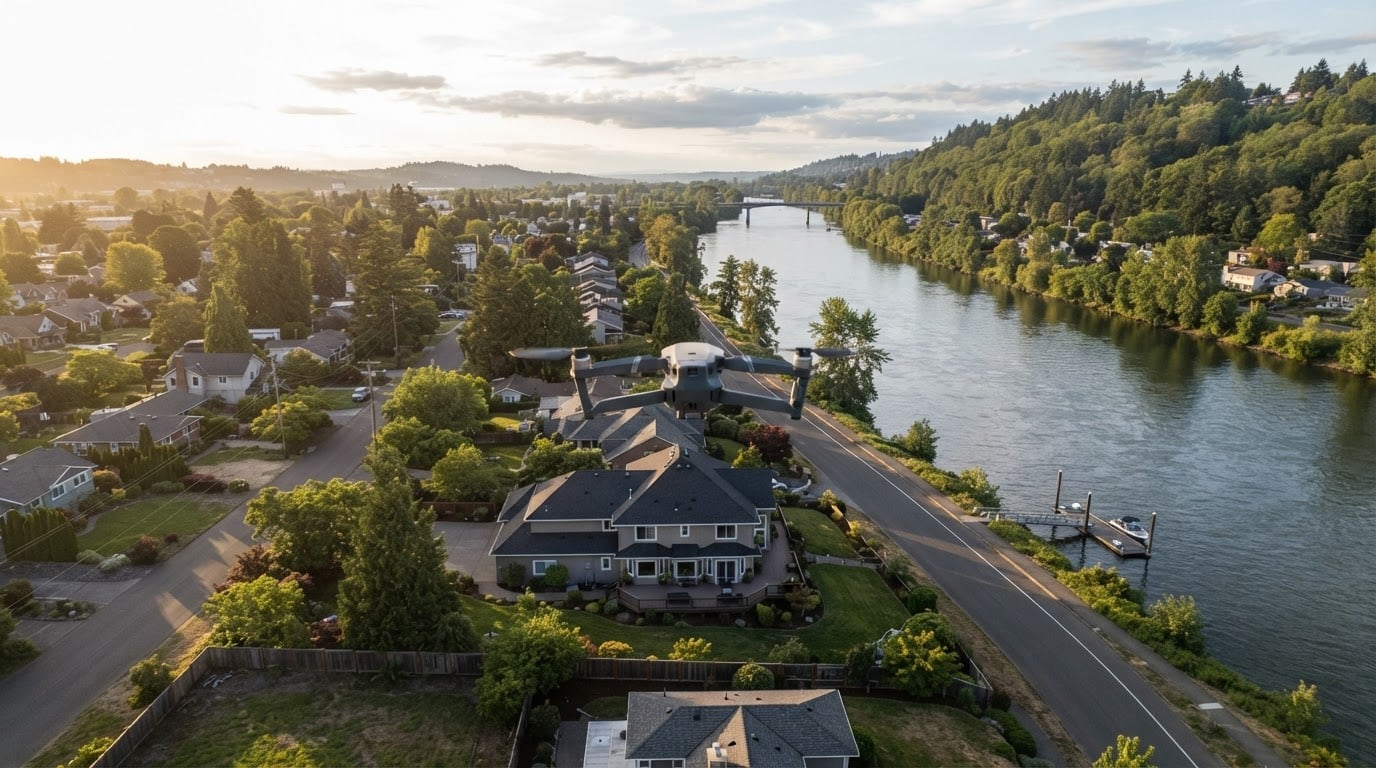
A drone photography near me search usually points to one of three jobs: documenting a property, covering an event or venue from above, or producing promotional footage of a place or a brand. Each one changes what you ask for, when the flight should happen, and how the finished material gets used.
Two problems cause most delays. The first is a site that cannot be flown when the client wants — usually because of airspace restrictions, weather, or a competing event. The second is a gap between what the client expects to receive and what the quote actually covers. A short written brief and a handful of direct questions prevent both.
Step 1: Define the Shoot Before You Contact Anyone
A one-paragraph brief with a map pin gets you a faster and more accurate quote than a phone call. Cover these points:
- Purpose. A real estate listing, a facility overview, a destination campaign, an event recap, and a fine-art print all call for different framing, timing, and file sizes.
- Shot list. Name the must-have frames — the building exterior, the property approach, the crowd at peak, the landscape at golden hour — and mark which are negotiable.
- Location and boundaries. Drop an exact pin and describe how far the flight may range in each direction.
- Timing window. Give a date range plus a preferred time of day. Aerial work is more weather-sensitive than ground photography, so flexibility usually costs less than a fixed date.
- Intended use. Say where the images or video will appear, how long you need the rights, and whether third parties will reuse them.
- Constraints. Note privacy sensitivities, brand guidelines, obstacles such as power lines or trees, and any part of the site that must stay out of frame.
Send the brief with the pin and ask for a written scope. If the reply is a price without a shot list, the scope is probably not fixed yet.
Step 2: Confirm the Site Can Be Flown — and When
Drone flights are regulated, and the rules depend on where you are. A provider who works regularly in your area should know how to check the airspace around your site and whether any authorization is needed. Your job is to flag anything unusual early: proximity to an airport or helipad, a stadium or large gathering, a government or secure facility, a hospital, or a temporary event such as a festival or airshow.
Property permission is separate from airspace permission. If you do not own the site, get the owner's consent in writing before the flight, and tell the provider who the site contact will be. For venues, that often means coordinating with an operations or events manager weeks ahead.
Two trade-offs worth planning around
One visit may not get the best light. Aerial images depend heavily on the sun's angle, so the frame you want may only be available at a specific hour — often shortly after sunrise or before sunset. If your schedule is fixed, expect the provider to shoot the light that is available rather than the light you imagined. If the result matters, budget for a return flight window.
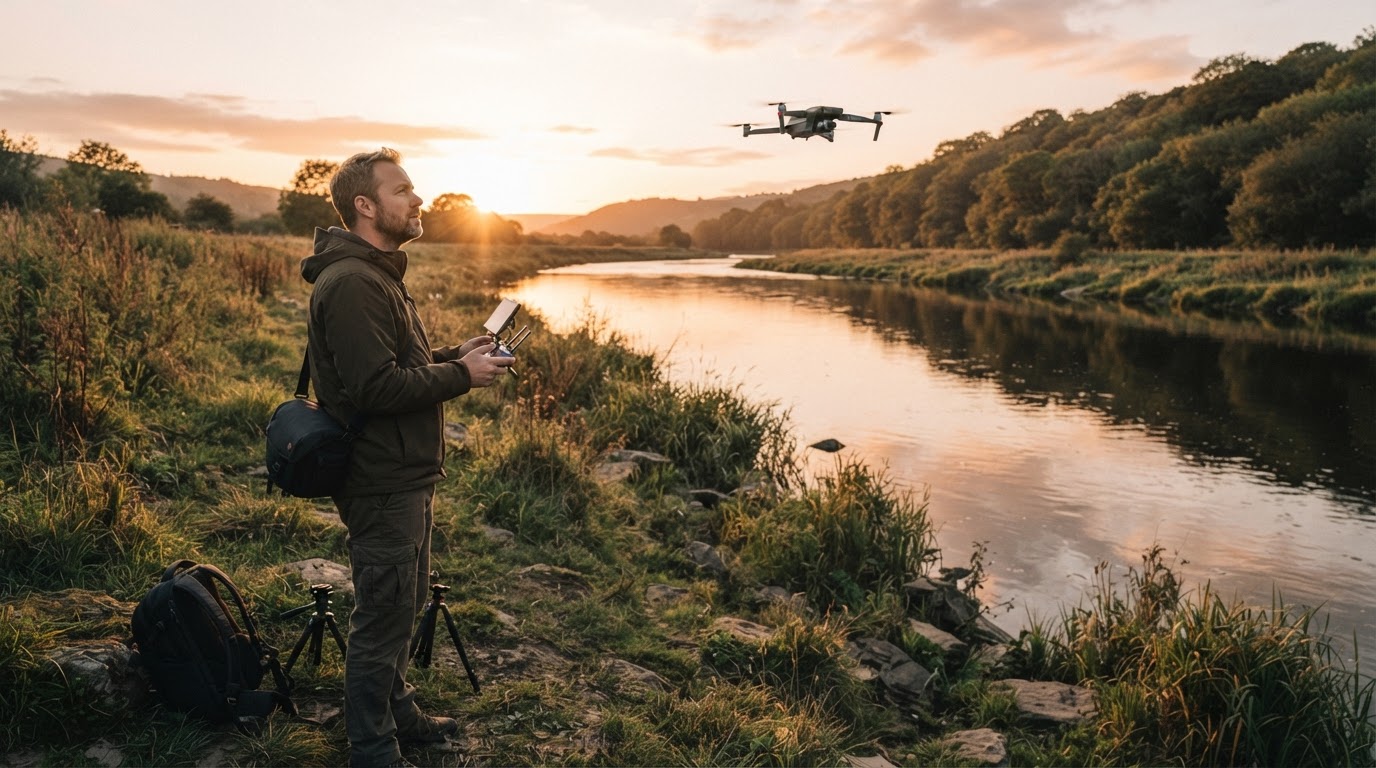
Weather and site activity decide the day, not the calendar. Wind, rain, low cloud, and glare all ground or degrade a flight, and a busy parking lot or a street full of cars can ruin a composition that looked clean on a map. Ask what the weather policy is before you pay, and keep one backup date open.
The most common booking mistake is treating drone photography like ground photography: choosing a convenient appointment time and assuming the operator can simply show up and capture everything. Aerial work is planned backwards from conditions.
Step 3: What to Prepare for Flight Day
Most of the work happens before the aircraft arrives.
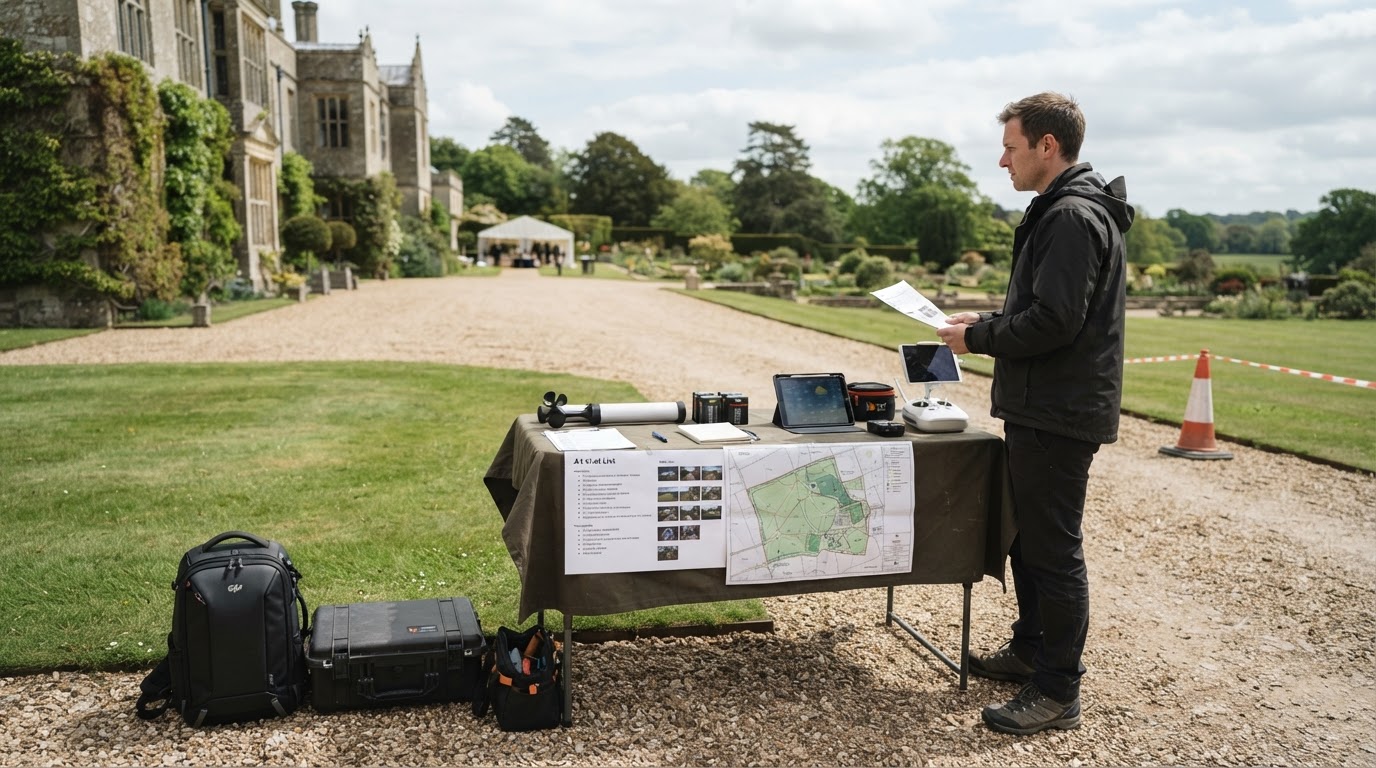
- Access details. Gate codes, parking, loading zones, and who will meet the pilot on site.
- A schedule. Share the event run-of-show or the work schedule so flights do not collide with load-in, speeches, or shift changes.
- A clean frame. Move vehicles, bins, and temporary signage where you can, and tell the pilot which areas must stay clear of people for safety.
- Reference material. Send logos, brand colors, or example images if the footage will be edited into a campaign.
- A decision-maker. Make sure someone with authority to approve shots is reachable during the flight.
On the day, expect setup time before the first frame and battery changes between flights. Flight time is limited, so the pilot will usually work down the shot list in priority order. Follow their direction on safety: keep bystanders away from takeoff and landing areas, and route questions through your site contact rather than calling out to the pilot mid-flight.
Step 4: What Deliverables to Expect — and to Confirm in Writing
The quote should state exactly what you receive. Ask for these details in writing:
- Count and type of finished images, and whether edited files or original captures are included
- Video length, aspect ratios, and whether music, captions, or color treatment are part of the edit
- Resolution and file formats suitable for your intended print or digital use
- Turnaround time and the number of review rounds included
- Usage rights: where the material may appear, for how long, whether exclusivity is included, and how third parties are handled
- Delivery method and how long files remain available
- Weather, cancellation, and rescheduling terms
Usage rights deserve the most attention. Photography and video are usually licensed rather than handed over outright, so confirm the license covers every channel you plan to use — including paid social, broadcast, or print — before the shoot, not after.
Step 5: Questions to Ask Before You Book
A short list of questions separates a smooth booking from an expensive one:
- Are you certified and insured for commercial drone work, and can you provide proof of insurance naming my organization if required?
- Who checks the airspace around my site, and who handles any authorization the flight requires?
- Have you flown a site like mine — a venue, an active construction site, a waterfront property, a crowded event?
- What happens if the weather grounds the flight, and what rebooking terms apply?
- What exactly is included, and what costs extra?
- What usage rights do I receive, and for how long?
- How do you handle people, license plates, and private property in the frame?
- What do you need from me before and during the flight?
- How much lead time do you need, and what is the deposit and cancellation policy?
If a provider cannot answer the airspace, insurance, and usage questions clearly, that is useful information about how the shoot will go.
A Regional Example: Chris Sidoruk Media
Chris Sidoruk Media, the photography practice behind this site, lists Drone Photography & Video as a distinct service line alongside its ground-based concert, event, and commercial work. Its published print catalog includes aerial frames from across New England — the Housatonic River dam and Shelton riverfront in Connecticut, the hairpin turn at North Adams, Massachusetts, and the Marginal Way coastline in Ogunquit, Maine.
That range suits projects such as documenting a riverfront property, capturing a coastal landmark for a destination campaign, or producing a brand or facility overview video. Coverage follows the same New England footprint as the ground photography work, so it is a reasonable name to include on a shortlist if your project falls inside that area. As with any quote, confirm the shot list, deliverables, and usage terms in writing before you book.
Common Follow-Up Questions
How far in advance should I book?
For a single location with flexible dates, a few weeks is usually workable. Events, seasonal foliage, and campaign deadlines tighten availability, so earlier is better. Ask about the provider's typical lead time when you request a quote.
What happens if it rains or the wind picks up?
Flights are usually canceled or postponed when conditions are unsafe, and most providers build a weather clause into the agreement. Agree on the rescheduling window and any fees before the first date, and keep a backup slot open.
Do I need a permit or special permission?
Permission can come from several places: the property owner, the venue, the airspace authority, or a local ordinance. The provider should know which apply to your site; you are responsible for access and for securing the property owner's consent.
Can the drone fly at night or over a crowd?
Night operations and flights over people face additional restrictions, so ask early if your project needs either. Often the workable answer is a different time of day, a different angle, or ground photography for the crowd shots — a good provider will tell you which.
Who owns the photos and video?
The license you agree to defines what you can do with the files. Read it for duration, territory, and channels, and ask for exclusivity explicitly if a competitor should not be able to use the same footage.
How soon will I receive the finished files?
Turnaround depends on the edit and the volume of material. Get the delivery date into the agreement, and confirm who reviews the first cut and how revisions are handled.
Put the Booking Together
Booking drone photography near you is mostly a scoping exercise. Define the shot, confirm the site and the flight window, and write down the deliverables and rights. Do those three things and the flight day becomes the easy part: the pilot focuses on the air, and you get files you can actually use.