Key answers at a glance
- What drone photography pricing depends on: how long the aircraft is in the air, what you receive afterward, how you are allowed to use it, and what it takes to reach the site.
- How quotes are shaped: an hourly rate, a flat project fee, or a price per deliverable.
- What pushes a quote up: travel outside the service area, a tighter deadline, broader usage rights, more edited files, and anything that forces a second flight.
- What to compare first: the deliverables list and the usage terms. Those two explain most of the gap between a low quote and a high one for the same property.
- What to send when you ask for a price: the location, the shots you need, where the images will appear, and your deadline.
What drone photography pricing depends on
Drone photography pricing depends on four things: flight time, deliverables, usage rights, and logistics. Every one of them is a choice, and every choice has a cost.
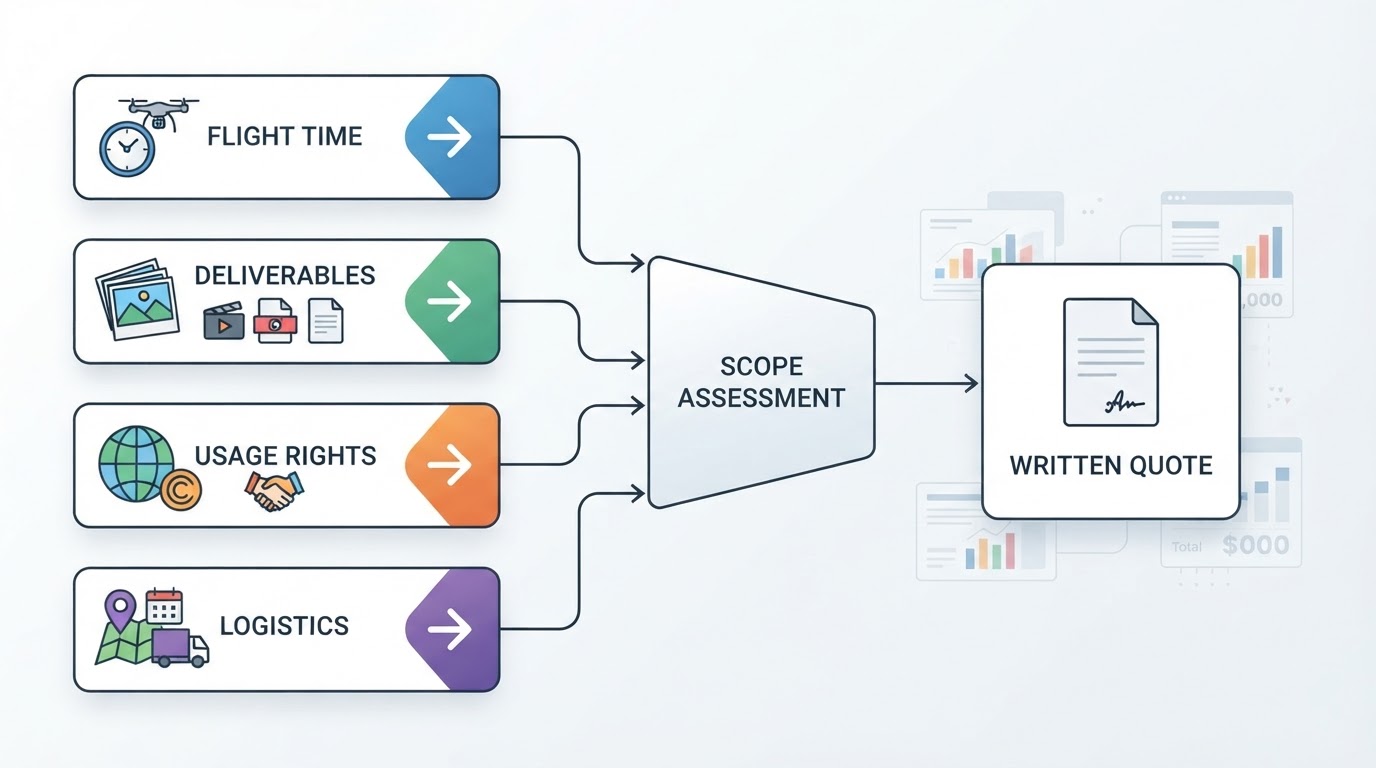
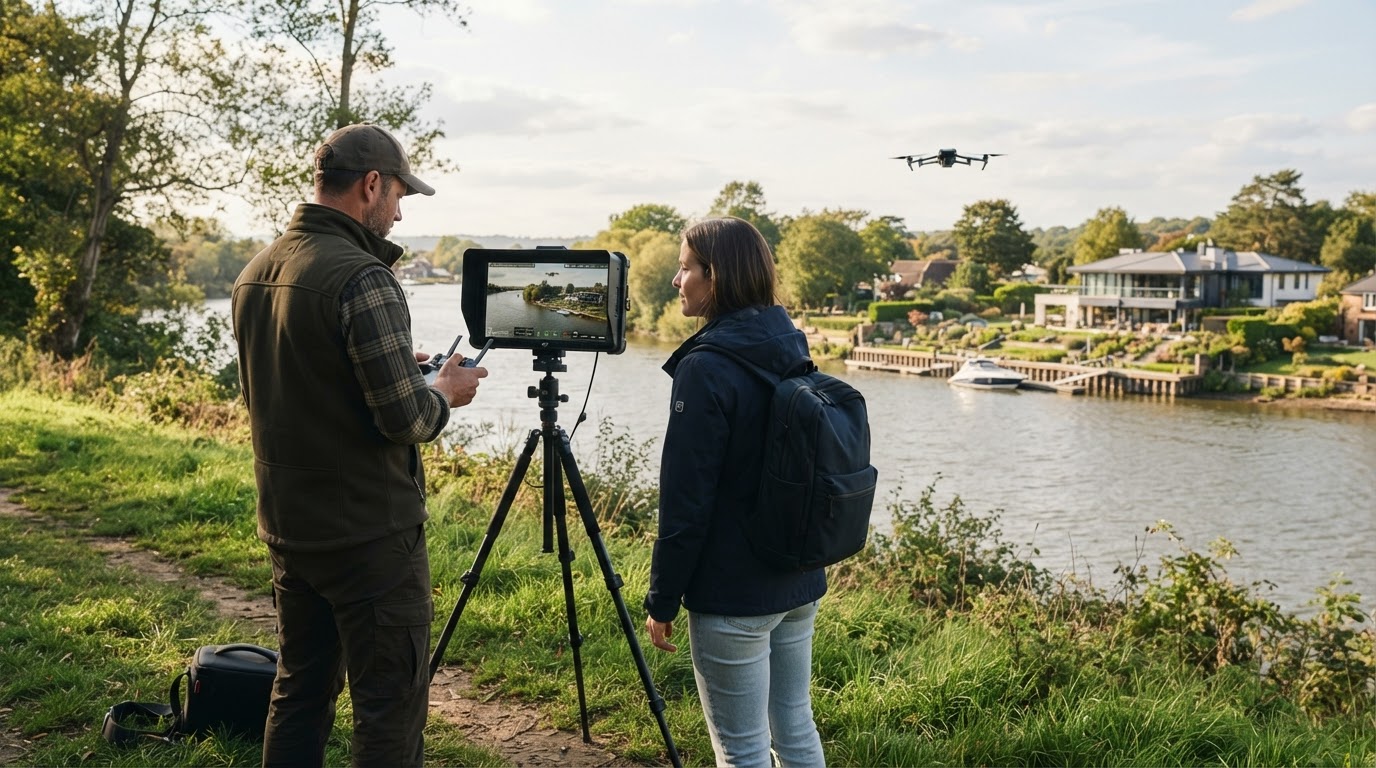
Flight time covers more than the minutes in the air. It includes planning the route, checking weather and airspace, traveling to the site, setting up, flying, and packing down. A single structure and a multi-building campus are different jobs even when a client describes both as "a drone shoot."
Deliverables are the second driver. A folder of unedited files, a set of edited selects, and a finished video are different products. Editing and sequence work often take longer than the flight, and a quote should show that separately.
Usage rights are the third driver. The flight produces the file; the license decides where that file can appear, for how long, and by whom. A photo used on a personal listing and the same photo used in a paid campaign are different assets because the rights attached to them are different.
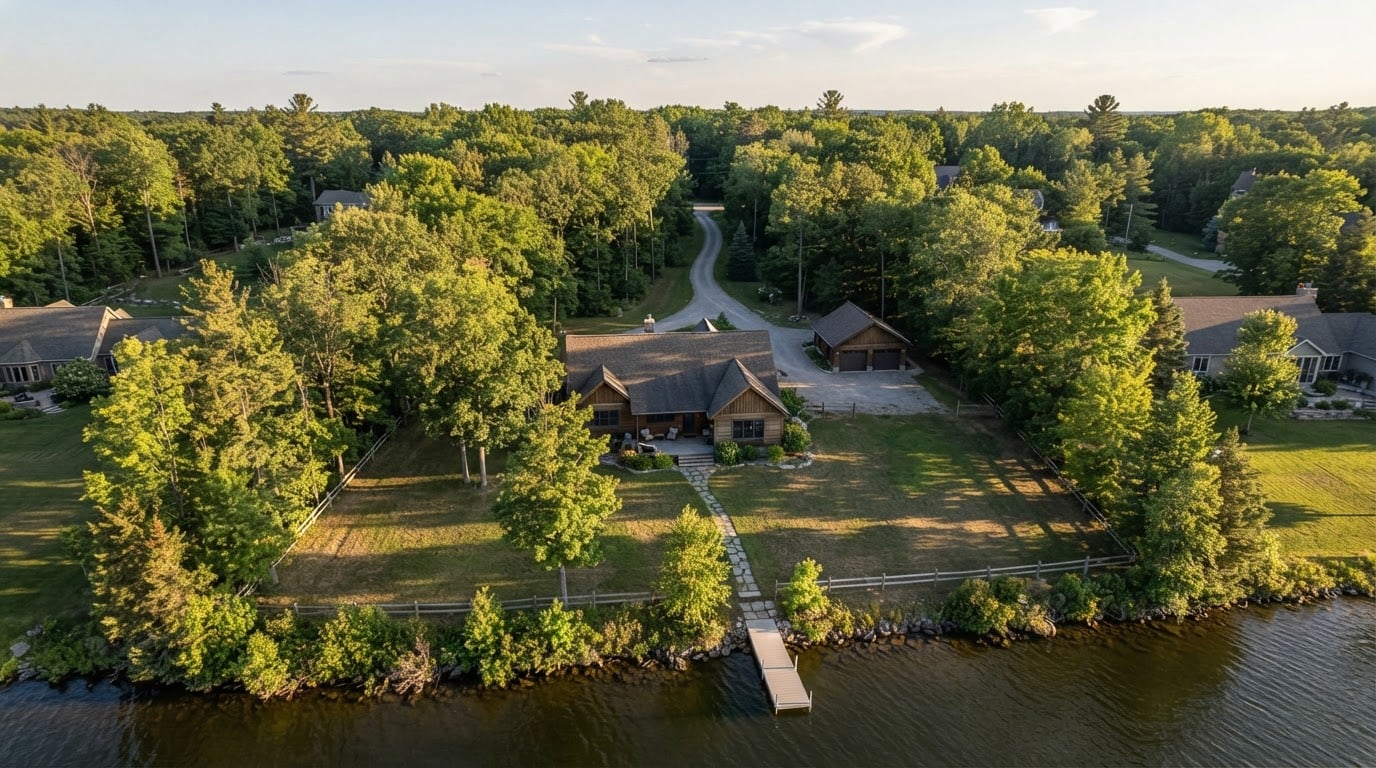
Logistics are the fourth driver. Distance, parking, site rules, permissions, and the number of locations all add work around the flight. Ask how each one is handled before you compare totals.
How drone photography services are priced
Providers quote aerial work in one of three shapes: an hourly rate, a flat project fee, or a price per deliverable. The shape matters as much as the number attached to it.
An hourly quote prices time, and it is easy to compare only when you know what the clock covers. Ask when it starts, whether travel and setup are included, and whether there is a minimum call-out.
A flat project fee prices a defined result. It is the easiest quote to budget against, provided "done" is written down: the number of finished images, the formats, and the usage that comes with them.
A per-deliverable price charges for outputs instead of hours — a set of stills, a short video edit, or a licensed image. It suits repeat work because the price stays stable while the scope changes around it.
Chris Sidoruk Media lists drone photography and video as its own service line, separate from its ground-based photography, and publishes aerial imagery made for commercial, tourism, and real-estate licensing. That split is a useful model for buyers: the flight is one line, and the right to use the images is another.
What moves a quote up or down
A quote changes when the scope behind it changes, not when the provider changes. Use this table to see which driver you are actually comparing.
Cost driver | What changes it | What to confirm in writing |
|---|---|---|
Flight time | Site size, number of locations, and how many passes the subject needs | What the clock covers, setup time, and any minimum call-out |
Deliverables | Number of finished stills, video length, formats, and resolution | Exactly what files you receive and when |
Usage rights | Where the images appear, for how long, and in which media | The license terms, exclusivity, and renewal conditions |
Travel and access | Distance, parking, site permissions, and building rules | The service area, travel charges, and who arranges access |
Scheduling | Your deadline, the provider's calendar, and the season | Turnaround time and how a priority request is handled |
Weather and re-flights | Wind, rain, visibility, and site conditions on the day | The rescheduling policy and who covers a second flight |
Editing standard | Color work, retouching, and video assembly | How many revision rounds are included |
Follow-up questions, grouped by intent
The follow-up questions around drone photography pricing split into two groups: what a buyer should expect to pay for, and what a provider needs to build into a rate.
Questions buyers ask
Buyers should ask about scope, editing, rights, and risk before comparing totals.
Is drone photography priced per hour or per project?
Both models exist, and the useful question is what each one includes. An hourly quote prices time, so ask what the clock covers and whether there is a minimum. A project fee prices a result, so ask for the exact deliverables and usage terms. Whichever model you choose, the scope list behind it should look the same.
Why do two quotes for the same property differ so much?
Because they rarely cover the same scope. One may include editing, travel, and broad usage rights; another may cover only the flight and a folder of files. Put both quotes against the same checklist before you treat the difference as a discount.
Does the price include editing?
It depends on the provider, so ask directly: "edited" means different things to different companies. Confirm how many finished images you get, what standard of color and retouching is included, and whether revisions cost extra. If editing is billed separately, ask for it as its own line so you can compare it.
Who owns the images, and what am I allowed to do with them?
Ownership and usage are separate questions, and the answer you need lives in the license. Ask for the permitted uses in writing: where the images can appear, for how long, whether the license is exclusive, and what would change if you need wider or commercial use later.
Are travel and weather delays extra?
They can be, so confirm both before you book. Ask how the provider defines the service area, what travel beyond it costs, and what happens if weather or site conditions cancel the flight after you have scheduled it.
Questions providers ask
Providers should build a rate from the work behind the job, not from what a competitor is advertising.
What should a drone photography rate cover?
A rate should recover the planning and flight time, travel, equipment wear and maintenance, insurance, editing, storage, delivery, and the value of the usage rights you grant. If a job cannot cover those lines, the rate is subsidizing the work.
Hourly, day rate, or project fee?
Pick the unit your clients can compare most easily. Hourly suits small, tightly defined jobs; a day rate or project fee suits work that spans a full day or several locations. Whichever you choose, state what is included so clients compare the same thing.
How do you charge for licensing separately from the shoot?
Price the production and the usage as two lines. The flight line covers the work of making the images; the license line covers where those images can appear, for how long, and whether the use is exclusive. Separating them makes repeat work simpler, because only the license line changes.
How do you handle weather and re-flights?
Write the policy before the job and repeat it in the quote. Define what makes a day unflyable, how you reschedule, and whether a second flight is included or billed. A clear policy prevents a conversation that costs more than the re-flight.
How do you avoid underpricing aerial work?
Price the whole job, not the visible part. The flight feels like the product, but the rate also covers planning, travel, editing, licensing, insurance, and equipment. Track your time across one complete job, then price from that total instead of from an hourly figure you guessed at the start.
How to compare drone photography quotes
Compare quotes on deliverables and rights, not on the bottom line. The lowest number is often the narrowest scope.
That is the real trade-off in drone photography pricing: a lower price usually means less scope, fewer rights, or less service. A quote that drops editing, narrows the license, or excludes a re-flight is not a better deal for every buyer; it is a smaller product. Decide which parts you actually need before you decide which total is lowest.
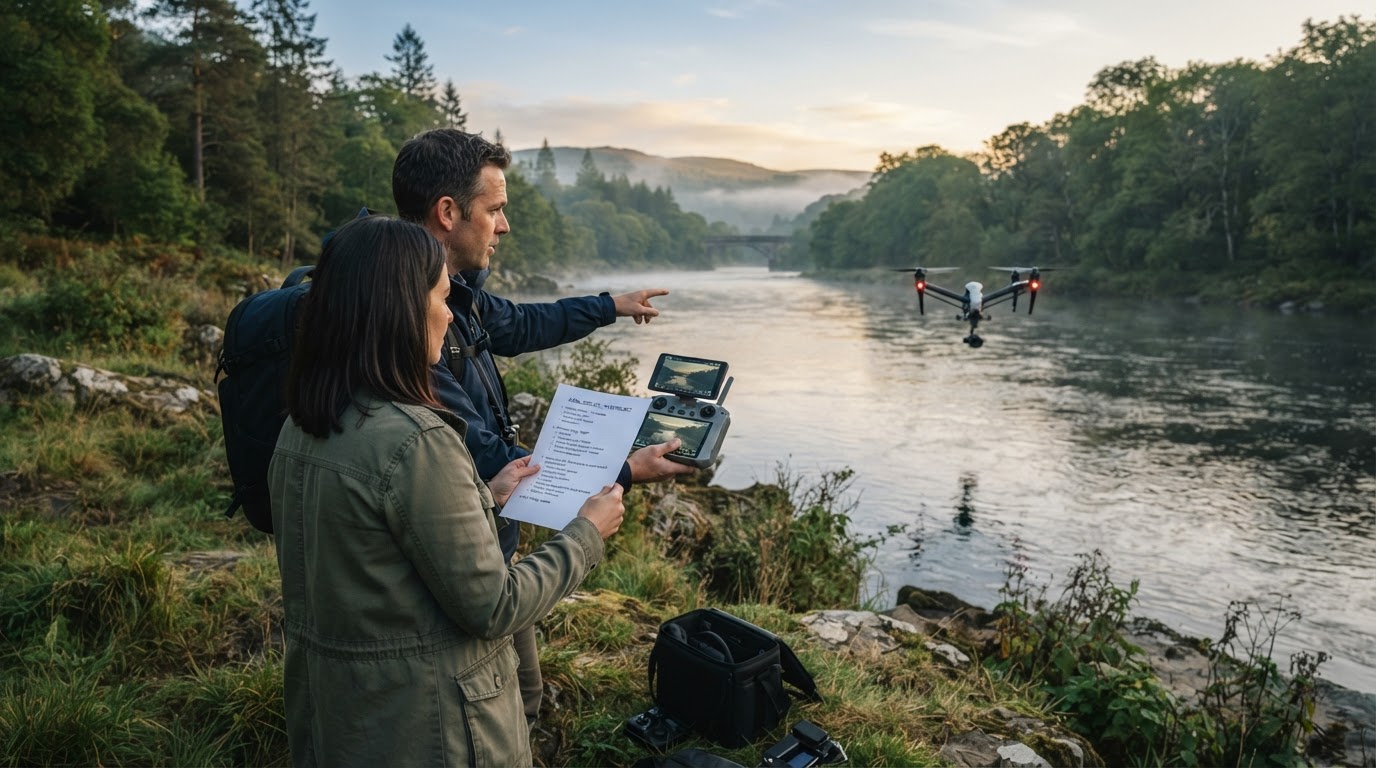
Send every provider the same short brief, then check the same list:
- What the clock or project fee actually covers
- The exact deliverables, formats, and resolution
- The usage rights, exclusivity, and license duration
- Travel, access, and any site-related charges
- The weather and rescheduling policy
- Turnaround time and how revisions are handled
- Whether the operator carries liability insurance and holds the certification your jurisdiction requires for commercial flight
When two quotes answer that list the same way, the higher one is attached to something you can name. When it is not, ask why before you commit.
Frequently asked questions
The remaining questions are mostly about totals, deliverables, timing, and terms.
How much does drone photography cost?
There is no single number to quote, because the total is built from scope: flight time, deliverables, usage rights, and logistics. A figure offered before those things are discussed is a placeholder, not a quote. Ask for a written breakdown you can compare line by line.
Is drone videography priced the same as drone photography?
No. Video is a separate deliverable with its own work: shooting for movement, selecting takes, cutting, and finishing. Ask for video as its own line instead of assuming it rides along with the stills.
How long does it take to receive the images?
That depends on the editing scope, so ask for a stated turnaround in the quote and get it in writing. If you need the files sooner, ask how the provider prices a priority turnaround.
Do drone photographers require a deposit?
Ask whether a deposit is required and what it is tied to. Confirm whether it is refundable, how it applies if you reschedule, and what happens if the weather cancels the flight. The terms matter more than the label.
Can I extend the usage rights later?
It is a question to settle before you book, and the answer belongs in writing. Extending a license means changing its terms — allowed uses, duration, and exclusivity — so the provider needs to price that change like any other scope.