What landscape prints are
Landscape prints are photographs of outdoor places — coastline, mountains, fields, rivers, weather — reproduced as fine art prints on paper, metal, or canvas so they can hang on a wall. The category is defined by the land rather than the style, so a black-and-white cliff edge and a saturated autumn hillside belong to the same shelf.
That definition matters at the point of purchase, because a landscape photograph is built around four structural choices the photographer made before any file reached a printer: where the horizon sits, how much sky the frame holds, which depth layer carries the detail, and which direction the light comes from. Those choices decide how the print behaves on your wall far more than the title or the color scheme does.
Orientation comes next. Landscape orientation, wider than it is tall, suits a wall above a sofa, a sideboard, or a long hallway run. Portrait-oriented landscape prints are common in New England work, where lighthouses, birches, and narrow river bends are naturally vertical. Square and panoramic crops are formats in their own right, and both need wall width you have already measured.
Read the image before you read the listing
Start with the horizon. A low horizon gives the sky most of the frame and makes a room feel open. A high horizon gives the ground the weight and pulls attention down toward furniture. A centered horizon is the calmest composition and the least forgiving of a bad hanging height, because the eye finds it immediately.
Then count the depth layers. Photographs that hold up over years usually separate a foreground, a middle distance, and a far element. When those layers stay distinct, a large print keeps revealing them as you walk past. When everything sits on one plane, the image reads as a single shape: strong as a small piece, flat across a large wall.
Check the light direction. Low side light rakes across texture and gives a print detail to hold onto. Flat overcast light produces even color and few distractions, which makes it easy to live with in a room you use every day. Backlit scenes and wet-sand sunsets look dramatic in a small preview and can fight a bright wall later.
Finally, note how much fine detail the image depends on: leaves, stones, ripples, distant ridgelines. Dense detail rewards a larger print and a closer viewing distance. Open, sparse images reward distance and empty wall around them.
Size the print for the wall and the viewing distance
Measure the usable wall width and height, not just the room. Set the print's width in proportion to what sits beneath it: a common convention is art spanning roughly half to three-quarters of the sofa or sideboard, with wall left visible at both ends. A print that ends flush with the furniture looks cramped; one that is much narrower looks like a stamp.
Hanging height matters as much as size. The usual target is the center of the image at about the eye level of a standing adult, near 57 to 60 inches from the floor, measured to the middle of the piece. Above furniture, a few inches of gap reads as connected to the sofa; a large empty gap makes both the art and the furniture look misplaced.
Viewing distance decides how much detail you will actually see. From three feet you read texture, individual branches, and small subjects. From ten feet you read shape, contrast, and color. A wall seen down a hallway wants a strong silhouette and a simple composition. A wall behind a desk supports tighter detail that a seated viewer can inspect.
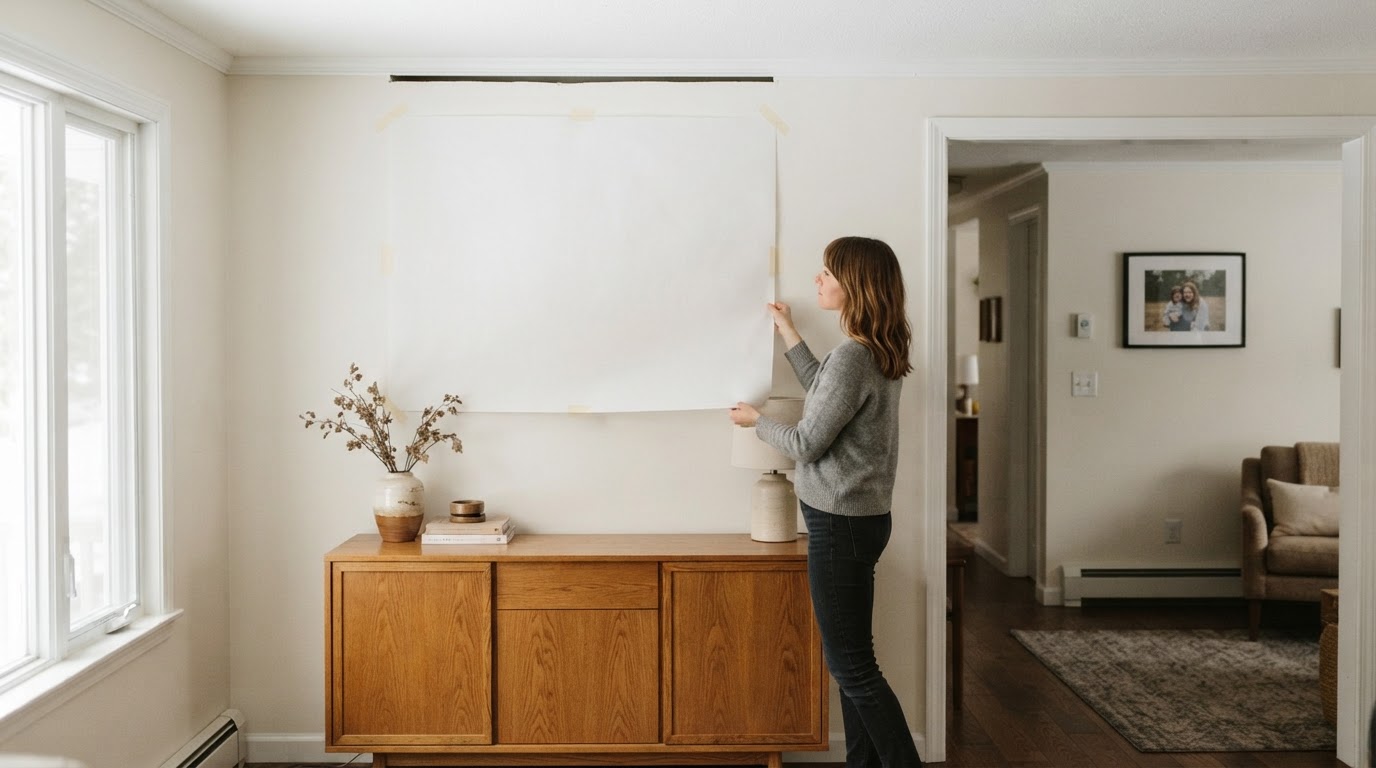
Before you commit, cut a paper template to the exact size and tape it up for a day. It costs nothing and it catches the two problems measuring tape misses: a print that crops awkwardly against a window or door frame, and one that crowds a light switch or thermostat. Interior mockups supplied with a listing give a first sense of scale; your own template is the final check.
Pick a surface and frame for the room's light
Surfaces behave differently under the same lamp, and glare settles the question first.
Surface | How it reads | Frame needed | Suits |
|---|---|---|---|
Fine art paper behind glazing | Paper texture, softer transitions, mat border | Yes | Walls without direct sun, rooms where the frame may change later |
Metal | Crisp, saturated, edge to edge, rigid panel | No | Softly lit walls, tight modern interiors, humid rooms |
Canvas | Visible weave, matte surface, softer fine detail | No, arrives stretched | Large walls viewed from several feet back |
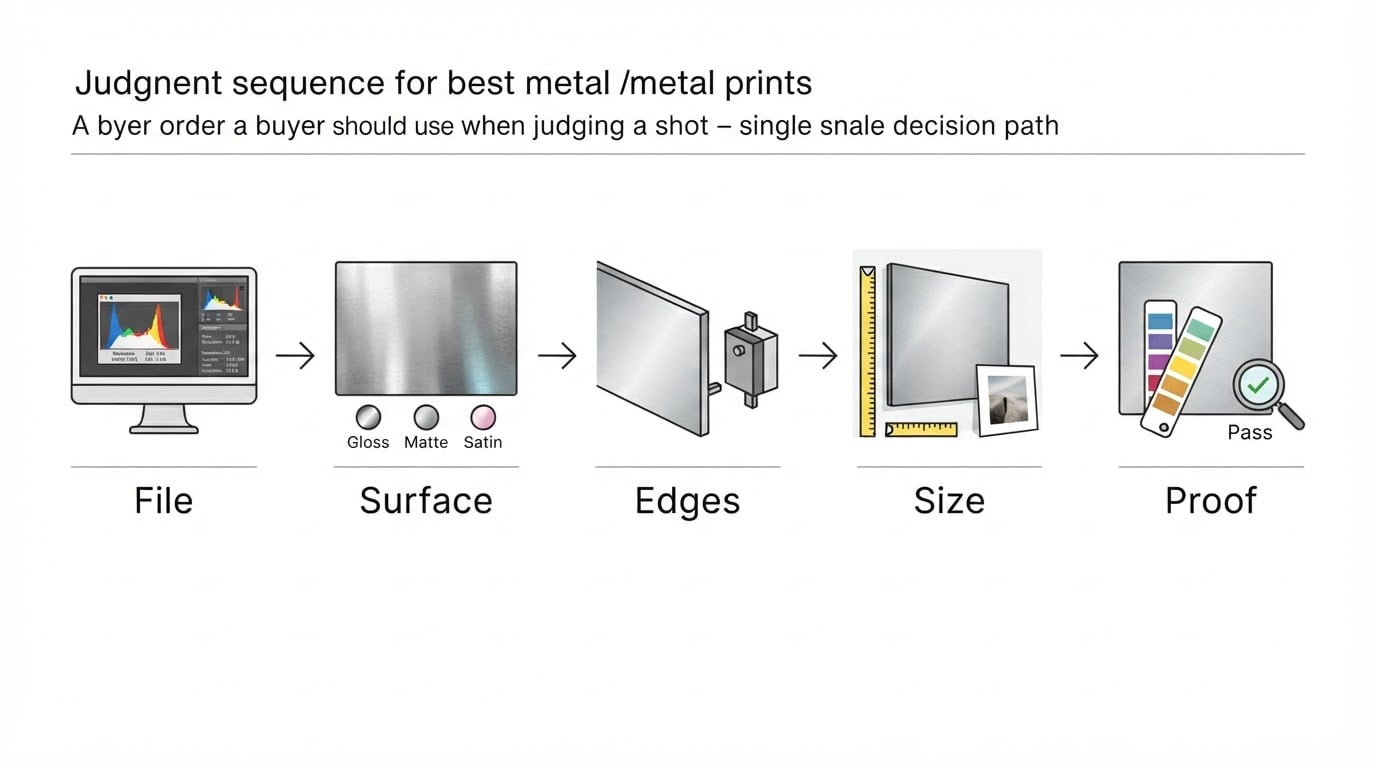
A metal print fuses the image into a coated aluminum panel. Nothing sits between your eye and the image, so edges stay clean and the print holds its shape when you look from the side. The same surface reflects: on a wall with a bright window opposite, the reflection can land between you and the photograph. Acrylic glazing is lighter than glass and easier to hang in large sizes, and both glazing types add a reflective layer unless you specify an anti-reflective option.
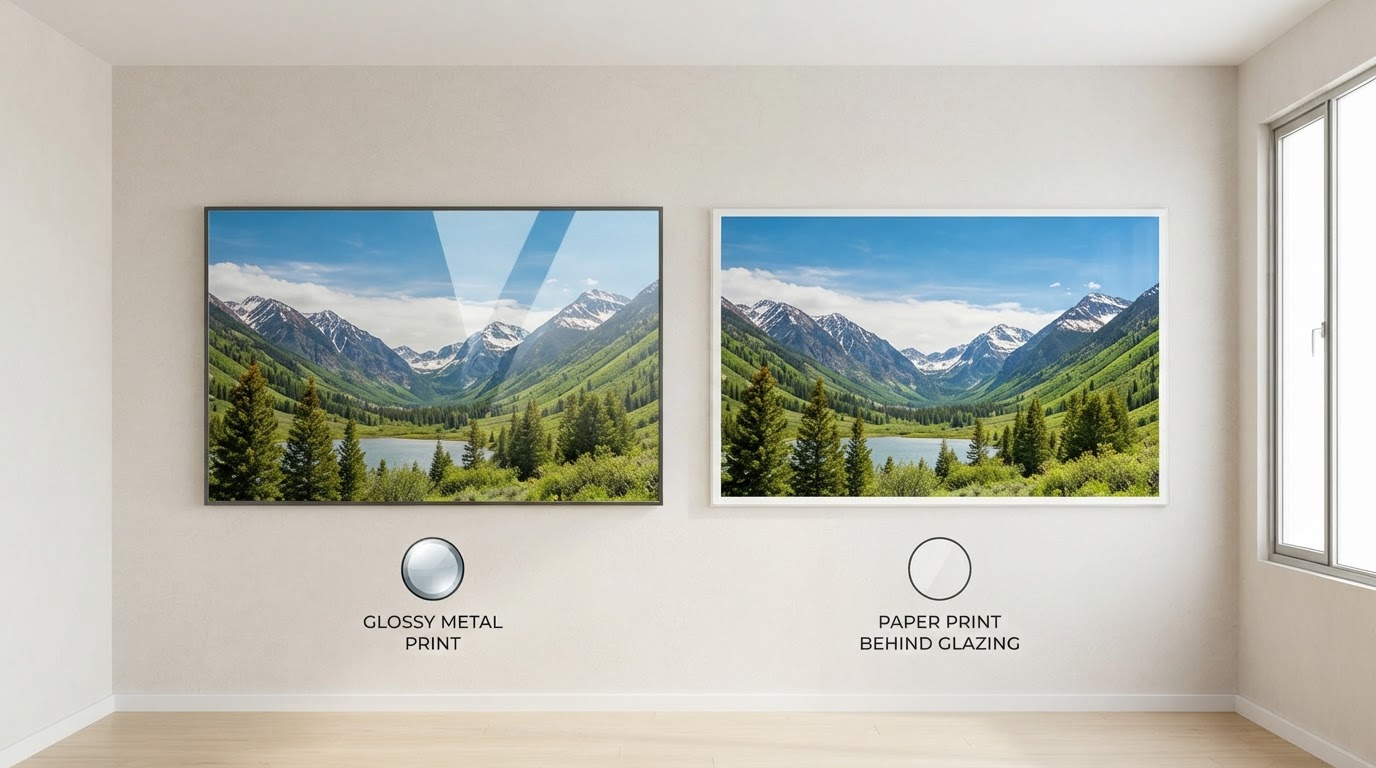
A paper print needs a frame, and usually a mat. The mat separates the image from the frame, gives the eye somewhere neutral to rest, and protects the surface when the piece is handled. Deep frames add shadow and weight; thin frames keep the photograph dominant. Metal and canvas arrive ready to hang, and a float frame can add the shadow line an unframed panel lacks.
Weight belongs in this decision too. A large framed paper print with glass is heavy, and hollow drywall needs the correct anchors. Check what the wall is made of before you order the biggest available size.
Match the image's color to the room's light
Interior light changes what a print looks like more than most buyers expect. North-facing rooms run cool and even, so prints with blue water, fog, and gray stone keep their character there. Rooms lit by warm bulbs or western sun push every print toward amber, which can turn a subtle sunset scene muddy and make a cool coastal frame feel like the only clean note on the wall.
Test the image in the room instead of on your phone in a shop. Open the file or the listing photo on a screen and stand where the print will hang, at the hour you use that room. A photograph that looks flat on a sunlit wall at noon may look right in the same spot after dark. If the seller offers a small proof or a sample, take the comparison.
Saturation needs the same check. Heavily saturated skies and bright foliage compete with colorful furniture and rugs, while a muted palette can disappear against a pale wall. Rooms with strong paint colors take a print with a narrow color range better than one with many competing hues.
Choose coastal and New England subjects that hold up
New England gives landscape work a specific vocabulary: granite shore, tidal marsh, stone walls through woodland, birches, covered bridges, white steeples, and hills that turn in October. Each carries its own behavior on a wall.
Coastal scenes sit naturally in kitchens, bathrooms, and entryways, where cool light and pale surfaces echo the water. A wide shoreline or an open horizon keeps a small room from feeling closed in. Tighter coastal subjects — a lighthouse, a pier at dusk, rocks in moving surf — make a focal point for a hallway or stairwell.
Seasonal subjects ask for a decision about permanence. Foliage and snow scenes are strong and specific, and they read best where the rest of the room stays quiet. Fog, overcast shore, and winter river scenes are more forgiving across seasons and easier to keep up year-round. If a print will stay on one wall for a decade, an image about light and landform ages better than one about six weeks of color.
Local subjects reward local knowledge. A recognizable stretch of coast or a particular mountain holds meaning for people who have stood there, and that meaning separates a landscape print from a decorative panel. It also means the photograph cannot be swapped for a similar scene elsewhere, which is worth knowing before you compare options on price alone.
Buy from a photographer's archive, not a marketplace listing
A photographer's archive is the body of work one person shot, edited, and prints on request. Buying from it gives you a direct line to the person who made the file, which is the most practical way to confirm what will actually arrive in the box.
Ask these questions before you order:
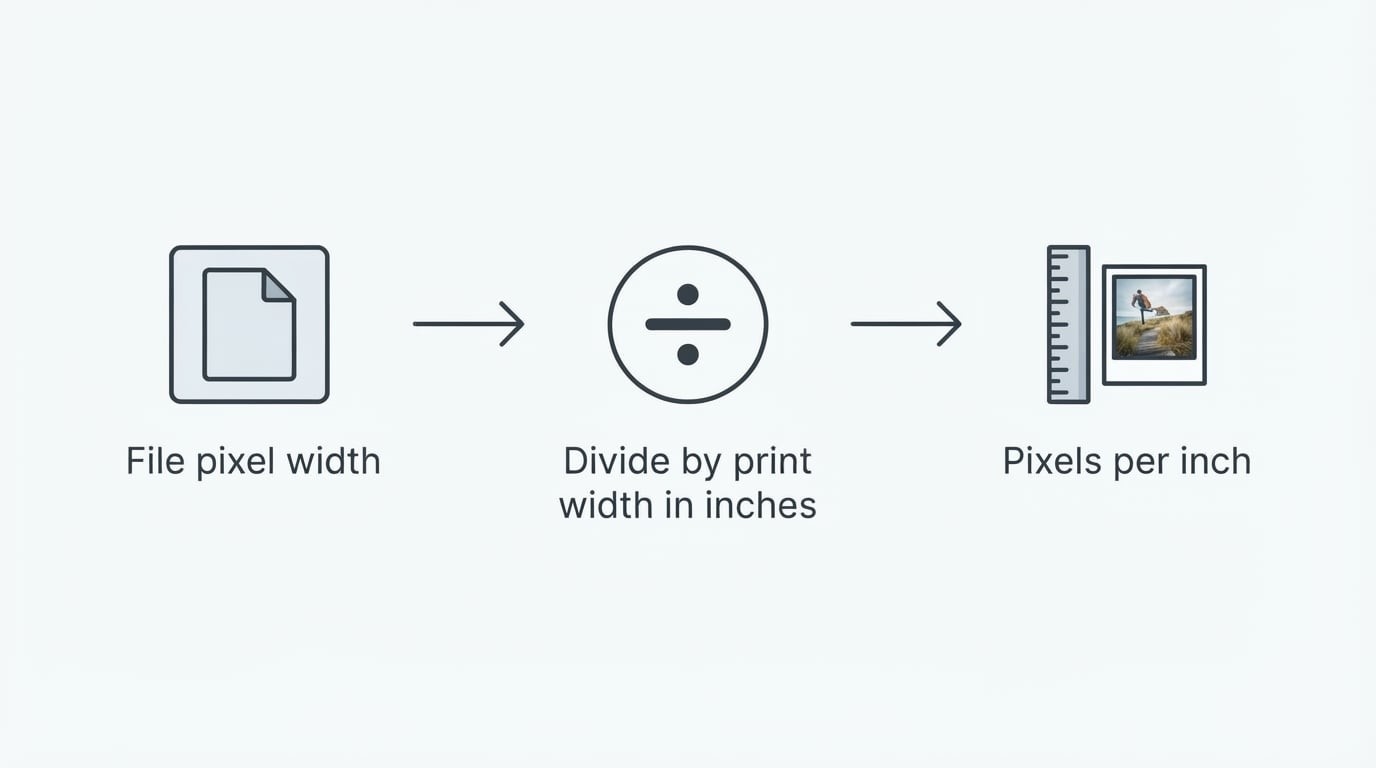
- What file will be printed, and what are its pixel dimensions at the size I am buying?
- Was the image cropped for this aspect ratio, and does the proof show that exact crop?
- Which process and material will be used: pigment ink on paper, dye sublimation on metal, or something else?
- Is this an open or limited edition, and what accompanies it — a signature, a certificate, a numbered sheet?
- Who prints it, and can they send detail crops from the file at final size?
- What is the production time for a made-to-order piece, and what happens if it arrives damaged or the color is clearly off?
The crop question is the one buyers skip. A wide landscape photograph printed at a squarer ratio loses its edges, and if the horizon or a lighthouse sat near one edge, the composition you saw online is gone. Detail crops at final size show whether the file has the resolution for the print you chose instead of an upscaled approximation.
Marketplace listings rarely answer these questions, because the seller may never have seen the file. That is the trade-off: a marketplace offers volume and fast comparison, while an archive offers one photographer's judgment about the crop, the paper, and the size at which the image still holds. If a listing shows only mockups and no location or capture information, treat the print as decoration and price it that way.
An archive purchase also makes a second print possible later that matches the first, which matters for symmetrical walls and for gifts. And you can ask what the photographer recommends for the specific room, since the person who made the frame usually knows which size and surface preserve it.
Care and hanging
Fading starts with ultraviolet light. Keep prints off walls that take hours of direct sun, and if the only good wall is bright, choose glazing with UV filtering and expect slower change. Metal panels resist fading well and still shift under constant sun.
Humidity matters more than temperature. Bathrooms and kitchens work when the print sits behind sealed glazing or is printed on metal, and they cause problems for canvas and for paper in an open frame near a shower. Keep pieces away from radiators, fireplaces, and heating vents, where dry heat warps paper and dries the wood in a frame.
Clean with a dry microfiber cloth and light pressure. Never spray cleaner onto the surface; apply it to the cloth, and skip solvents and paper towels on acrylic, which scratch. Dust the frame before the print.
Hang by weight. Small pieces can use a single hook, while large framed prints want two hooks set level and anchors rated for the load. Leave a little breathing room between the frame and the ceiling, and check the level again after a month, since new anchors settle. Keep the original packing corners for the next move.
Decide in this order
The sequence below keeps cheap decisions ahead of expensive ones. Measuring and testing with paper costs an afternoon; a print ordered at the wrong size or surface costs a return.
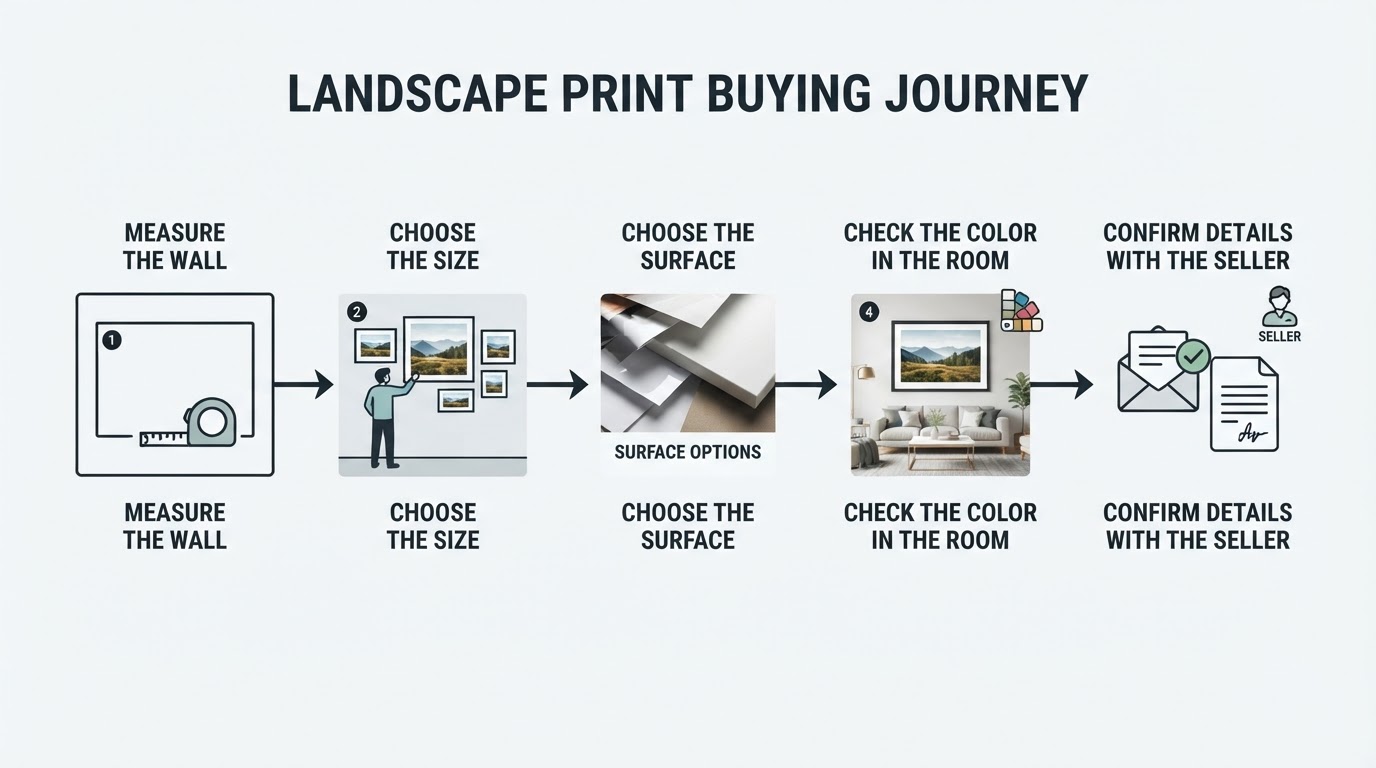
- Measure the usable wall and the furniture below it, then mark the intended center height.
- Shortlist images by horizon, depth, light direction, and orientation for that specific wall.
- Choose the size for the viewing distance, and check the aspect ratio against the image's crop.
- Pick the surface by the light the wall receives, then decide on a frame.
- Compare color and saturation in the room at the hour you use it.
- Confirm the file, the crop, the edition terms, and the production time with the seller.
- Plan the hanging hardware and the sun exposure before the print arrives.