What makes a metal photo print good
A good metal print keeps detail in the darkest parts of the image, holds the contrast the file was edited for, and arrives flat with clean corners.
Metal prints fuse color into a coated aluminum sheet, so nothing sits between the image and the viewer: no paper texture, no matting, no glass. That construction rewards a prepared file and exposes a careless one. Shadows can crush, bright highlights can blot, and a photograph that is slightly soft on screen reads softer on a panel that is a few feet wide.
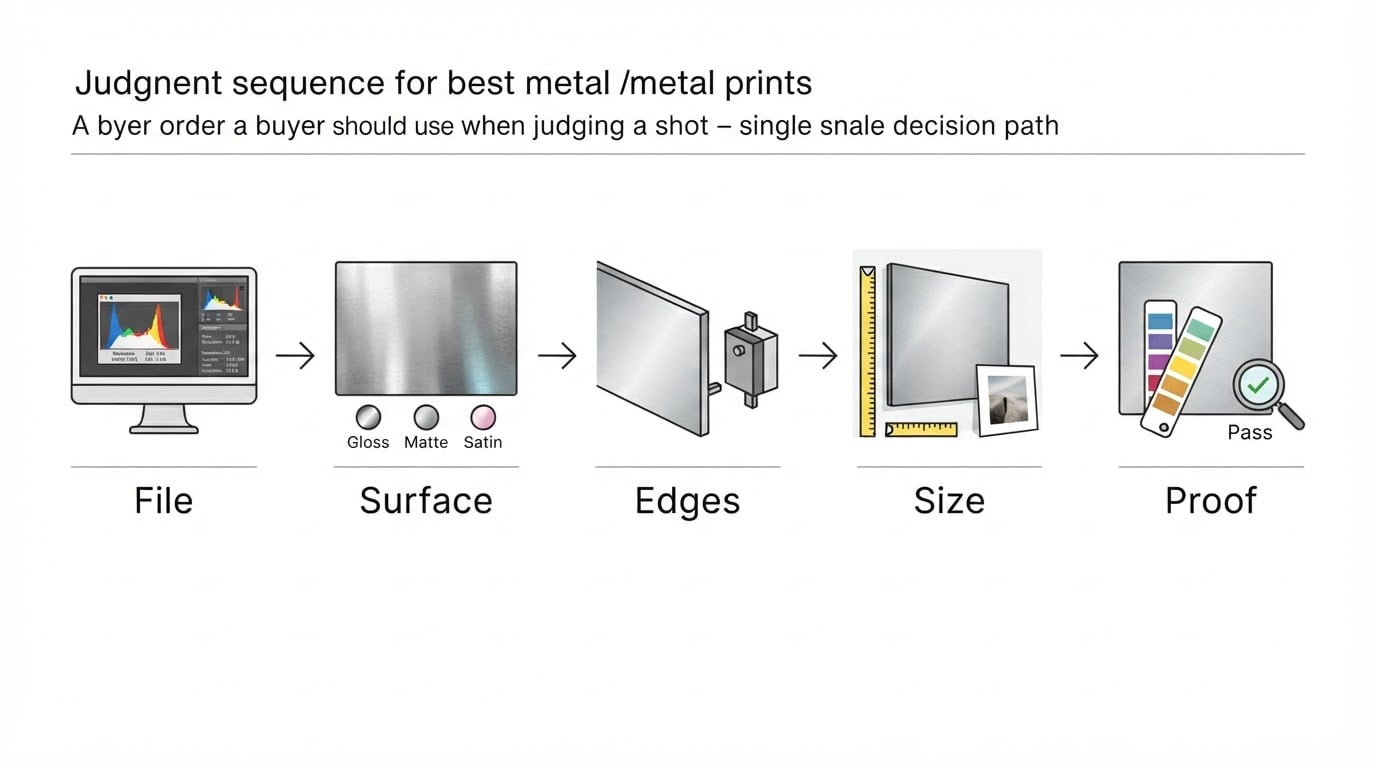
Three things decide most of the result:
- resolution at the size you order,
- how the surface behaves under the light of your room,
- finishing, meaning edge type, mounting, and how the panel is packed.
The rest of this page works through those in order so you can ask a seller specific questions about each one.
Key answers before you shop
- What separates a good metal print from a dull one? Detail that survives the transfer, midtones that keep their separation, and an edge that meets the wall cleanly.
- Which surface fits which photograph? Gloss adds apparent depth and saturation; satin or matte surfaces quiet reflection where a wall gets side light.
- Does print size change the look? Yes. A larger panel spreads the same pixel count over more area, so fine texture softens and the viewing distance grows.
- What edge and mounting options matter? A flush-cut panel sits close to the wall, a float mount or standoff holds it away from the wall, and a framed panel needs room behind the face.
- How do you confirm the file is ready? Check the crop at the final aspect ratio, confirm pixel count at the ordered size, and look at a soft proof on a calibrated screen.
- What should packaging protect? Corners, the printed face, and the flatness of the panel.
Prepare the file for the print, not the screen
A file that looks correct on a phone can still arrive soft on a wide panel, because the print spreads the same pixels across more surface.
Work through these before you upload:
- Crop at the final aspect ratio. A 3:2 camera file and a square panel are different photographs. Decide the crop yourself so the seller does not choose it for you.
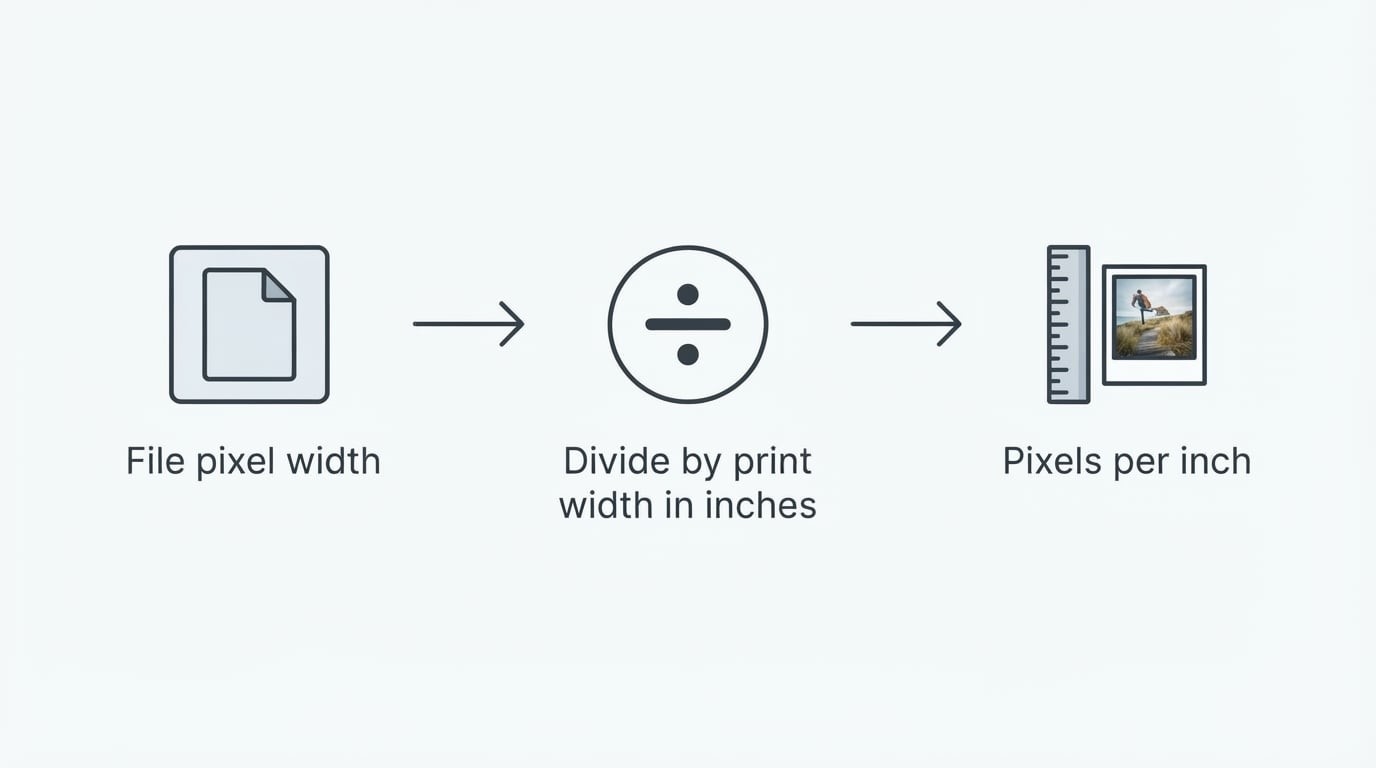
- Check pixel dimensions at the ordered size. Many labs ask for roughly 300 pixels per inch at final size. A 3:2 file intended for a 24 by 36 inch panel needs about 7,200 by 10,800 pixels; below that, most workflows enlarge the file rather than recover detail.
- Remove sharpening added for screen viewing. Displays compress and resharpen, so a panel shows halos that a monitor hides.
- Keep the working file in a color space the lab accepts. Ask whether it wants sRGB or a wider space, and convert deliberately rather than letting the seller guess.
- Export at high quality. Stay with a large JPEG only if nothing better is offered; a TIFF or PNG avoids a second round of compression on fine texture such as water, foliage, or gravel.
Judge color and contrast against the surface
Metal panels hold deep blacks and saturated color, and a glossy panel reads brighter than the same file printed on paper.
That behavior changes how you should edit:
- Lift the shadows a little and keep separation in the darkest quarter of the image, because a dense black area is where metal shows the least texture.
- Protect highlight detail in skies and water, since a blown white patch has nothing left to print.
- Judge midtones rather than the extremes. Foliage, stone, skin, and fabric are where a surface either keeps its shape or turns into a flat band.
- Ask for a soft proof of the actual file. A stock sample of another photograph only shows the coating; it says nothing about your edit.
- Compare the proof under the light of the room. A panel that looks calm in a dim hallway can glare in a room with a south-facing window.
Choose the surface by where people stand
The right surface is the one that keeps the photograph readable from the place where people actually look at it.
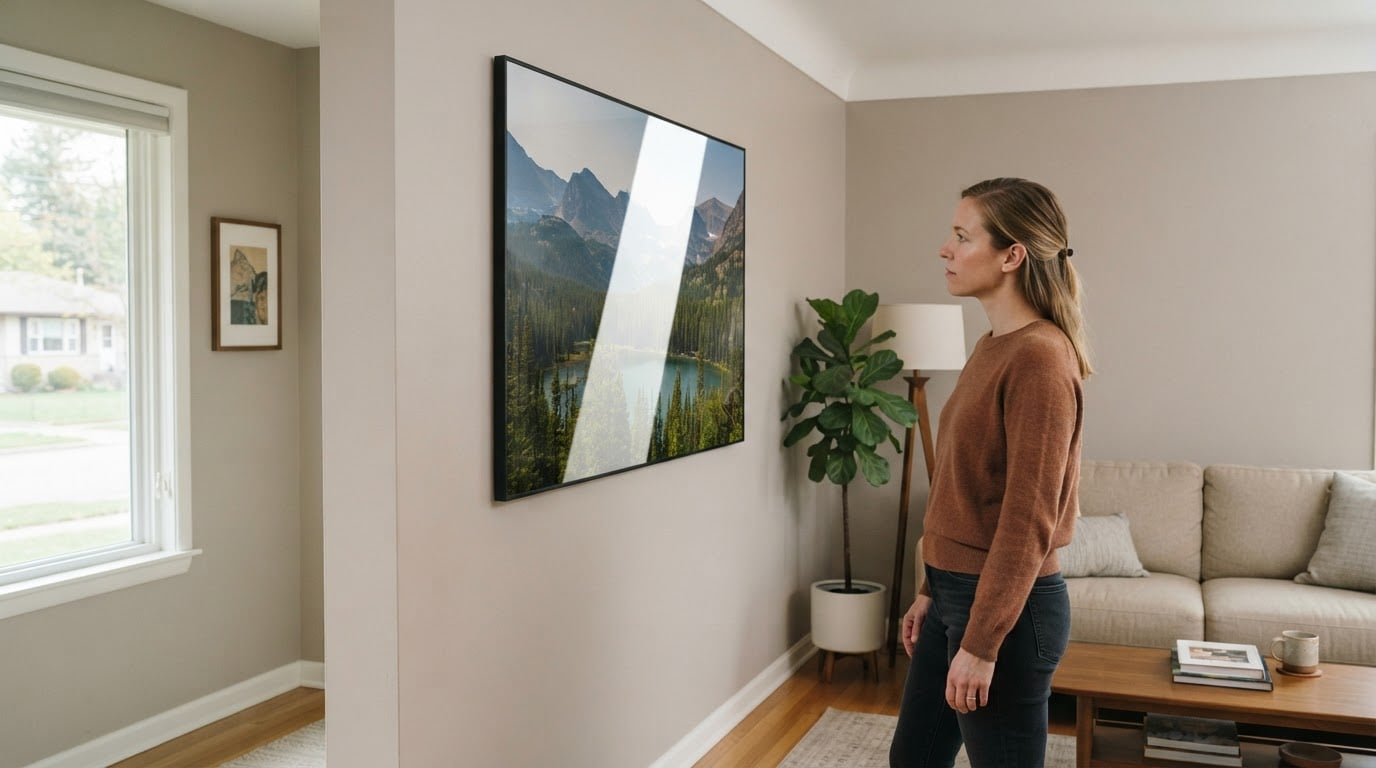
- Gloss gives the widest spread of tone and the deepest apparent color. It also reflects windows, lamps, and the room behind you, which matters most on large panels and on walls opposite glazing.
- Satin or matte surfaces scatter that reflection. They usually trade a little apparent contrast for a steadier image at an angle, so they suit a wall that people pass rather than face.
- White-base coatings brighten whites and can shift very saturated color. Ask for a proof when the photograph depends on subtle color relationships, such as fog over water or snow in shade.
- Hanging height changes the surface decision too. A panel above eye level is seen from below, where a gloss surface catches ceiling light.
Check edges, corners, and mounting
Edges and mounting decide how the panel meets the wall and whether it stays flat over time.
- Flush cut edges give a clean, frameless rectangle that sits close to the wall. Ask how the cut is finished, since an unfinished edge shows machining marks and handling.
- Float mounts and standoffs hold the panel off the wall and produce a shadow gap. They look deliberate and require solid anchoring, especially at larger sizes.
- Frames add depth and weight. Check the rabbet depth so the panel does not sit proud of the frame, and confirm whether glazing is included or needed.
- Corners take the most abuse in transit. Look for a seller that specifies corner protection and edge protection rather than one that only mentions a box.
- Hardware and the wall should be planned together. Drywall anchors suit small panels; larger panels usually want blocking or a cleat, and humid rooms such as kitchens and bathrooms need hardware that will not corrode.
Confirm the size limit
Order the largest panel the file supports and the wall can carry at the distance people will stand.
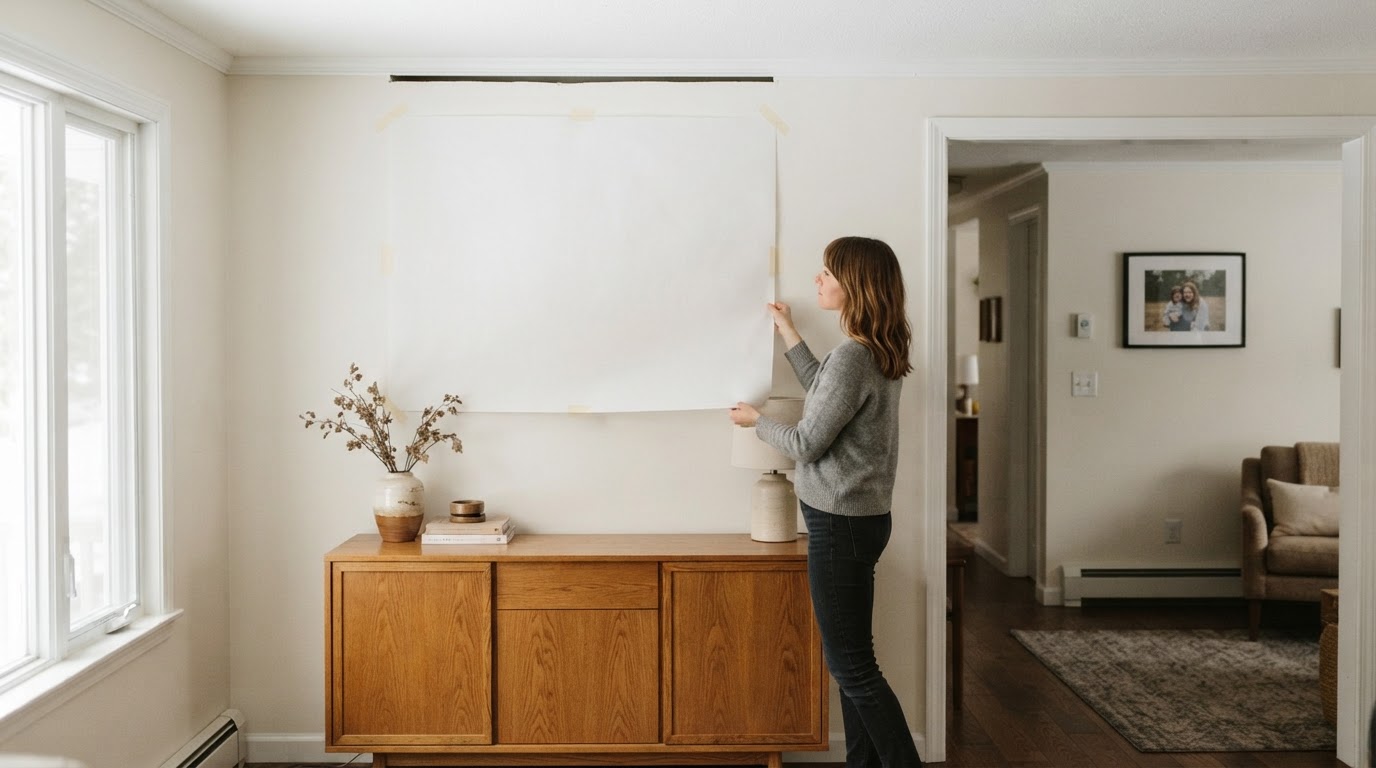
- Measure the wall, the furniture below it, and the space to the nearest corner before you pick a size, then mark the outer dimensions on the wall with painter's tape.
- Step back to the room's normal viewing distance and check whether the whole frame reads at once. If it does not, the panel is too large for the room or the crop is too busy for the size.
- Weight grows with area. A panel that seems light in a listing can need a stud, a toggle, or a cleat rather than a single hook.
- Very large panels sometimes carry shipping limits, crating, or a delivery appointment. Ask before you order so cost and timing are not a surprise.
Ask what proofing is included
A proof is the cheapest way to catch a wrong crop, a color shift, or a contrast surprise before the panel is made.
- A soft proof by email confirms framing, crop, and overall density without shipping anything.
- A small physical proof or sample print shows the real coating, which is the part a screen cannot simulate.
- A revision window tells you whether a change is still possible after you approve. Ask for the deadline in writing.
- Format mockups let you judge scale in a room instead of guessing from a dimension line.
Inspect the packaging and the arrival check
Packaging is part of the product, because a clean print that arrives with bent corners is not a finished purchase.
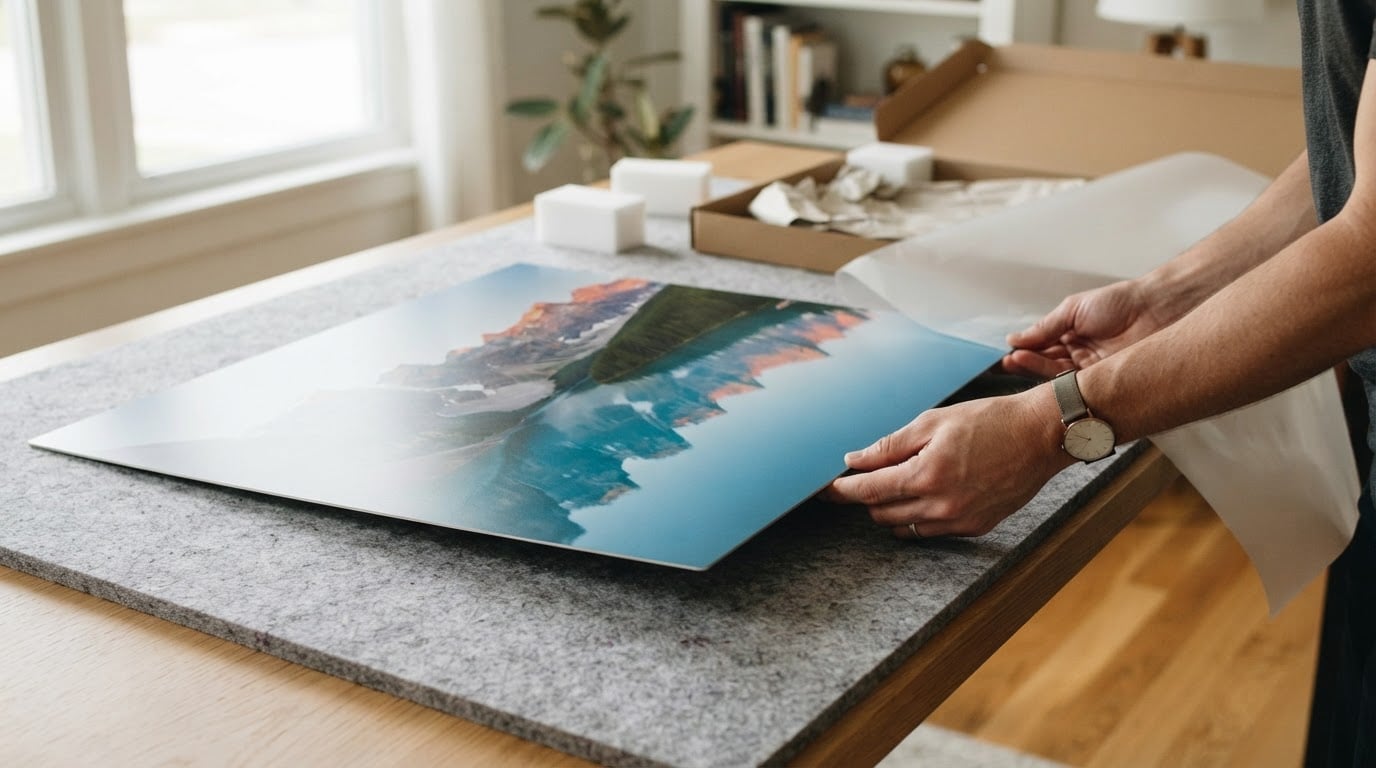
- Look for a rigid box, corner blocks or foam, and a face covering that keeps packing material away from the printed surface.
- Unbox on a padded, clean surface and keep the packaging until you have confirmed the panel.
- Check corners, surface, mounting hardware, and color in daylight before you hang anything. Metallic surfaces show handling marks that disappear in low light.
- Report damage inside the seller's stated window and photograph the packaging as well as the print.
What a New England landscape listing should show you
A listing should tell you where the photograph was made, what it shows, how it is finished, and how large it will look on a wall.
Landscape work depends on those details more than most subjects. Coastal fog, river fog, and snow all compress the tonal range, so surface choice and contrast handling decide whether a scene reads as weather or as a gray rectangle. A listing that names the location, the subject, the style, the orientation, and the available formats gives you enough to match a print to a room before you spend anything.
This guide is published by Practical Photo Notes, whose print store sells metal prints of New England landscapes, so we have a commercial interest in the format described here.
Practical Photo Notes lists each landscape print with its location, subject, style, orientation, and available formats, and offers a Metal Print and a Fine Art Paper Print of the same frame.
The store's 13 made-to-order landscape titles start at $50.00, with production quoted at about four business days before shipping within the U.S. Product pages carry interior and format mockups, so you can judge scale against furniture rather than against a dimension line.
The Fine Art Paper Print is the paper-based alternative for the same photograph, and it fits a plan that already includes a frame and a glazed surface.
Apply the same test to any other seller: if a listing leaves out location, finish, size, or packaging, the missing detail is the one you will discover after the panel arrives.
Run the checklist before you order
Six checks catch most expensive mistakes, and none of them takes more than a few minutes.
- The file is cropped at the final aspect ratio and holds enough pixels for the ordered size.
- The surface matches the room's light and the angle people view it from.
- Edge finish and mounting hardware are specified, including what the wall needs.
- The size is marked on the wall and confirmed from the normal viewing distance.
- A soft proof or a sample has been reviewed for color, contrast, and crop.
- The packaging and the damage window are clear before you pay.