Here is how to get a photo pass for a concert: send one short, specific request to the contact the artist, promoter, or venue publishes — and treat written permission as a separate step.
The short answer: access is granted, not sold
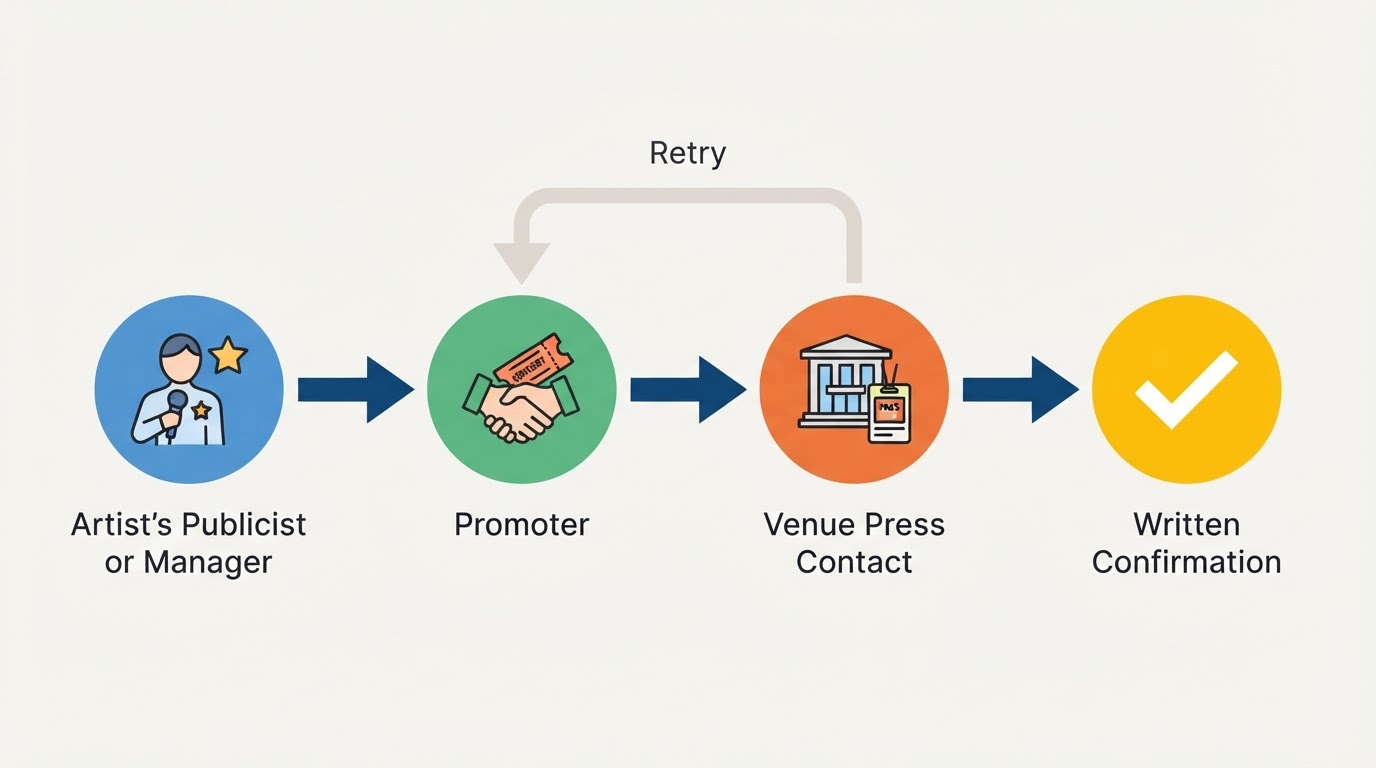
Someone decides who photographs each show, and that someone changes with the booking: for a touring act, the photo list usually belongs to the artist's publicist or manager, while the promoter and the venue often have a say. A ticket does not create photo access, and a generic press card is not an automatic pass. The first question you will be asked is the negotiation in miniature: who are you shooting for? (How To Get a Photo Pass for Concerts, 500px)
Build a request that can be evaluated
Fill in this reusable record before you send anything — an editorial aid, not a venue form:
- Show and date: ______ (artist, venue, city, and date)
- Recipient and route: ______ (a contact the artist, promoter, or venue publishes)
- Portfolio or assignment, described truthfully: ______
- Intended use: ______ (where the images will appear, and when)
- Send-by deadline: ______ (work back from the show date)
- Response and permission status: ______ (prepared / submitted / no reply / granted / declined)
Then keep the message short enough to read on a phone:
- An assignment, a publication, or a portfolio. Name the outlet and link recent coverage, or link a tight portfolio — the 500px guide suggests ten to twenty of your best concert images.
- The show and the date. Artist, venue, city, and date in one line; vague requests are easy to ignore.
- A usage plan. Say where the images will run and when. Offer only what you can deliver: do not promise promotional rights or high-resolution files without the authority to agree.
- Contact and lead time. Give a direct email and ask early; a request that arrives late has the least room to be reviewed.
If a format helps, adapt the site's photo-pass request template.
A routing table: who holds the photo list
The show | Who usually holds the photo list | How to start |
|---|---|---|
Club or bar show with a local act | The band or its manager | Use the contact route the band publishes |
Mid-size venue with a touring act | The artist's publicist or manager, with the venue's PR team aware | Find the artist's press contact, and copy the venue |
Theater or arena tour | Tour publicist or management | Pitch early; expect a decision close to show day |
Festival | The festival's press or media department | Follow the published application and its deadline |
Use the show's published accreditation process when it exists. If a request goes quiet, one polite follow-up may be appropriate, then wait; you cannot know why there has been no reply. A refusal is a decision: thank the person and stop. Never route around it or claim an assignment you do not have.
Approval, and what a yes actually covers
A prepared request and granted permission are separate states. Sending a request is preparation, not approval, and no reply is never permission. Wait for written confirmation — a name on a list or a confirmation email.
Approval does not mean unrestricted access, and it does not include admission, pit access, or a free ticket by default. Confirm each separately, because one does not cover another:
- Camera and lens limits, under venue policy
- Where you may go, and whether you are escorted
- Whether flash is permitted
- Your shooting window: which songs, how long
- What credential to bring
- Whether you also need a ticket to stay
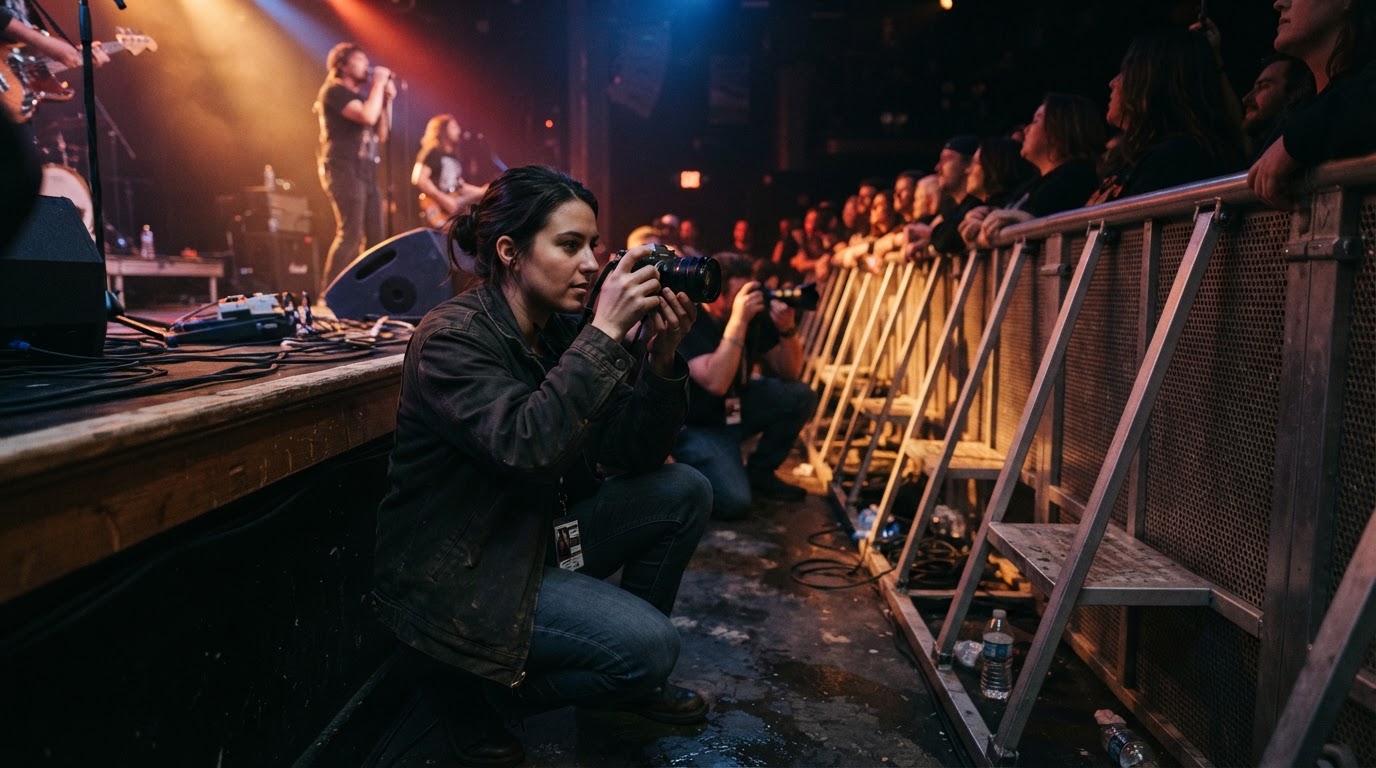
In the pit: plan around the "first three, no flash" convention
The first three songs with no flash is a common convention, not a universal rule. Digital Camera World traces the practice to the 1980s and notes that the band, not the venue, usually decides how long photographers may shoot. Venue rules differ too: First Avenue's published standard policy allows cell phones and small point-and-shoot cameras only, with no detachable or telescoping lenses, and does not permit flash (First Avenue FAQ). Confirm the show's own terms.
Assume no flash unless your credential terms allow it, and work with the stage light. After the window, some venues let photographers keep shooting from the crowd; ask security where you may stand. For the convention itself, see the three-song rule guide.
After the show: deliver and stay in touch
Send your selects fast, keep the usage terms that came with the pass, and copy the venue's press contact on future requests.
Limitations: when there is no pass to get
- Not every show has photo access, and some artists decline press photography.
- Pit space is finite, and larger acts often employ their own tour photographer.
- Without an outlet or a portfolio, a request has little to work with; build the portfolio at smaller shows first.
- A request can go unanswered through no fault of yours; one polite follow-up is reasonable, then move on.
- A ticket is not a workaround: it gets you in as an audience member, not into the pit with professional gear.
State check: a request is complete as a request once it is specific and sent. Permission is confirmed only in writing from a named contact; admission, pit access, and your shooting window are separate. Until then, you are waiting — not approved.
FAQ: concert photo-pass questions
Can I get a photo pass if I already bought a ticket?
A ticket gets you in; a photo pass is a separate credential that permits pit photography, granted by the artist, promoter, or venue. Without it, you attend as an audience member under the venue's camera rules.
Do I need to work for a publication?
It is the strongest ask: a publication answers the gatekeeper's real question — where will these photos run? Local bands, promoters, and venues need images too, so a strong portfolio and a clear offer of usable images open doors.
How long will I be allowed to shoot?
Plan for the first three songs as a common default, but expect your show to differ: the band's team sets the window, and it can be longer or shorter. Confirm it with the venue's press contact or your credential contact.