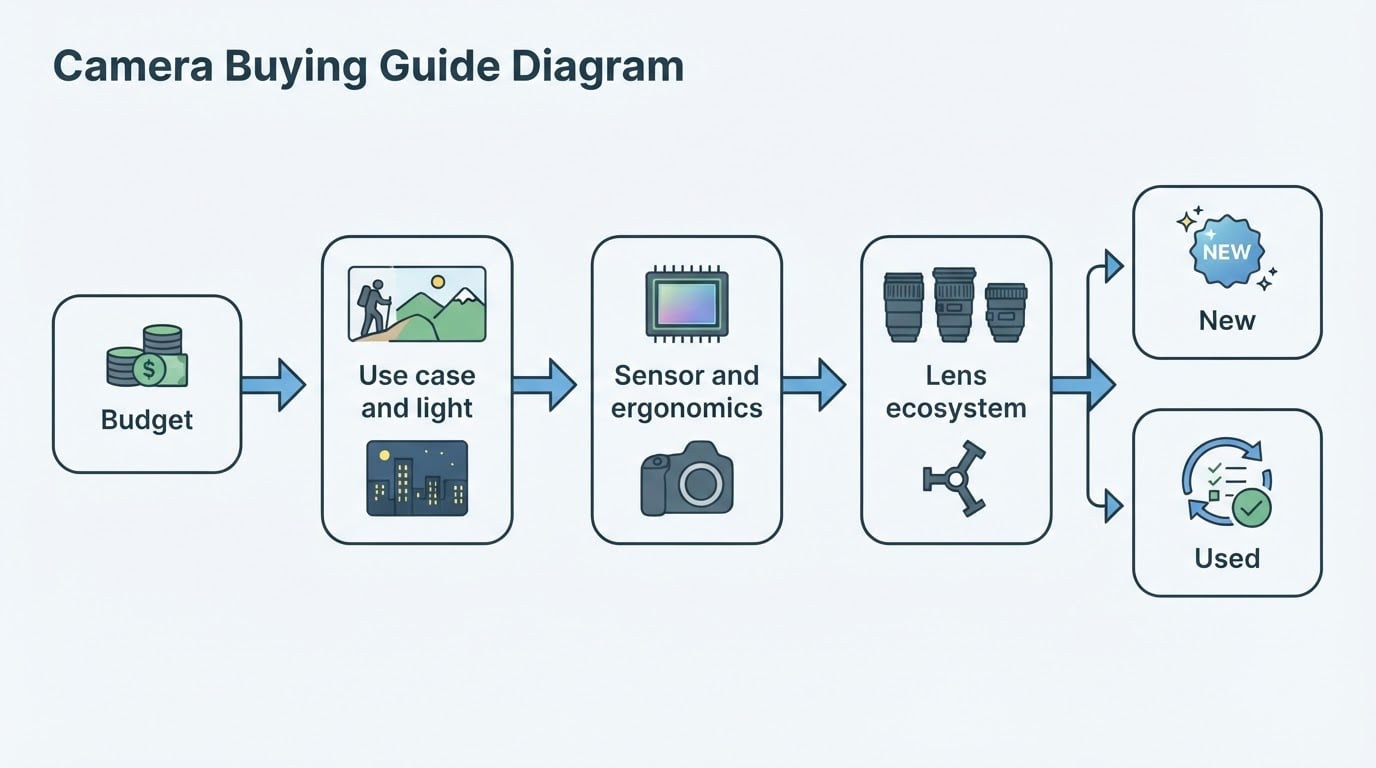
Start with the subject, not the price
A coastal print is not simply a picture of water. The pieces that keep working on a wall for years share three qualities: a clear subject, a light that suits the room, and a surface that suits the place it hangs.
Begin with the subject. Coastal imagery runs from wide shorelines and open horizons to tighter details — a lighthouse, a pier at dusk, stones in moving water, a line of surf. Wide scenes slow a room down and make it feel larger. Tighter subjects create a focal point and hold their own in a hallway, a stairwell, or a small office wall.
Then judge the light. A frame made on an overcast morning or at blue hour reads quiet and cool. A sunrise or late-day frame carries warmth and energy. Neither is better; they pull a room in different directions. If your space already has warm wood, brass, or lamplight, a cooler scene balances it. If the room is mostly gray and white, a warmer scene gives it life.
Before you compare prices, answer one question: do you want to stand inside the scene, or look out at it? Close water detail pulls a viewer in. A distant horizon gives the eye somewhere to rest. Both work; they ask for different wall positions and different viewing distances.
Match the subject and mood to the room
Room by room, the same image behaves differently. In a bedroom, a calm horizon or an overcast shoreline supports rest; a high-contrast sunset tends to energize a space you want to wind down in. In a living room, a shoreline with some movement — surf, weather, a breaking wave — holds attention across a large wall without competing with conversation. In a hallway or stairwell, a vertical subject such as a lighthouse or a single sail reads better than a wide panorama, because the wall is narrow and the viewer stands close.
Kitchens and bathrooms want lighter, airy scenes: pale skies, open water, sand tones. Dark, moody frames can feel heavy in a bright room, and they are harder to place beside small fixtures. A home office sits somewhere in between; a long horizon gives a sense of distance that helps a tight workspace feel less enclosed.
If you are buying as a gift, the decision narrows quickly. A scene from a place the recipient knows — a particular coastline, a landmark, a harbor they visit — usually lands better than a generic beach. Specificity is what makes a coastal print personal, and it is also what makes it hard to find a substitute for later.
Decide between metal and paper prints
Two surfaces cover most coastal prints, and the wall decides between them.
A metal print has the image fused to a rigid panel. It tends to look crisp and saturated, and it can hang without a frame — useful when you want the photograph to carry the wall on its own. The trade-off is the surface: metal reflects. On a wall that catches direct sun or a bright window across the room, the reflection can sit between the viewer and the image.
A fine art paper print carries texture that some subjects want — soft skies, mist, long exposures with quiet gradients. It usually sits behind glazing in a frame, which protects the surface and lets you change the frame later. That also means another decision and another cost, so budget for framing at the same time as the print.
A simple test: stand where you will most often look at the wall, at the hour you most often use the room. If you can see a bright window reflected in that spot, lean toward paper under low-reflectance glazing, or find a wall without the glare. If the wall is softly lit and you want the image to hold its color with almost no upkeep, metal is the straightforward choice.
Get the size and framing right
Sizing goes wrong most often when the print is chosen for the furniture instead of the wall. As a rule of thumb, keep the framed piece within the width of the furniture below it and leave some wall visible on both sides — a print that touches the edges of a sofa or a console looks crowded, whichever format it is in.
Hang the center near standing eye level rather than high on the wall. In a hallway or above a desk, the piece can sit slightly lower so it meets the viewer where they actually are. For a wide wall, a single large panorama usually reads better than several small frames; for a narrow one, a vertical piece fills the space without spilling into a doorway.
Orientation matters as much as size. A long horizontal frame suits a low, wide wall — above a bed, a sofa, or a sideboard. A square frame is the most flexible and can sit above almost anything. A vertical frame belongs where the wall is tall and narrow.
Before you order, check whether the seller shows the image in a room setting or a format mockup. A scale preview turns a thumbnail into a decision; without one, you are guessing at the relationship between the print and the wall it will live on. Those mockups are also where you can compare the look of a metal panel against a framed paper print on the same photograph.
Read the edition and licensing terms before you buy
Edition and usage terms are the part of a print purchase that buyers most often skip, and the part that is hardest to change later.
An open edition can be printed again in the same size and format, which makes it easy to replace or to add a second copy. A limited edition is capped at a stated number, often numbered and sometimes accompanied by a certificate; it is generally meant to hold its place rather than be reprinted. Neither is automatically better. What matters is that the listing tells you which one you are buying.
Licensing is a separate question from ownership. Buying a print normally gives you the physical piece for personal display. Commercial use — advertising, merchandise, resale, or reproduction — usually sits under a different agreement. If the print is going into a workplace, a rental property, or a hospitality space, confirm the usage terms before you order rather than after it arrives.
Three checks are worth making on any listing:
- Is the edition size stated, or is the print open?
- Are the available formats and orientations listed clearly?
- Is the production and shipping window stated before checkout?
If a listing answers all three, you can compare it against another seller on equal terms. If it answers none of them, price is the only thing you can actually compare.
Care for a coastal print so it lasts
Most prints fail for boring reasons: sunlight, moisture, and handling.
Keep the piece out of direct sun. Ultraviolet light fades color over time, and paper is the more vulnerable surface of the two. If the wall gets strong daylight and you cannot move the print, ask for UV-filtering glazing when it is framed.
Keep it out of damp rooms. A steamy bathroom or a wall above a kettle is a poor home for a paper print, and even a metal panel will collect condensation in a room with no ventilation. In a coastal home, where the air already carries salt and humidity, the same rule applies more strongly.
Dust with a dry, soft cloth and never spray cleaner onto the surface. Clean the glazing instead of the print, and use a damp cloth on the glass only. Handle paper prints by the edges or with clean gloves; fingerprints on a matte surface are difficult to remove without marking the paper.
A frame with a mat keeps a paper print off the glass, which prevents the surface from sticking or marking in changing humidity. Hang the piece away from air-conditioning vents and radiators, where dry air and temperature swings do the most damage over the years.
Three mistakes that make a coastal print look wrong
The first is buying for the sofa instead of the wall. The print should relate to the wall it hangs on and the furniture below it, not to the furniture alone; a piece chosen only to match a sofa color usually feels small or lost once it is up.
The second is choosing by thumbnail. Screen color, ambient light, and the surface of the print all shift how an image reads. Compare the same image in the room setting or format mockup whenever the seller provides one, and check it in the room at the hour you actually use that space.
The third is leaving the edition and usage terms until after checkout. Edition status, format availability, and production time are the details that decide whether a print is the right purchase for a home, an office, or a gift, and they are much easier to check before an order than to renegotiate afterward.
How these criteria look in practice
Three common ways to buy show how the criteria above play out. This guide is published by Chris Sidoruk Media, the studio that sells the coastal prints described below.
Mass-market canvas sets are usually open editions in fixed sizes, made to fill a large wall quickly. They are the cheapest way into a room, but the surface is part of the design and the format is fixed, so changing size or surface later usually means buying a second piece.
Open-edition poster prints are light, inexpensive to ship, and easy to swap out. Paper quality and color accuracy vary a lot between sellers, though, so the same photograph can look notably different from one listing to the next, and it is worth reading the paper and ink details before ordering.
Chris Sidoruk Media's wall-art collection is a studio-scale example of the same checklist filled in: thirteen New England landscape photographs sold as made-to-order prints, each listed from $50, in a Metal Print or a Fine Art Paper Print, with production running about four business days before shipping within the U.S. The titles include Coastal Beacon, Coastal Rhythm, Day's End at the Pier, Stone and Water, and The Walk Out, and each product page lists the location, subject, style, orientation, and available formats next to interior and format mockups that show scale.
The right answer depends on the wall, the light, and how the piece will be used. A smaller, documented collection makes it easier to confirm exactly what you are buying; a mass-market set makes it easier to fill a wall for less. Neither choice is wrong when the trade-off is understood before the order.
A practical path to ordering
Work through the decision in the order the criteria matter, and the purchase becomes a short sequence rather than a long browse:
- Measure the wall and note how the light falls on it during the hours you use the room.
- Shortlist two or three images in the orientation that suits the space.
- Choose the format from the light — paper under glazing where glare is likely, metal where the wall is softly lit.
- Check the edition status, usage terms, and production window before checkout.
- Budget framing at the same time as the print, and order both together when possible.
- Order from the collection page itself rather than a marketplace listing, so format, orientation, size, and mockups stay in view while you decide.
A coastal print is a long-term object. Choosing the subject for the room, the surface for the light, and the size for the wall — then confirming the terms — is most of the decision. The rest is hanging it at the right height and keeping it out of direct sun.