What makes a photograph editorial
Editorial photography is made to inform a publication's story. The subject might be a reported feature, a profile, a review, a news story or a scene report; in each case an editor, or a photographer pitching to one, decides which images the publication needs, and the images exist to help readers understand the subject. What makes the work editorial is that job and that use, not the lighting, the crop or the amount of grain in the frame.
Rights are a separate decision. An editorial commission may grant a narrow one-time license or a broad multi-platform grant, and the contract sets the scope. Using "editorial" as shorthand for "narrow license" confuses two different things: the category explains why the picture was made, while the license explains what the publication may do with it.
Commercial photography is made to sell or promote something. A brand, agency or business commissions it, approves it, and normally needs rights wide enough for a campaign. A photograph can look editorial and still be used commercially. If a picture that ran with a story is later proposed for an advertisement, press kit, merchandise or paid social post, check whether the existing rights and consents cover that use before approving it.
Fine art is often treated as a third category, but the boundaries are less tidy than that division suggests. The same frame can become a gallery print and a magazine portrait, a documentary project can be published editorially, and an editorial outtake can be exhibited. For a commission, the practical question is which use is being granted, whatever genre the photographer works in.
How editorial assignments arrive
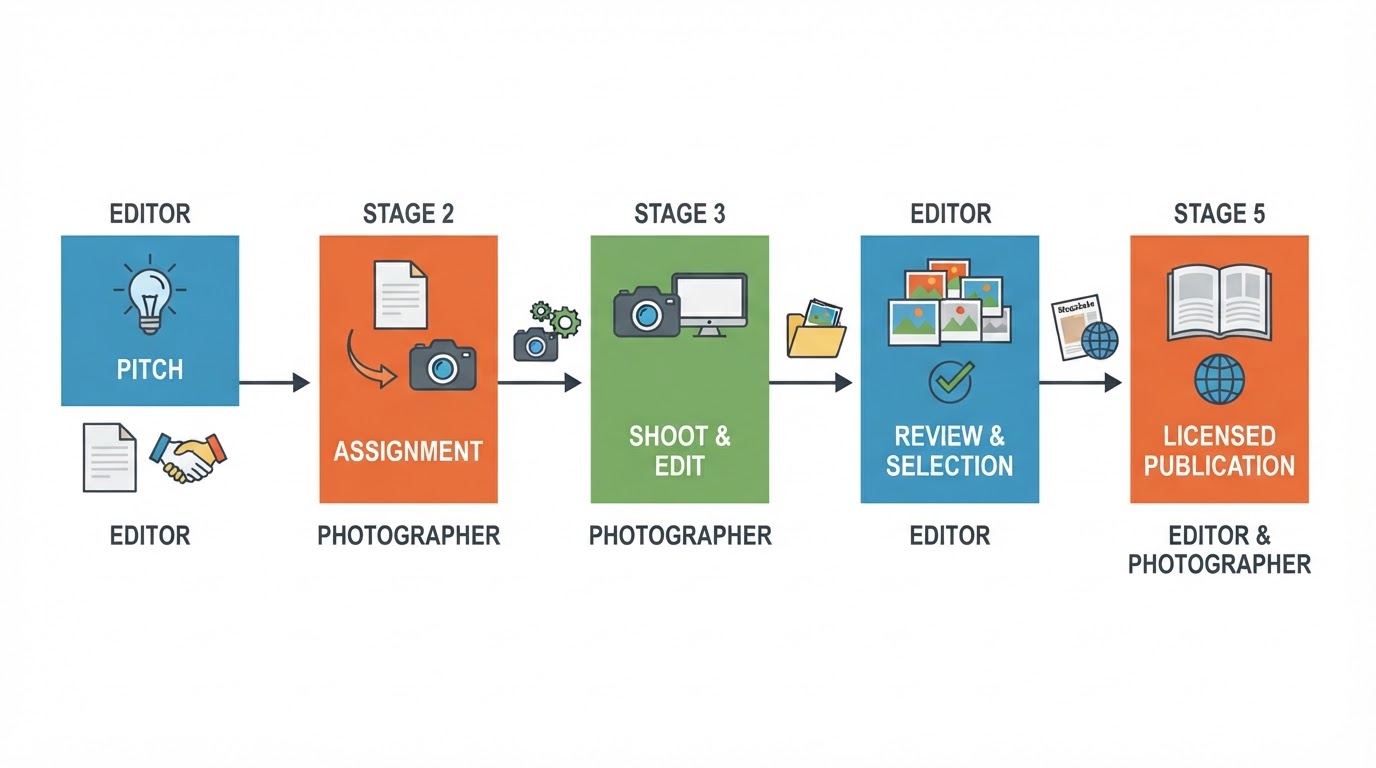
Editorial work reaches a photographer in two shapes: an editor commissions it, or a photographer pitches it and wins the assignment. Both begin with a gap in a publication's coverage rather than with a portfolio.
A pitch that gets read tends to contain five things:
- The story in one line, stated as a fact or a question the publication has not answered.
- Why now: a season, an opening, an anniversary, or a decision being made this month.
- The images you can deliver, described as scenes rather than adjectives.
- The access you have already confirmed, and the name of the person who confirmed it.
- What you need from the publication: a deadline, a page or word slot, expenses, and the rights you are offering.
Specificity is what makes the pitch usable. "Portraits of the people rebuilding the market" gives an editor something to picture; "moody documentary coverage" does not.
What an assignment brief should specify
Before the shoot, get the brief, deadline, deliverables, credit line, expense arrangement and license scope in writing. Ask directly whether the publication wants camera-original files for verification. A verbal "we will sort out usage later" leaves the scope open at exactly the point where it matters most.
A short brief can carry everything a longer one does. Copy this and fill it in with the editor:
ASSIGNMENT BRIEF
- Publication / section:
- Story and angle (one or two sentences):
- Editor and fact-check contact:
SCOPE
- What to cover:
- Access confirmed by (name, role, date):
- Subjects or scenes not to photograph:
- Locations and shoot window:
DEADLINE
- Selects due:
- Final delivery due:
- Publication date:
DELIVERABLES
- Number of images:
- File format, size and color space:
- Naming convention:
- Transmission method:
- Captions due with the files: yes / no
- Credit line exactly as it should run:
- Camera-original files required: yes / no
RIGHTS TO CONFIRM
- Media (print, web, newsletter, social, archive, syndication):
- Territory:
- Duration:
- Exclusivity:
- Portfolio and social use:
- Sublicensing:
- Promotional or commercial reuse included: yes / no
MONEY AND CHANGES
- Fee:
- Expenses and receipts:
- What happens if the story is killed or delayed:
- Who approves the final edit:
Assignment terms vary a great deal between a regional outlet, a trade publication and a national magazine, and the size of the fee is not the only variable. The license clause tells you what the publication actually intends to do. A one-time, one-publication editorial license and an all-media, perpetual grant are different products and should carry different terms.
Research the story before the shot list
Three questions decide whether the images will work, and all three are answered before the camera comes out.
What will the text claim? Ask for the editor's paragraph or the draft angle. Your images have to support the assertions in the piece and must not quietly contradict them.
Who has to appear? Get exact names, titles and roles, and verify them with a person rather than with memory. A wrong title in a caption becomes the photographer's problem even when the editor wrote the brief.
What does the sequence need to show? A reader usually needs a way into the scene, a process, a detail that proves the story is real, a person to care about, and a consequence. Name those beats and shoot for each one.
Access belongs in this stage too. Confirm in writing who is letting you in, for how long, and what you may photograph. Build a shot list that can survive a lost subject: for every essential frame, name a fallback that carries the same fact. If a scene is cancelled, the story should still have a picture that tells the truth.
Shooting for the publication's page
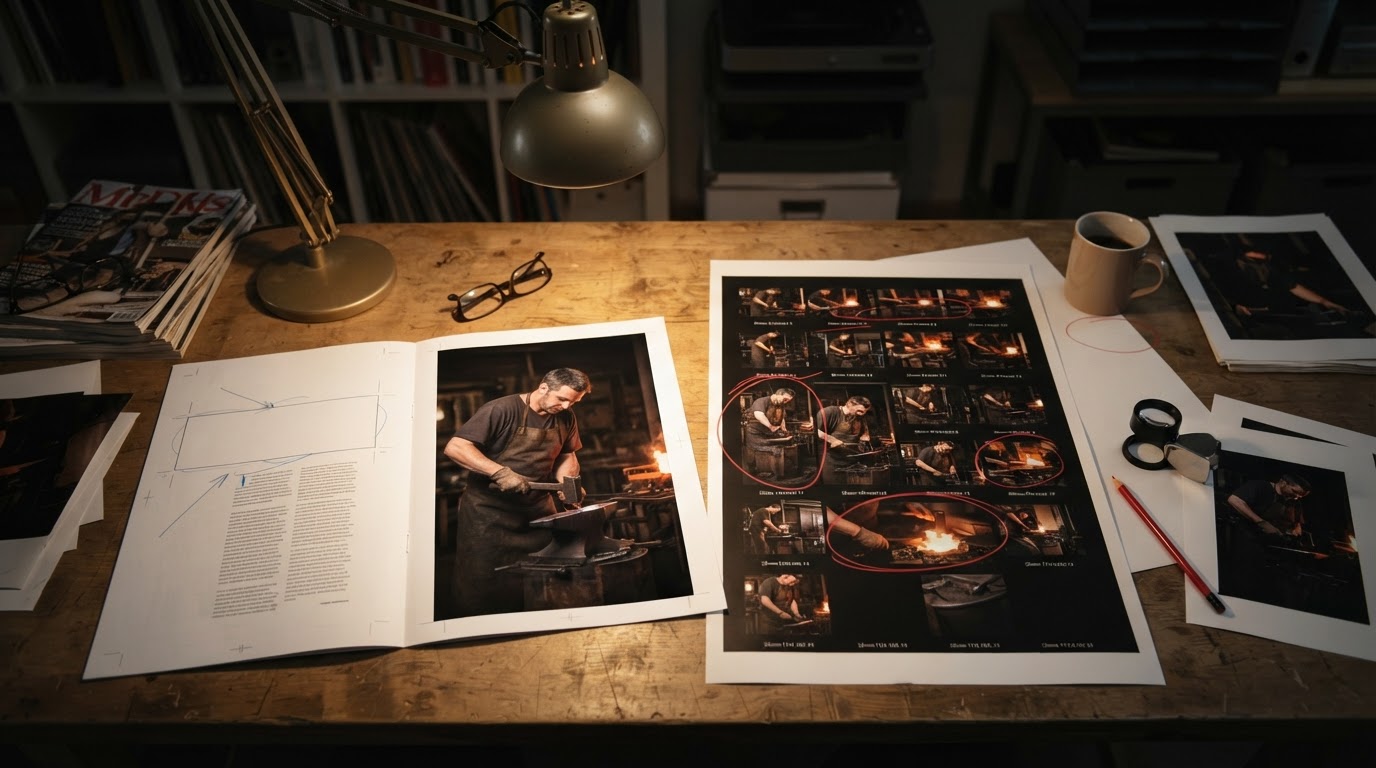
A publication usually needs images that fit a page, not just individual photographs. Before the shoot, find out the shape of the space: single column or spread, whether a gutter will run through the middle of a frame, the crop ratio, and how much empty area the designer needs for a headline or caption. Then shoot for it.
Deliver vertical and horizontal coverage of the key moments, and keep the subject away from the very edge so a crop does not cut off a hand or a face. Shoot a sequence rather than a highlight reel: an opening frame that establishes place, a detail that rewards a second look, a portrait or gesture that carries the human stake, a transition, and a closing frame that resolves the scene. Keep the grade consistent across the set so the images read as one story rather than six unrelated submissions.
Technical delivery is part of the craft. Confirm the file format, size limits, color space, naming convention and transmission deadline in advance, and test the upload path before deadline day.
Retouching should follow the receiving publication's rules. Ask what its photo policy allows before you edit, because outlets differ: many accept global tonal and color correction and routine dust cleanup, while some documentary and news desks restrict even that. Removing an object, adding elements or compositing scenes changes what the image records. If an adjustment goes beyond ordinary correction, disclose it to the editor and let them decide whether the image still meets the publication's standard.
One test is worth applying before delivery. A photo editor may run only one image from your set. Make sure the strongest frame can carry the story alone, with a caption that stands on its own.
Captions, accuracy and corrections
Captions are editorial content and part of the photographer's deliverable. A caption that travels with the file should answer who, what, when, where, and why or how, in plain sentences, without hedging and without inference. Describe what is visible and confirm what is not: the name of the street, the role of the person on the left, the date of the event. Verify spellings, titles and place names against a source you can point to, then keep the same wording across every frame from the shoot so the publication does not have to reconcile two versions.
Deliver the caption text alongside the images, not in a separate message that will be lost, and add the credit line exactly as the license requires. The editor owns the final fact-check, but the photographer owns the accuracy of the caption's first draft. When a correction arrives after publication, fix the archive copy, note the change and tell the editor. A corrected caption is cheap; an uncorrected one is a permanent public record of the error.
For the export and delivery side of concert work, including how caption and credit fields survive an export, see How to Caption Concert Photos.
Permissions and releases: the questions to settle
Whether a release is needed is not answered by the word "editorial" alone. The answer depends on the publication's policy, the venue or accreditation terms, who the subject is, how the image will be used, and the law that applies.
In the United States, ASMP's guidance is a useful starting point. Writing for the organization's Strictly Business Blog in 2012, Judy Herrmann separates taking a picture from its intended use: a release is not required merely to photograph someone, and editorial news use generally does not require one, though publishers or galleries may still ask for it. Promotional use raises different issues, including when a publication, venue or the photographer's own business is being promoted. The article is US-oriented and not an unconditional exemption, so treat it as a framework for asking the right questions rather than a rule that travels everywhere. (ASMP, "Do You Really Need a Release?")
The questions worth putting to the editor and the venue before the shoot:
- Does the publication require a signed release for this subject or setting, and in what form?
- What do the venue or accreditation terms say about photography, consent and later promotional use?
- Is the subject a minor? What does the publication's policy and the applicable law require? A minor or a private setting often prompts a release request, but neither is a universal rule on its own.
- Will the image be used to promote the publication, a sponsor, the venue or an event? If so, is that use inside the granted rights, and are additional consents needed?
- Was the scene staged, a re-enactment, or a paid participant? The caption has to say so.
Keep the pass conditions with the files so nobody has to reconstruct them later. Take particular care with people in vulnerable moments and with anyone who did not choose to be part of the story. If a subject later asks for an image to be removed, treat it as a licensing and editorial question: check what the publication's policy allows, what the license covers, and who has already republished it. This is general guidance rather than legal advice; the contract, the venue terms and the law that applies govern a specific assignment.
Licensing: read the grant, not the label
In the United States, the photographer generally initially owns the copyright. The U.S. Copyright Office's photography guidance describes the work-made-for-hire exception: work within the scope of employment, or a qualifying specially commissioned use with an express written agreement. A later written transfer can also change ownership. When the photographer retains copyright, read the license to find out which uses the publication receives.
Read the scope line by line. Media means which channels the publication may use: print, web, newsletter, social, syndication partners or an archive. Territory and duration set where and for how long. Exclusivity decides whether you can sell the same images elsewhere. Additional clauses cover sublicensing, credit placement, indemnity, and whether you may show the work in your portfolio.
The line between editorial and commercial use matters because it changes what the publication may do next. An image licensed for a story does not automatically move into an advertisement because the advertiser liked it. If the subject, a sponsor or the venue wants the picture in marketing, check whether the existing grant already covers that use. If it does not, negotiate a separate license with its own scope and any additional releases or consents that use requires. An extra commercial license is needed only when the existing rights do not already cover the intended use.
When a license is silent on a use, do not assume it has been granted. Practical habits protect the archive: keep the unedited originals, deliver a licensed copy rather than the master file unless the terms require otherwise, write down what you granted and when, and record where each image eventually ran.
For the paperwork side of permissions — requesting them and keeping a usage record — see Image Licensing: Permission Request and Usage Record Templates. That guide covers the record-keeping task; this page covers preparing and briefing the assignment.
Getting a live-music or regional story placed
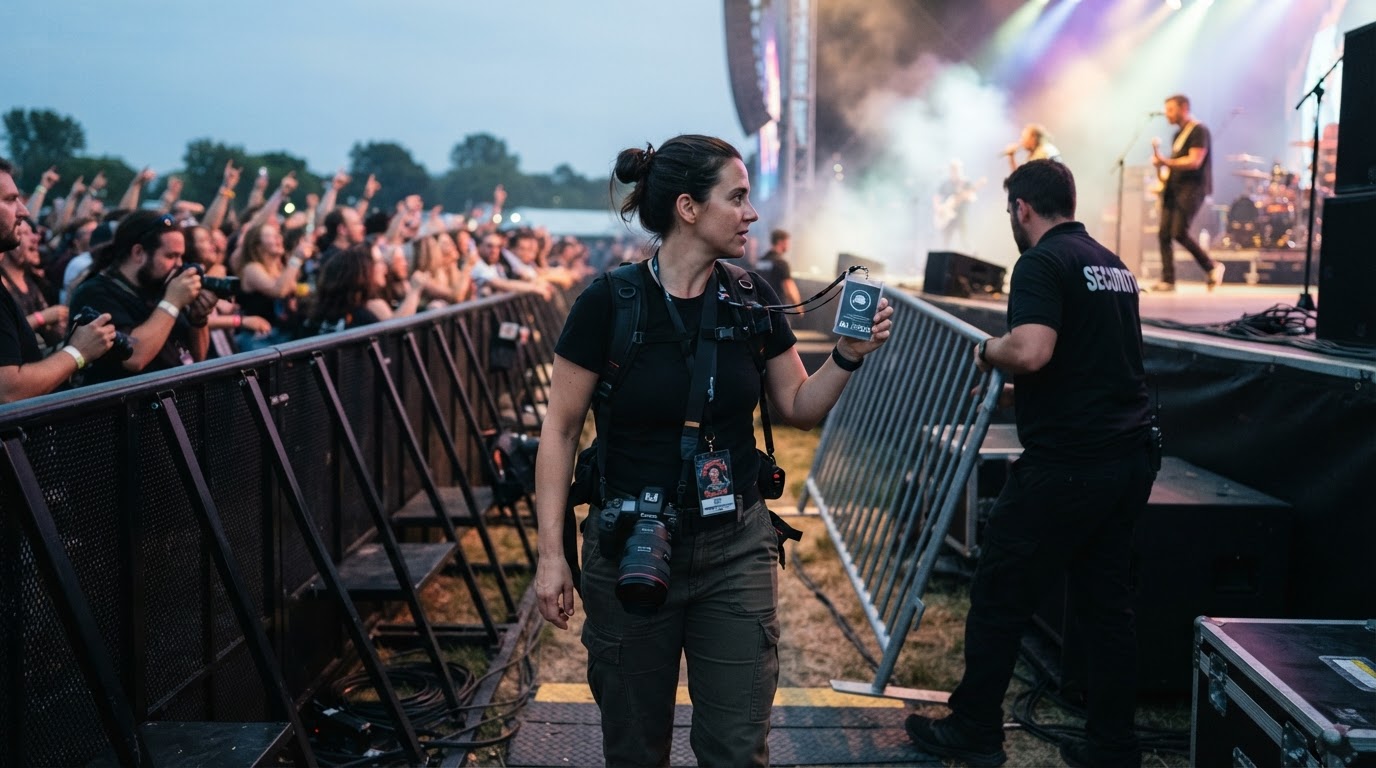
Live music and regional stories are placed on relevance, not on image quality alone. A national outlet rarely needs another festival gallery; a regional publication may need the specific fact only a local photographer can supply — the venue that reopened, the promoter's first full season, the tour stop that skipped the city for years, the scene forming around a particular room.
Find the person who assigns the section rather than the general inbox. Pitch with the work already made: a tight set of selects, captions written to publication style, a short summary of what the story is and why it belongs in that outlet, and a clear statement of the access you hold and the rights you are offering.
Planning cycles decide many placements. Season previews and festival coverage are planned well ahead, and accreditation windows close early, so a pitch that arrives after the schedule is set competes with nothing. If you can turn work around quickly, say so, and offer a photo-led option for outlets that cannot send a writer.
After publication, ask about second use and syndication, keep the tear sheet, and record where each frame ran. That record is what makes the next pitch credible, and it is what stops a one-time editorial license from quietly becoming an unlimited one.
FAQ
Is editorial photography the same as documentary photography?
They overlap but are not identical. Documentary work usually describes a photographer-led, long-form practice; editorial work describes the assignment context — images made for a publication's story. A documentary project can be published editorially, and an editorial shoot can be purely descriptive.
Do I need a model release for editorial images?
Not automatically. In the US, editorial news use generally does not require one, but a publisher may still require a release, and promotional use raises different issues. Check the publication's policy, the venue or accreditation terms, whether the subject is a minor, and the law that applies.
Can I use my editorial images in my portfolio or on social media?
Often yes, but check the contract. Many editorial licenses allow portfolio and social use after publication with a credit, and some restrict posting before the publication runs. Read the clause rather than assuming, and do not post an unpublished select that the editor is still considering.
What happens if the story is killed after the shoot?
Agree in advance what happens to the fee, expenses and your ability to place the images elsewhere. A kill fee applies only if the commission provides one; its size and the conditions that trigger it belong in the written terms, not in a conversation after the fact.