What White Balance Can and Cannot Do Under Stage Light
White balance compensates for the color of the light so that a neutral surface renders close to neutral. On a concert stage, the colored wash is usually the point of the lighting design rather than a defect to remove. The useful goal is workable, consistent color across a set: skin and costume details that read as themselves, and stage light that still looks like stage light. A white-balance setting cannot turn a strongly colored source into daylight without erasing the color that made the photograph.
When Auto White Balance Is a Practical Starting Point
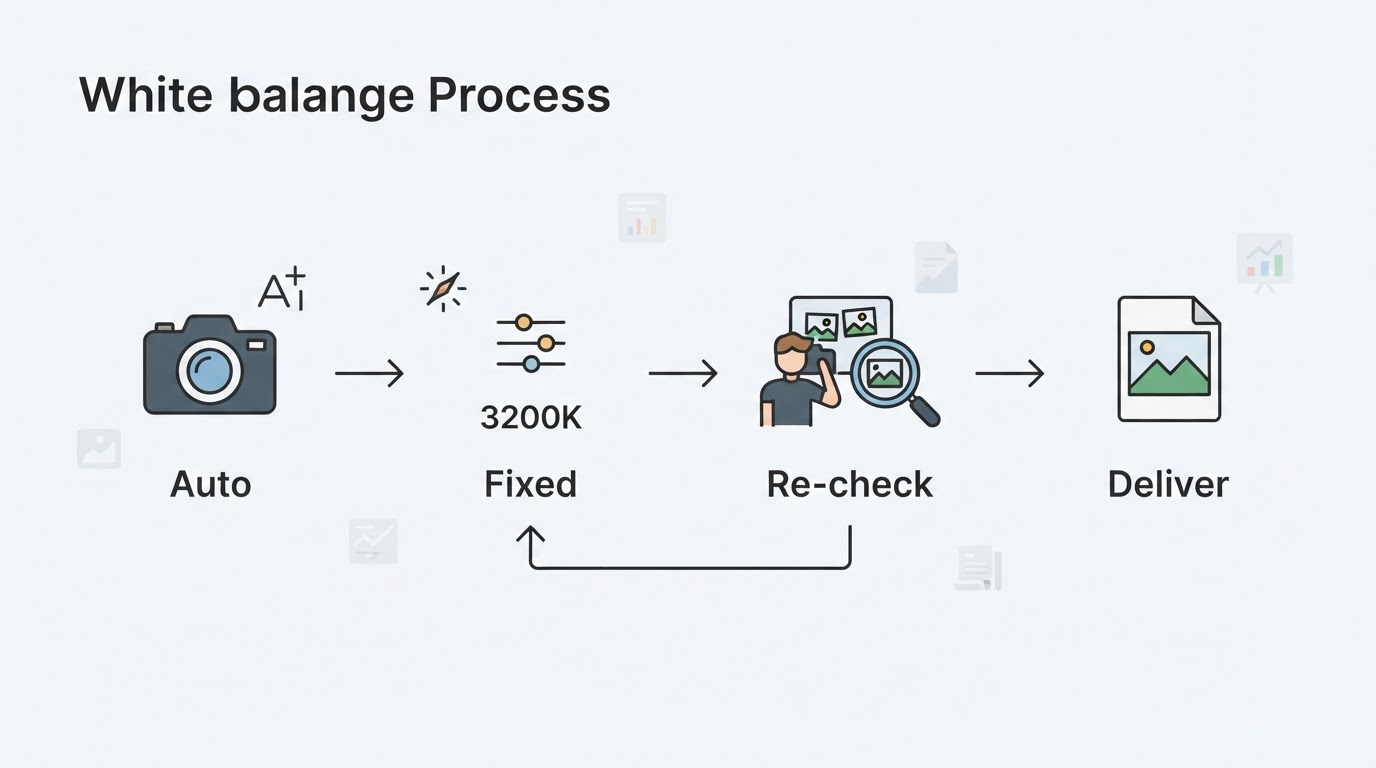
Auto white balance reads the scene's color and picks from the camera's pre-programmed adjustments, re-evaluating as the frame changes. A stage makes that difficult: saturated washes leave few neutral surfaces to measure, and the cue can change between the first song and the second. That makes auto a sensible choice while cues are moving, and a sensible starting point in an unfamiliar room where it gives you a first frame to judge before you commit.
The trade-off is drift. When the wash changes, the camera's interpretation changes with it, so a run of frames that looked consistent on the back screen may need different corrections later. That matters if the finished images must match each other; it matters less if you are editing each frame anyway.
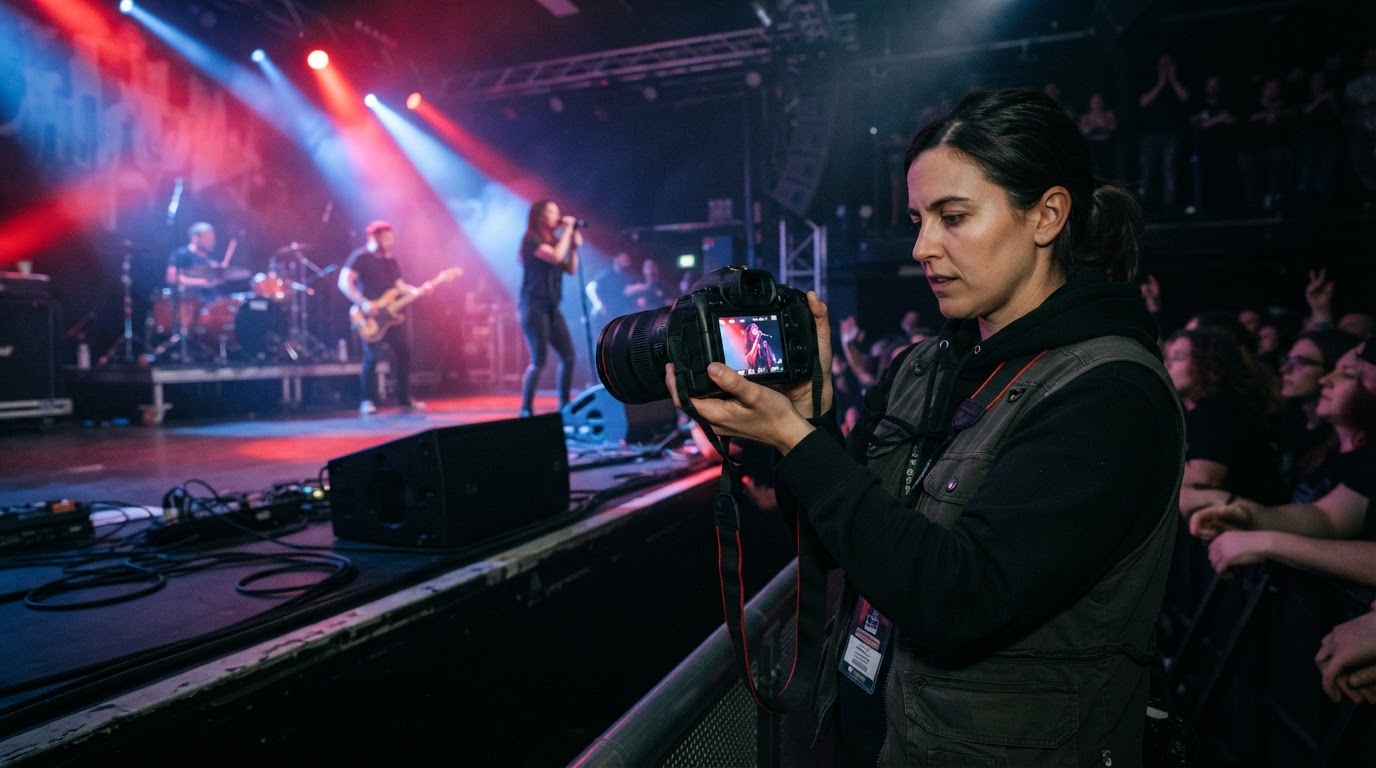
Nikon's profile of concert photographer Mike Corrado attributes his use of auto white balance to changing concert lighting, and he shoots RAW so that an exposure can be adjusted later (Nikon, Thunder Road). That is a working practice under shifting cues, not a universal camera setting.
When a Fixed Setting Helps a Run of Frames
A fixed white balance, whether a Kelvin value or a preset, holds the camera's interpretation still. If one cue persists through a verse or a whole song, that consistency is useful: the frames relate to each other, culling is faster, and a batch adjustment behaves predictably. Use it when the lighting is stable enough that you would otherwise be chasing the same look frame after frame, then re-evaluate when the cue changes rather than treating the number as a permanent answer.
The distinction matters. A fixed setting keeps the camera consistent under a cue; it cannot keep the real lights the same color. The red wash is still red, the blue backlight is still blue, and a fill light at a different temperature still pulls part of the frame in another direction. Fixed is a tool for stability, not the automatic answer for every stage: when cues keep changing, auto or a fresh reading between cues can serve you better than a value set before the first song.
Why No Kelvin Number Fits Every Colored Stage Light
Kelvin describes color temperature on a single blue-to-yellow axis, while colored stage light can sit anywhere across the spectrum. How narrow it is varies: some deep red or magenta LED washes occupy a narrow band, while other gels and fixture mixes cover a broader range. When a source leaves very little green or blue, no temperature setting invents that information back. The camera can add gain, but it cannot recreate spectral color that the sensor never recorded.
Mixed cues make the arithmetic worse. One white-balance value applies to the whole frame, so a setting that flatters a warm side wash will push a cooler backlight further away. No single global balance neutralizes two sources independently.
This is also where white balance stops being the right tool. If the red channel is pressed against the ceiling, the problem is exposure and channel headroom, not color temperature. Changing the white-balance value does not recover raw channel data that was never recorded, and the histogram on the back of the camera is usually rendered from a JPEG preview, so it can disagree with clipping in the raw file. The guide to concert photography in red light covers the histogram checks and recovery limits.
Match the On-Camera Choice to the Delivery Format
The file format decides how much the on-camera setting matters. RAW gives more latitude than JPEG for correcting highlights, color balance, levels, and noise, while JPEG bakes in the camera's contrast and color decisions before you can protect a single channel, as the red-light guide explains. White balance still matters in RAW because your preview and exposure judgment depend on what the camera shows you.
Delivery sharpens the decision. If you must hand over JPEGs straight from the card, predictability matters, and the setting that provides it is the one tested against the cues you actually get; if the cues keep changing, keep re-checking or let auto follow them rather than locking a value that no longer matches the stage. If you are delivering RAW files or editing everything, the recorded choice is provisional, though you should still confirm the preview is not misleading you about the color of the light.
A Short Capture-Choice Guide
- New room or a cue in flux: start on auto, shoot the dominant cue, and judge color and channel clipping in the same pass.
- One cue holds across a run: lock a tested Kelvin value or preset, note it for the batch, and re-evaluate when the light changes.
- Mixed sources: expect one global balance to favor one light at the expense of another, and decide which part of the frame must read correctly.
- Saturated red or magenta: protect the channels rather than hunting for a Kelvin number that restores detail.
- Delivery after the show: JPEGs need the setting to be right in camera; RAW leaves more room, but the preview still shapes what you record.
When the Cue Will Not Cooperate
Some cues leave no honest neutral reference: a single saturated color over the whole stage, a moving wash, or two sources at very different temperatures cutting across the same face. In those situations, choose the subject over the room. Expose and set white balance for the performer, accept that the surrounding light will read as saturated, and use editing only as far as the recorded data supports. If the face cannot become believable in color without inventing information, black and white is a defensible document of the light rather than a failure of the setting.