Why cold glass fogs when the doors open
Warm air holds more water vapor than cold air. When that air reaches a lens element, an eyepiece, or a metal barrel still at outdoor temperature, the thin layer of air against the glass cools. Once it falls below the dew point, it can no longer hold the same amount of vapor, and droplets collect on the coldest surface available. That is why cold glass and metal carried in from outside collect the moisture.
The same process can reach the rear element and the inside of the body through an open mount. Whether the haze is sitting on the outside of the glass or inside the assembly changes what you should do, so the two cases are separated below.
Bag the gear before the air changes
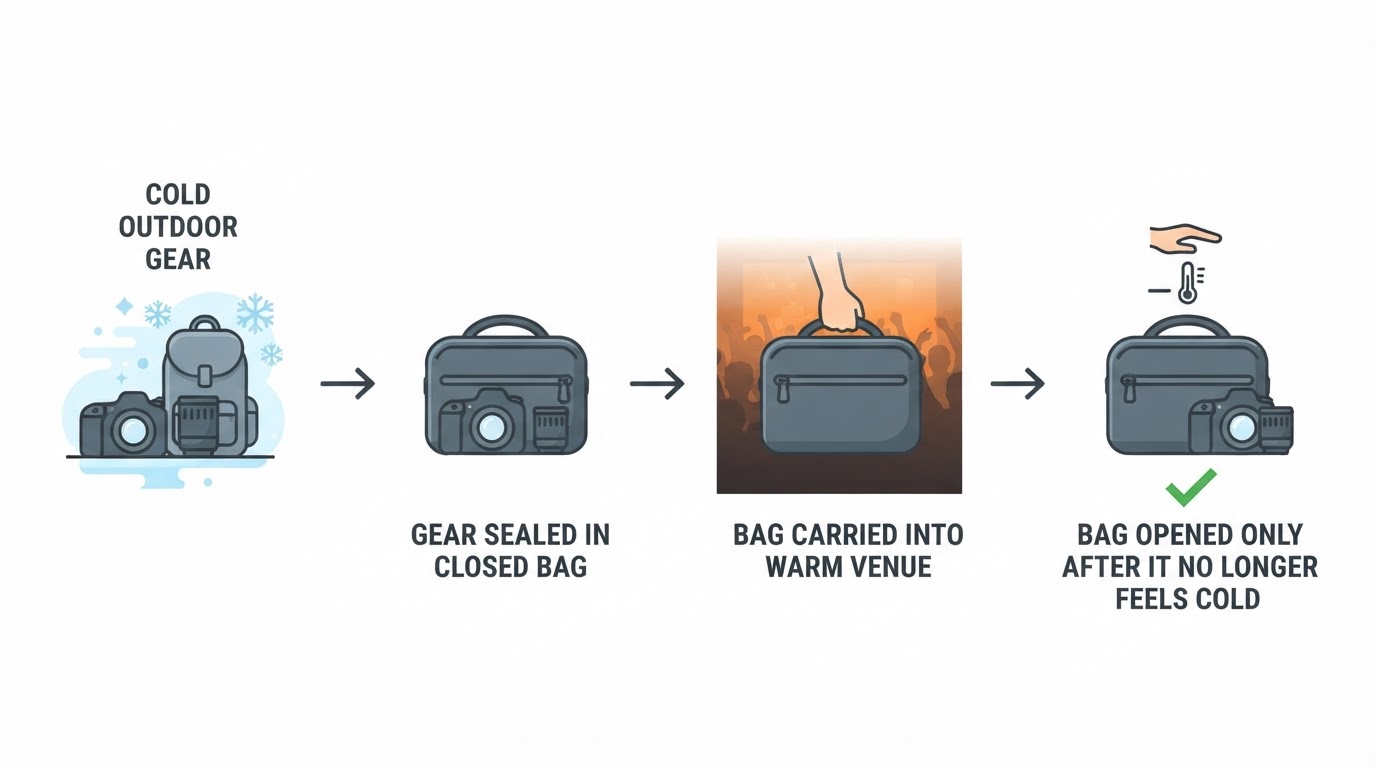
Prepare the transition at the door rather than during the first song. Fit the lens you plan to use, cap the front element if you carry a cap, and close the camera inside the bag or case you are taking in while the gear is still cold: at the car, on the sidewalk, or in the venue's outer lobby before the inner doors.
Nikon's guidance for photographing Arctic wildlife recommends the same treatment for equipment moving from freezing conditions into a warm building or vehicle. It suggests a dry bag or "an ordinary camera bag or backpack" around the gear so it warms slowly, and notes that otherwise "condensation will form on the lens and possibly inside the camera." Nikon support's article on acclimatization describes the same warm-up before equipment is exposed to warm, humid indoor air. Neither source is a concert test; applying them here follows from the temperature and moisture change at the doors.
A closed ordinary camera bag reduces how much heat and humid air move around the lens, and that is the useful part. It is not a vapor-tight barrier. An insulated case can also feel warm on the outside while the camera inside is still cold, so the case's outer surface is not a way to judge the equipment's temperature. Close it before the air changes, and keep it closed.
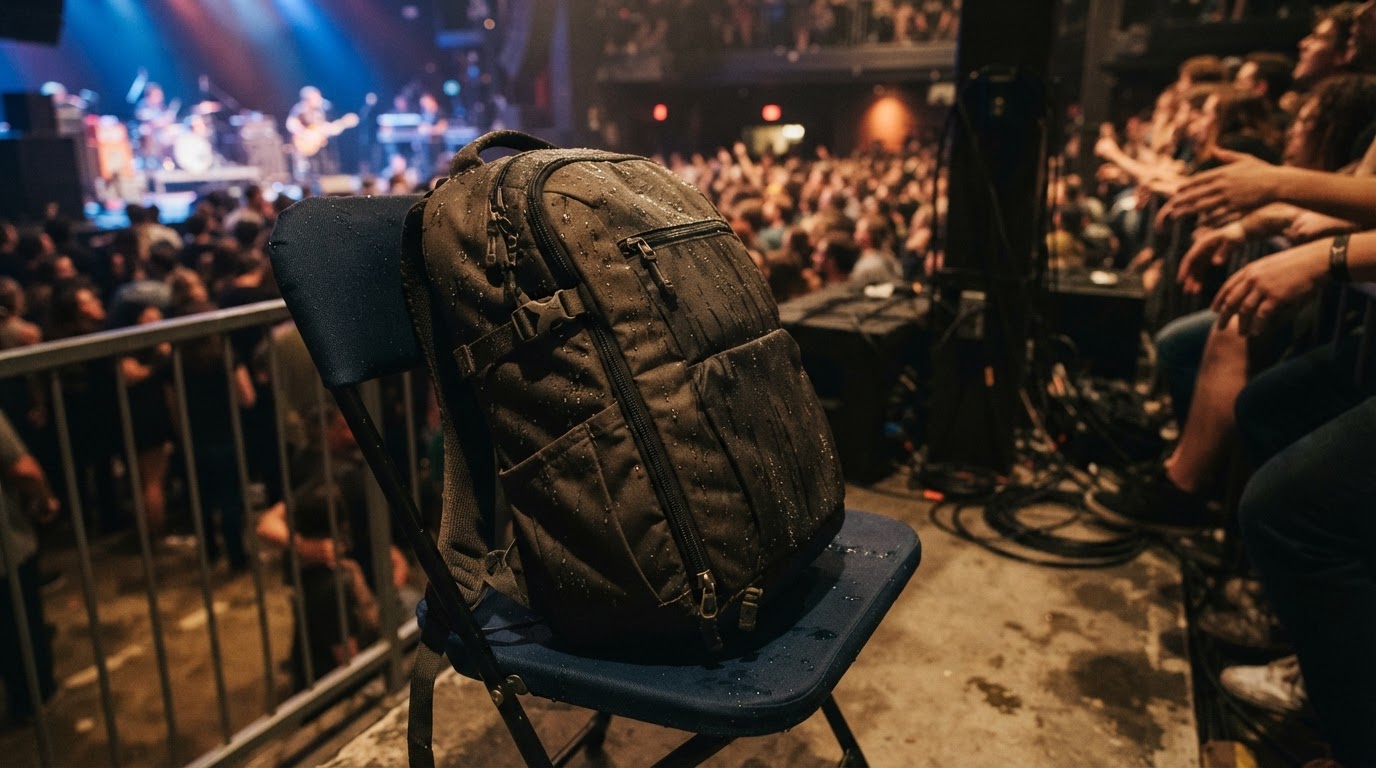
Change lenses as little as you can once you are in the room. When you have to, work quickly with the body facing down and close the bag again, because an open mount lets humid venue air reach the rear element and the inside of the camera.
What to do while it warms
No fixed number of minutes is reliable. Lens and body mass, the size of the temperature difference, and the humidity of the room all change how long the gear needs, so a confident "ten minutes" or "half an hour" is not a promise anyone can make for your kit and your venue. Where the camera or lens manual gives guidance for your model, follow that.
Set the closed bag down somewhere it will not sit against a radiator, a stage monitor, or a forced-air vent, and use the wait for what you have to do anyway: coat check, photo pass, finding the pit. Repeatedly opening the bag to test the glass lets warm, humid air in and puts the cold element back in contact with the air the bag was shielding it from, so leave it closed until you are ready to shoot.
When you do open it, watch the front element. If a veil forms, close the bag and give it longer; if the glass stays clear, take the camera out and start. A clear look at that moment does not settle the rest of the night — glass that is still cold can fog again after it is exposed.
What does not help
Breathing on the front element puts warm, moist air exactly where the droplets form, and it does not warm the glass evenly. A heater, hand dryer, or hot-air vent is no better: it heats one surface quickly while the rest of the lens and body stay cold, which is not the gradual warm-through the maker's guidance describes. Neither replaces time in a closed bag, and the manufacturer's care instructions remain the authority on what a given lens can tolerate.
Repeated lens changes in the humid room expose the rear element and the sensor to venue air. Pressing the eyepiece into a damp coat or scarf moves water onto the eyepiece glass and the rear screen. None of these ruins a show by itself; each works against the acclimatization you are waiting on.
Exterior haze or moisture inside
Moisture you can see on the front element or the eyepiece is the case you can inspect. It clears as the glass warms. If a mark remains afterwards, the camera or lens manual says whether and how to wipe it with a clean, dry cloth.
Haze that returns after a wipe is not automatically internal. While the glass is still below the dew point, fresh condensation can form on the outside as fast as you clear it, so a repeat tells you the surface is still cold more reliably than it tells you where the water is. Softness by itself is no better as a test: stage haze, dirt, focus error, and subject movement all produce it. Look at the glass rather than judging from the back screen.
Suspect internal moisture when haze remains after the equipment has had time to reach room temperature, when droplets sit behind the front element, or when the same haze keeps returning through a session. That is a service question, not something to solve at the side of the stage. Switch the camera off, stop shooting with that body or lens, and move the gear to a dry environment as the manual describes. Do not put wet gear back into the same warm, humid bag as a cure, and do not disassemble it, heat it, or pack it with rice; follow the manufacturer's care guidance, and take persistent or recurring internal haze to manufacturer service.
Water that arrived as rain or a spilled drink is a separate problem with a separate response; concert photography in rain covers water ingress and when to stop shooting.
A transition plan for the next show
- Before you leave the car or the street, fit the lens, cap the front element, and close the camera in its bag or case while the gear is still cold.
- Cross the doors with the bag closed, and keep it closed through the queue and coat check.
- Set it down away from vents, radiators, and monitors, and sort out your pass while it warms.
- Open it when you are ready to shoot and look at the front element. A veil means close the bag and wait longer.
- Going outside between sets, bag the camera before you come back in: the gear cools again and needs the same warm-up.