Start With Budget and Use Case
Set your total budget and your main subject first; those two answers narrow the field faster than any specification.
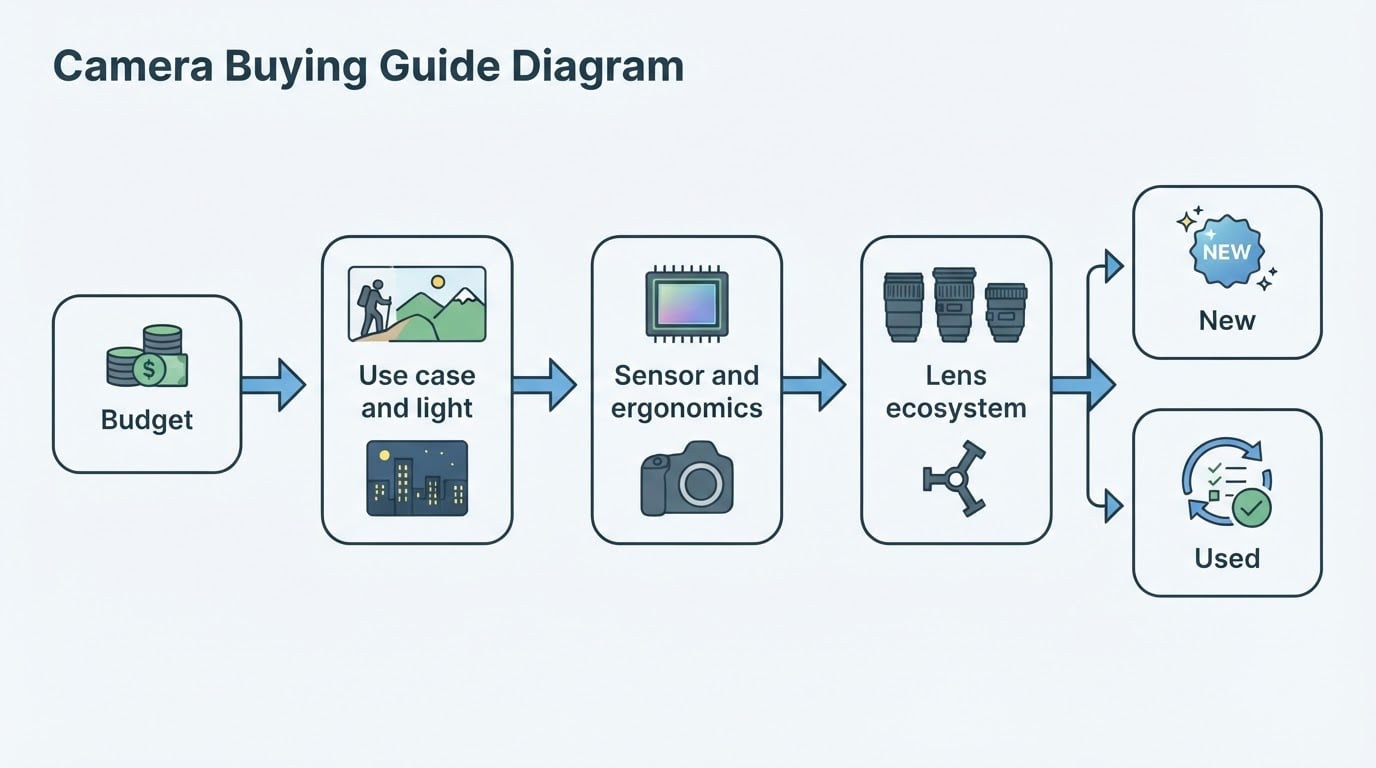
A camera is a system purchase, not a single item. Add up the body, at least one lens, memory cards, a spare battery, storage for backup, and anything you need to carry it. That total is your real budget, and it is the number every other decision has to fit inside.
Then name the light you shoot in most. Bright daylight, indoor stages, evening streets, and studio strobes each reward different equipment. Write down the subjects you photograph, the working distance you have at those events, and whether you need discretion, silence, or speed. The list of must-haves that survives this exercise is usually short.
Separate needs from wants before you compare anything. If two bodies compete and one leaves more room for lenses, the one that funds the lens is usually the better purchase.
Match Sensor Size and Ergonomics to How You Shoot
Bigger sensors trade size, weight, and cost for low-light headroom and shallower depth of field; ergonomics decide whether you carry the camera at all.
Sensor size shapes the trade in a predictable way: smaller formats keep bodies and lenses compact and affordable, while larger ones gather more light and separate a subject from its background more easily. The practical question is not which sensor is best but which compromise matches your subjects. If you shoot moving people in dim light, autofocus behavior and lens aperture tend to matter more than the sensor alone. If you shoot landscapes or travel, portability may matter more than either.
Ergonomics decides more than most buyers expect. Grip depth, dial placement, viewfinder comfort, menu clarity, and the balance of body with a mounted lens all influence how often the camera leaves the bag. Battery behavior, card redundancy for paid work, weather resistance, and screen articulation are worth checking against how you actually shoot.
Hold the shortlist before you buy; a camera that fits your hand and your habits outperforms one that only looks better on paper.
Check the Lens Ecosystem Before the Body
The system you buy into matters more than the first body: lenses outlast cameras and shape what you can actually shoot.
Every mount is a long-term commitment. Before you compare bodies, list the lenses you would need for your main subjects — a fast prime for dim stages, a versatile zoom for events and travel, a longer lens for reach, a macro for detail — and check whether each exists in the mount at a size and price you can live with. A healthy used market and third-party options extend a system's reach.
Adapters can bridge systems, but autofocus speed, stabilization, and handling may not carry over fully, so treat adapted glass as a stopgap rather than a plan. Filter sizes, tripod plates, and lens weight also accumulate: the lightest body paired with the heaviest lens is not a light setup.
Plan your first two lenses together with the body. If the lens you need is missing or out of reach in one mount, reconsider the mount before the body.
Decide Between New and Used
Buy new when warranty, predictable condition, and current support matter; buy used when you can inspect the gear and accept a shorter safety net for a lower entry cost.
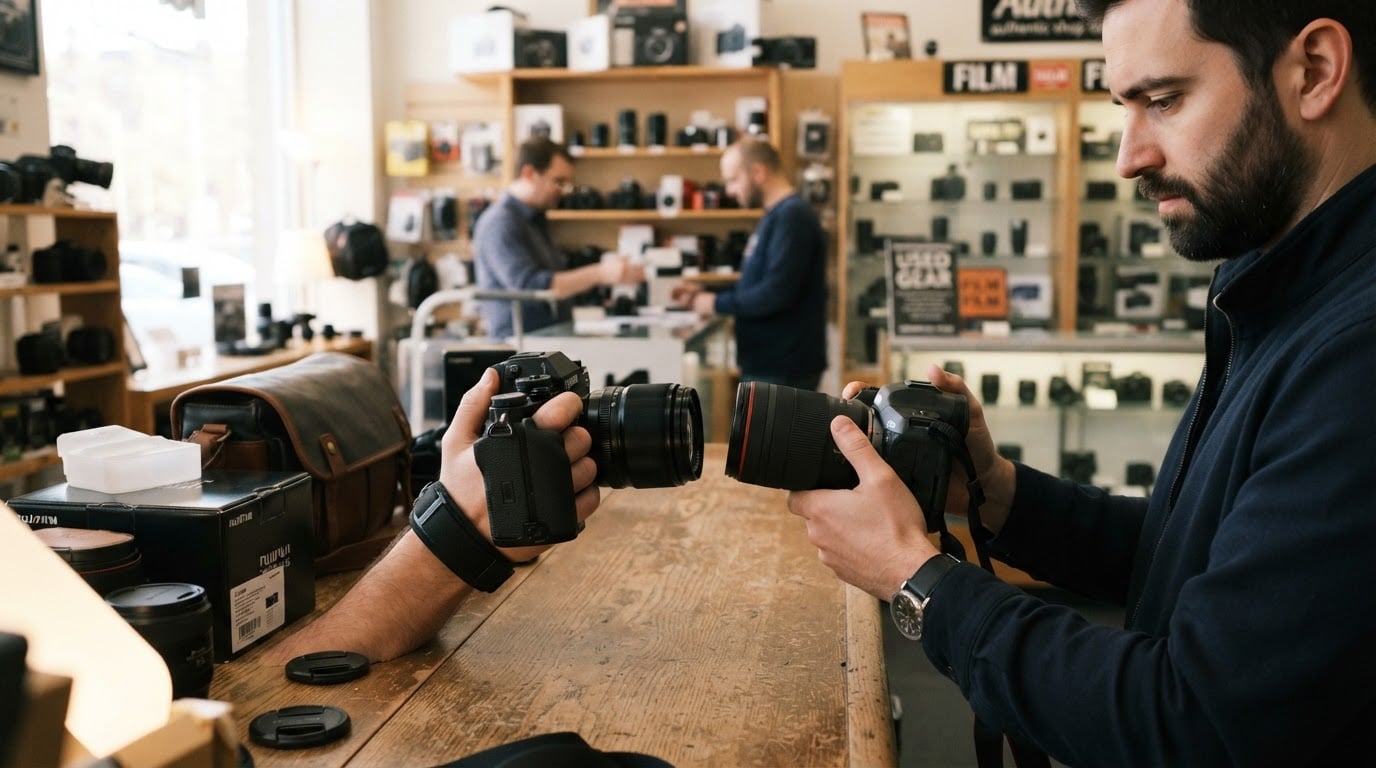
With a used body, ask how it was used and then test it: every dial, button, port, and mount; autofocus in dim light; the sensor for dust; the battery and charger to confirm they are included; and the shutter count where the model reports one. Check whether the firmware is current and whether service and parts are still available for that generation.
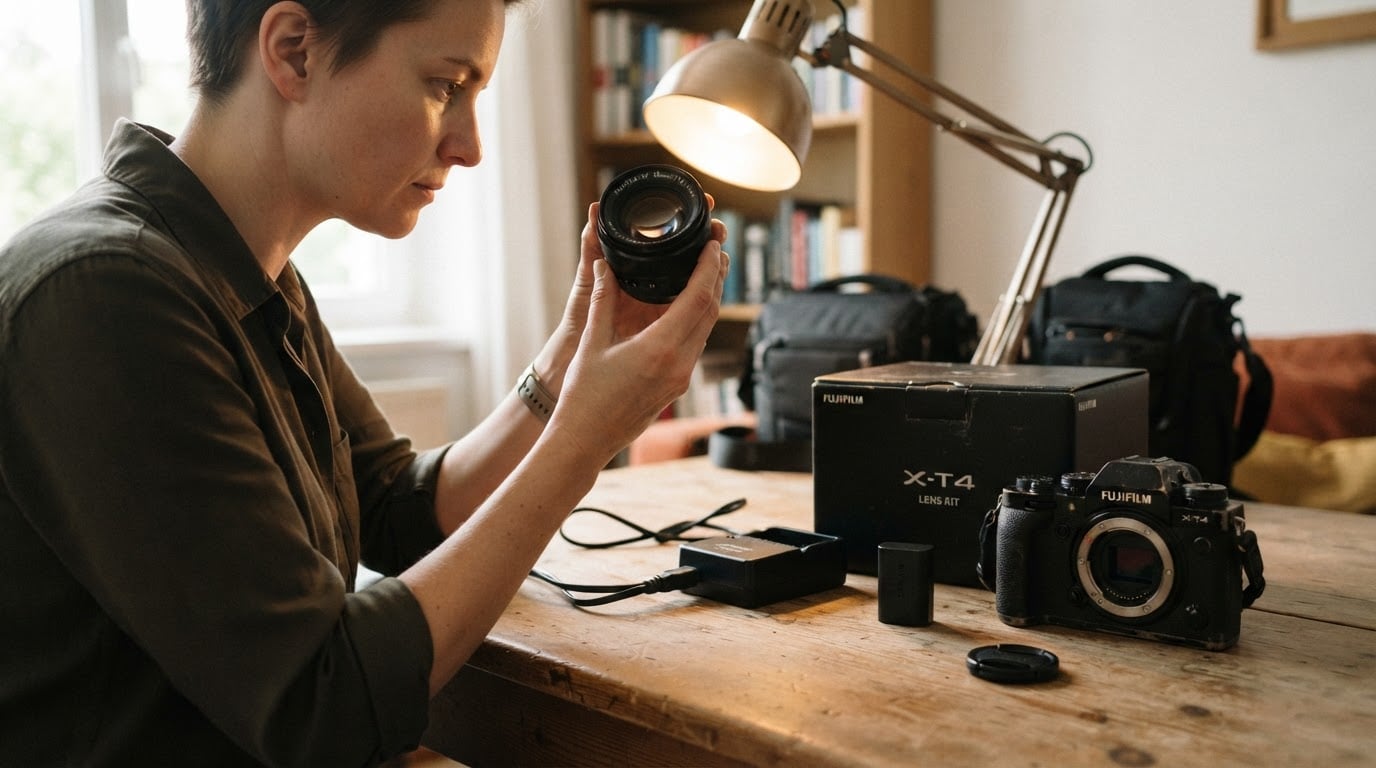
With used lenses, inspect the glass against a light for haze, fungus, or scratches, work the focus ring and zoom through their full travel, and confirm that autofocus and stabilization behave quietly. Zoom creep and loose mounts are worth noticing before you commit.
Buy through a channel with clear return terms, or in person where you can test first. A used purchase with a return window is a different risk from a final sale, and it should be priced accordingly in your decision.
Avoid the Costliest Buying Mistakes
Most disappointing purchases come from paying for capability you will not use and underfunding the parts that touch every image.
The classic imbalance is spending most of the budget on the body and leaving too little for the lens, which is often the difference between the photo you wanted and the one you got. Second is buying for a hypothetical future — a heavier kit, a fancier sensor, a faster body — instead of the subjects and light you work in now. Third is forgetting the supporting costs: storage, backup, batteries, and the time to edit larger files.
Two habits prevent most of this. Write down the three things you photograph most and score every candidate against them. Then decide your upgrade path before you buy: a mount and a lens plan you intend to keep makes the first purchase a foundation rather than a step.
Key Answers
These standalone answers summarize the decisions in this camera buying guide.
- How do I choose a camera? Fix your total budget and the light you shoot in most, then match sensor size, ergonomics, and mount to them.
- Which comes first, the body or the lens? The lens system comes first, because the mount and your lenses tend to stay while bodies change.
- What should I check for low light? Dim-light autofocus behavior and a wide-aperture lens, which matter as much as sensor size.
- Do I need full frame? Only if the budget covers suitable lenses and the extra weight is acceptable; a smaller sensor with a fast lens can serve most beginners.
- New or used? New buys warranty and predictability; used buys value when you can inspect carefully and return the item.
- How should I test a camera before buying? Hold it with your most-used lens, check dial and menu access, and confirm the viewfinder suits your eyes and habits.
FAQ
How much should I budget for a first camera?
Budget for the whole setup, not the body alone: at least one lens, spare batteries, memory cards, and storage for backup. That total is the number to plan around.
What should a beginner look for in a camera?
A comfortable fit, dependable autofocus, and a lens system you can grow within your budget. Beginners rarely need the most capable body in the store.
Is mirrorless better than DSLR for a first camera?
Neither category is universally better. Compare the lens systems, viewfinder preferences, and used prices available to you, and choose the one that fits your hands and habits.
Do I need a full-frame camera?
No. Full frame helps in dim light and with shallow depth of field, but only when your lenses and budget can use those advantages and the extra weight is acceptable.
What should I check before buying a used camera?
Ask how it was used, test every control and autofocus, inspect the glass for haze or fungus, check for sensor dust, and confirm the battery and charger are included.
How many lenses do I need to start?
One is enough: a versatile zoom that covers what you shoot most, or a fast prime if your subjects are people or stage light. Add another only when you can name the shot the first one misses.