How to Find and Hire a Drone Service Nearby
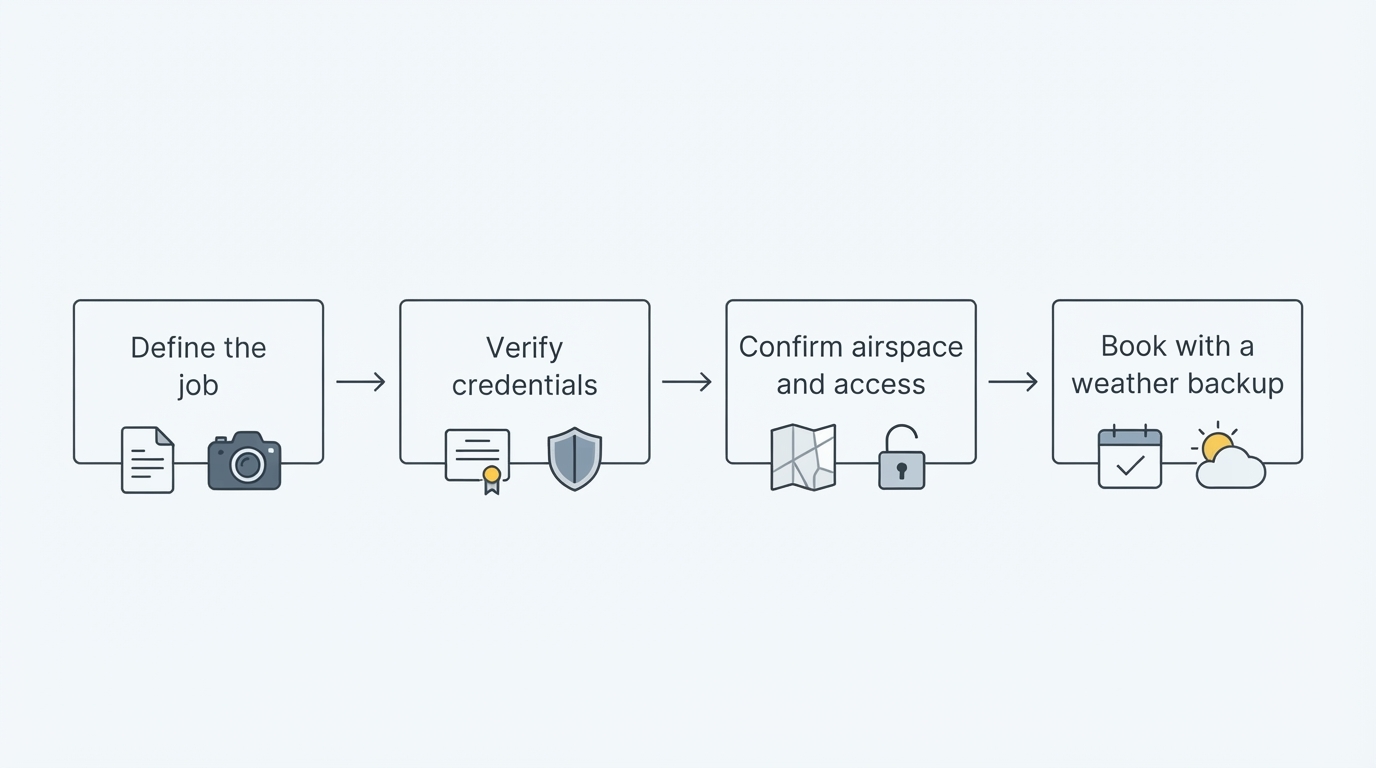
The short answer: search by the job and the location, not by the category alone, then verify credentials, insurance, and scope before you compare totals. A search for drone services near me returns national marketplaces, full-time operators, and photographers who fly occasionally; the differences between them show up after something goes wrong.
Put the deliverable in the search phrase. Queries like "construction progress drone video in Fairfield County" or "aerial roof inspection near Hartford" surface pilots who already do that work. The generic category returns a broker, a wedding photographer, and a specialist in the same list, and you cannot tell them apart from the results page.
Then ask people who hire often: venue managers, promoters, general contractors, property managers, and marketing agencies. Referrals from people who have already checked insurance and licensing save you the first hour of vetting.
Five steps take you from search to signed scope:
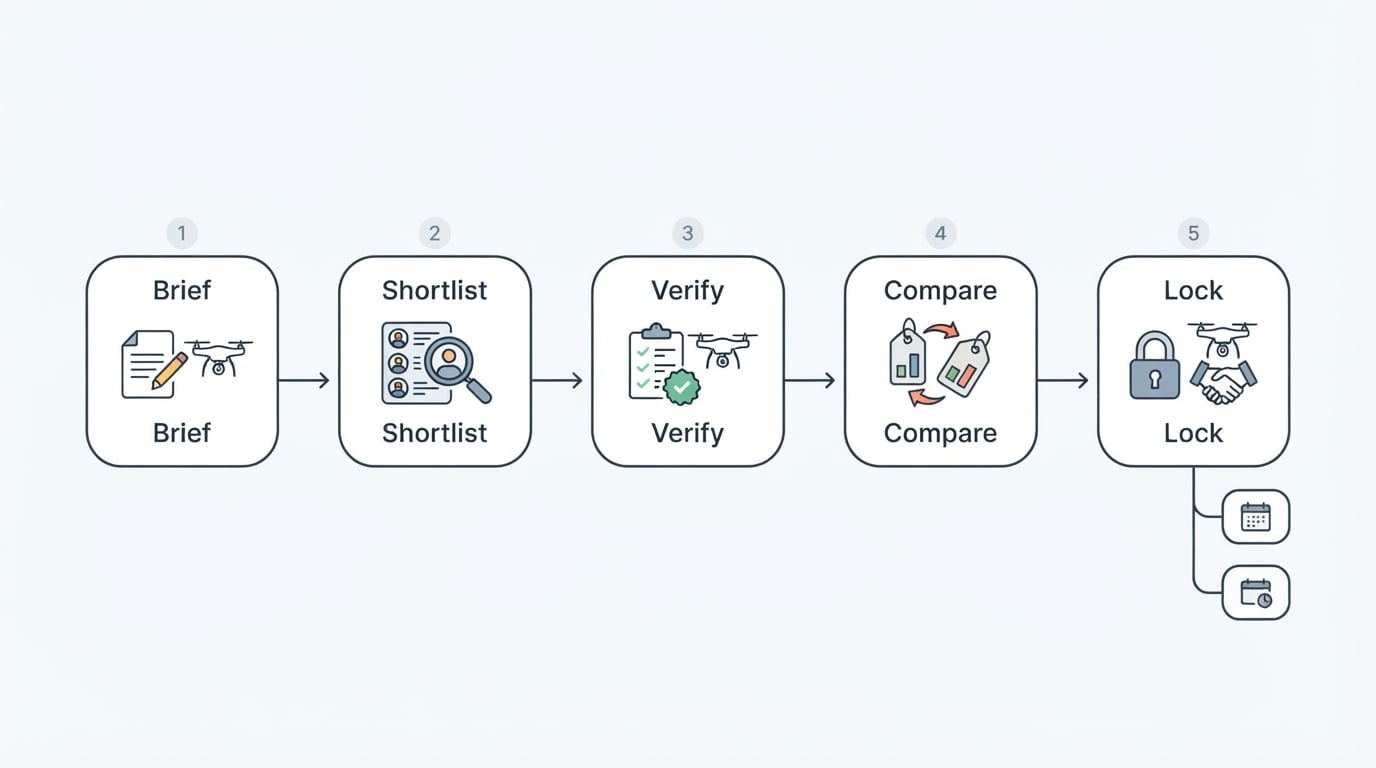
- Write the job down. One page: the site, what needs to be documented, the deliverable format, the deadline, and where the asset will appear.
- Shortlist three local operators. Two is too few to compare, and five wastes your time.
- Verify credentials and insurance before you discuss money.
- Compare line items, not totals.
- Lock the schedule, the weather decision time, and the backup date in writing.
National marketplaces can be useful when you need a fast comparison quote, but ask who will actually be on site. The entity that quotes you is not always the pilot who flies the job.
Put the Job in Writing Before You Ask for a Price
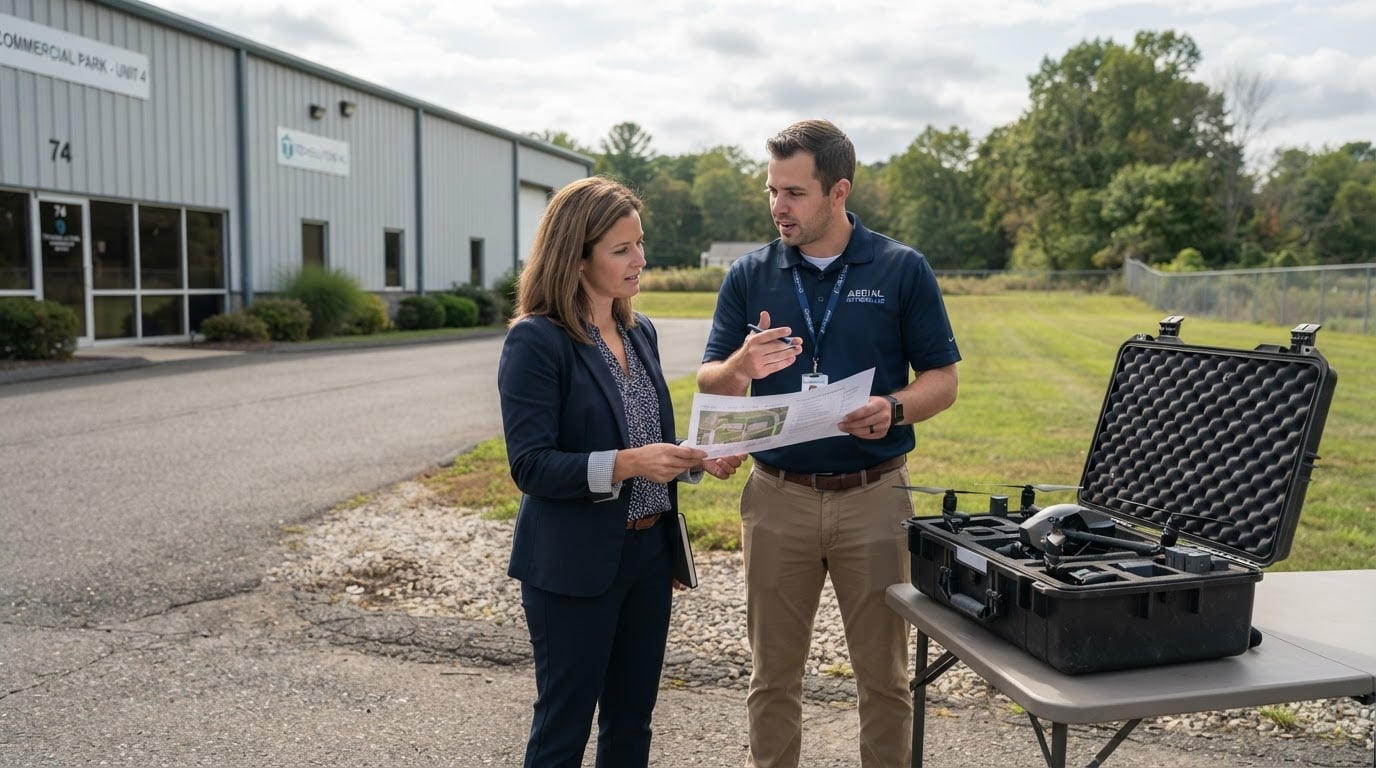
Most disappointing drone hires start as a one-line request. A one-page brief takes ten minutes and makes every quote comparable. It also tells a serious operator that you know what you are buying.
What to specify | Why it changes the quote | What to ask for |
|---|---|---|
Site address and access | Airspace, permits, parking, and the launch point all depend on the location | Written confirmation that the site is flyable on your date |
Stills, video, or both | Each format changes the flight plan and the editing time | A sample deliverable from a similar job |
Resolution and final length | Higher resolution and longer edits take more flight, card space, and edit hours | Delivery specs written into the quote |
Edited files or raw files | Raw footage and unedited stills carry more value | A separate line item for raw files |
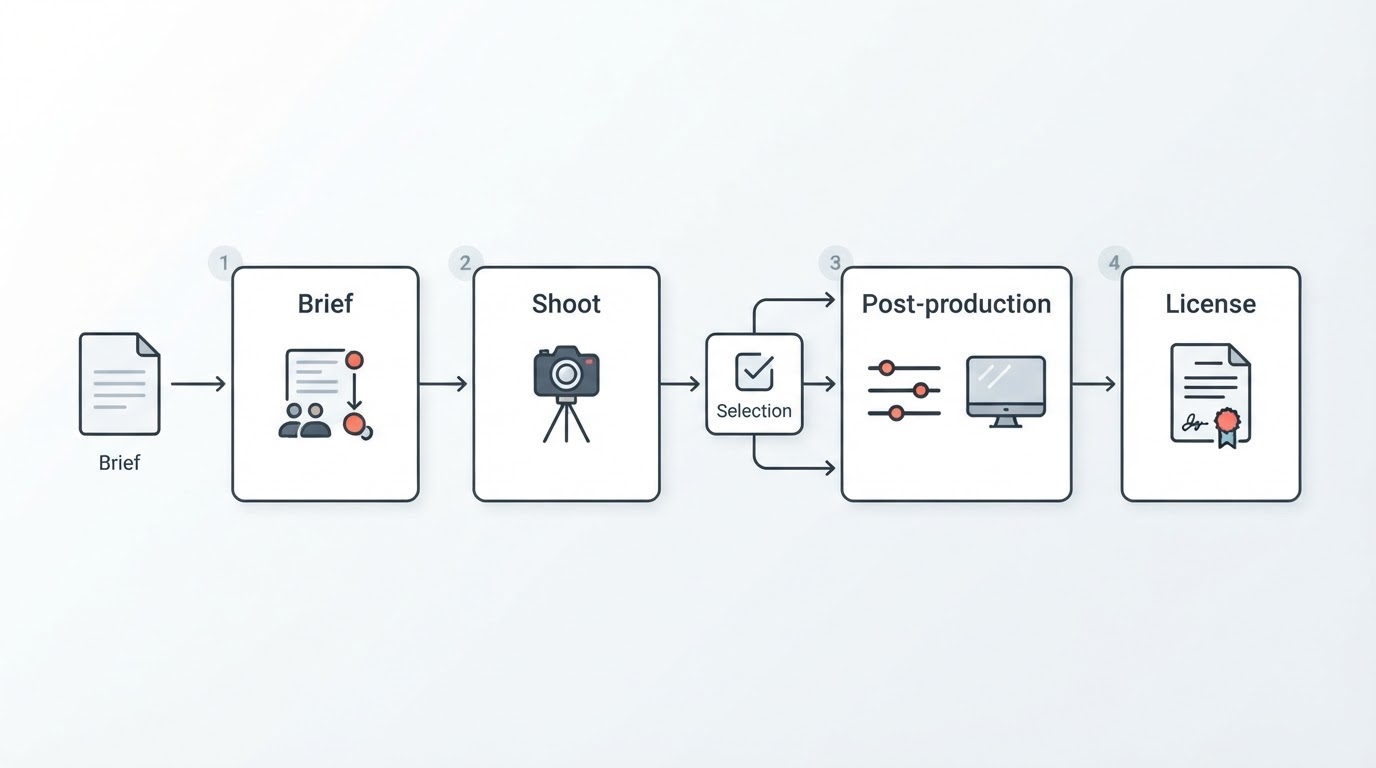
Usage and licensing | A one-time social post costs less to license than a multi-year ad campaign | License terms in writing, before the shoot |
Turnaround and revisions | Rush delivery and extra revision rounds add labor | The number of revision rounds included |
Weather contingency | A reschedule day is a real cost for the pilot | A backup date and clear deposit terms |
Businesses, venues, promoters, and creators tend to leave the same two rows blank: usage and weather. Those two rows cause most of the arguments that follow a shoot.
Credentials: Verify Before You Discuss Money
Commercial drone work in the United States falls under the FAA's small unmanned aircraft rules, commonly called Part 107. That gives you a short list of questions with document answers.
- Does the pilot hold an FAA Remote Pilot Certificate, and is the certificate holder the company you are paying?
- Which aircraft will fly the job, and is it registered?
- Who is the pilot in command on the day, and will anyone else be flying?
- What airspace authorizations or waivers apply to your site, and can the pilot show them?
- Does the site require permission from the property owner, the city, or a park or landmark authority?
- Will the pilot confirm in writing that the planned flight is legal at your location on your date?
You are not asking for a lesson in the rulebook. You are asking for the documents that prove the operator can legally do the work you are paying for. An operator who answers these questions without hesitation is usually the same operator who plans for weather and permissions without being asked.
Insurance: The Check Buyers Skip Too Often
A drone can strike a roof, a vehicle, a power line, or a person. Without coverage, the claim can land on the business that booked the flight. Ask for a certificate of insurance, and read it rather than filing it.
- Confirm the policy is active on the shoot date, not just at the time of booking.
- Ask which risks the policy covers, and whether aviation liability is included alongside general liability.
- Ask what limits the pilot carries, and whether your venue or property manager needs to be listed as an additional insured.
- Ask about workers' compensation coverage if a crew will be on site.
- Keep the certificate with the project file so the venue, the insurer, and your finance team all see the same document.
"My homeowner's policy covers it" is not a certificate of insurance.
Compare Quotes Line by Line, Not Total to Total
Send every operator the same brief and ask for an itemized quote: flight time, editing, revisions, raw files, license, travel, and any permit or reschedule fees. Then compare the rows.
Watch for these red flags:
- A scope that exists only in a text thread.
- A license described as "unlimited use" with no term, territory, or media listed.
- A refusal to share insurance details or a certificate.
- No weather decision time and no backup date.
- A total far below the others with no explanation of what is missing.
- A person on the phone who cannot say who will fly.
The cheapest quote is often cheapest because something moved off the invoice and onto you: insurance, licensing, editing, or a reshoot. Decide which risks you are willing to carry before price makes the decision for you.
Vetting a Provider's Work and Service Area
Ask for recent work in the category you are buying, not a highlight reel of unrelated jobs. A provider that treats drone work as a named service line is easier to vet than one that adds it only when asked.
Chris Sidoruk Media, a Connecticut-based photography studio, lists Drone Photography & Video among its professional services and has published aerial images of New England locations in its print catalog; its coverage footprint is New England. If your site sits outside a provider's footprint, expect travel costs or a referral to another pilot, and get that in writing before you compare totals.
The portfolio check has three parts. Does the work look like the deliverable you asked for? Does the operator show consistent work in your category, such as real estate, construction, events, or tourism? And can the operator explain the choices behind a shot rather than showing you a folder of drone footage with no context?
Scheduling, Airspace, and Site Logistics
The flight is usually the shortest part of the day. Setup, the site walk, repositioning, and pack-down take the rest, so agree on an on-site schedule rather than a flight time.
- Light: name the window you want. Early morning and late afternoon light is easier to work with; harsh midday light flattens roofs and facades.
- Access: identify a launch point, a safe landing area, parking, and a point of contact who can open the gate or the loading dock.
- People and safety: the pilot should brief anyone near the launch area before the aircraft starts. Ask how the flight will avoid interrupting your business or your event.
- Permissions: settle who secures any required airspace authorization or property, park, and landmark permission before the day.
- Weather: ask for the wind and precipitation limits the pilot flies in, agree on a decision time such as "call by 6 a.m.", and confirm the backup date.
- Data: confirm when files arrive, in what format, how long they are stored, and who has access to them.
- Payment: tie the deposit and the balance to dates and deliverables rather than to good intentions.
You are ready for the shoot date when you have a named pilot, a written scope, an insurance certificate for that date, a confirmed launch plan, a weather decision time, and a backup date.
Common Follow-up Questions
How much do drone services near me cost?
No rate card answers this, because a quote follows the scope. Two bids for the same site can differ by a wide margin when one includes editing, raw files, licensing, and a reschedule day and the other does not. Ask for the itemized quote, compare the rows, and treat an unusually low total as a question rather than an answer.
How long does a shoot take?
Ask for an on-site schedule that separates setup, flight blocks, and pack-down, and confirm how many locations are included. The number of finished images or the final video length is a better planning unit than flight time, because it reflects the deliverable you will actually publish.
Do I own the photos and video?
Ownership and usage are separate questions, and most disputes trace back to that confusion. Get the license in writing: where the asset may appear, for how long, in what territory, whether it is exclusive, and whether raw files are included. Then check that the final invoice repeats the same terms.
What happens if the weather turns?
Good operators plan for it. Confirm the decision time, the backup date, and what happens to the deposit when the flight cannot happen. Wind and rain limits vary by aircraft and by the planned shot, so ask the pilot instead of assuming a threshold.
Can a drone fly over my building or event?
It depends on airspace, local rules, and permission. Ask the pilot to confirm in writing that the flight is legal for your site and date, and to handle any authorization or permit the location requires. Property permission and privacy are separate from airspace, and both are worth settling before the day.
Do I need to be on site?
Not always, but someone should be: a point of contact who can confirm the shot list, grant access, and approve the flight area. At venues and events, that person is often the operations or marketing lead, and their presence is what keeps the shoot from interrupting the main event.
Finish the Hire in Writing
A drone hire is finished when the paperwork matches the promise. The scope should match the brief you sent. The license should say where, how long, and in what media. The insurance certificate should cover the shoot date. The schedule should carry a weather decision time and a backup date. And the payment schedule should be tied to delivery rather than to the first invoice.
Do those five things and the hire stops being a gamble on a stranger with a camera. You are not buying a flight. You are buying a documented, licensed, insured deliverable, and the difference is worth the ten minutes it takes to ask.