What drone services actually include
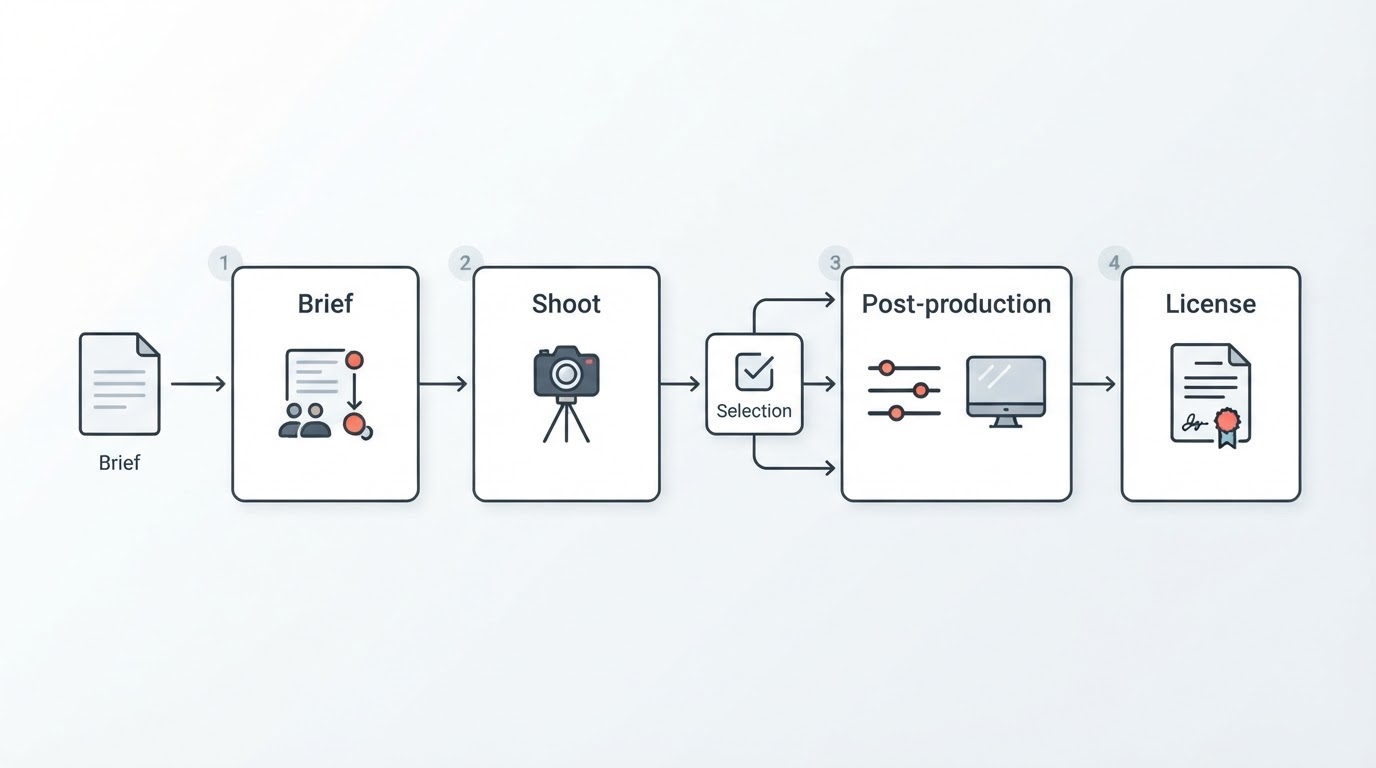
A drone service is a flight plus everything around it. The aircraft is only one part of what you are buying. A working provider plans the flight, flies it with a certified pilot, captures the images or sensor data, processes the files, and hands them over under terms you can rely on.
Most providers organize their work into a few recognizable categories:
- Aerial photography and video for marketing, listings, venues, campaigns, and brand or facility overviews.
- Progress and site documentation, where the value is the same view captured again and again over weeks or months.
- Inspection work for roofs, structures, towers, and other assets that are slow or risky to reach on foot.
- Mapping and measurement, where overlapping images are processed into models or site plans.
- Event coverage, from a single ceremony to a festival footprint.
Not every provider covers every category, and the difference matters more than the drone model on the spec sheet. A pilot who is excellent at cinematic venue footage may not be set up for measurement-grade mapping work. Ask what the provider does regularly rather than what the aircraft can theoretically do.
When hiring a drone provider makes sense
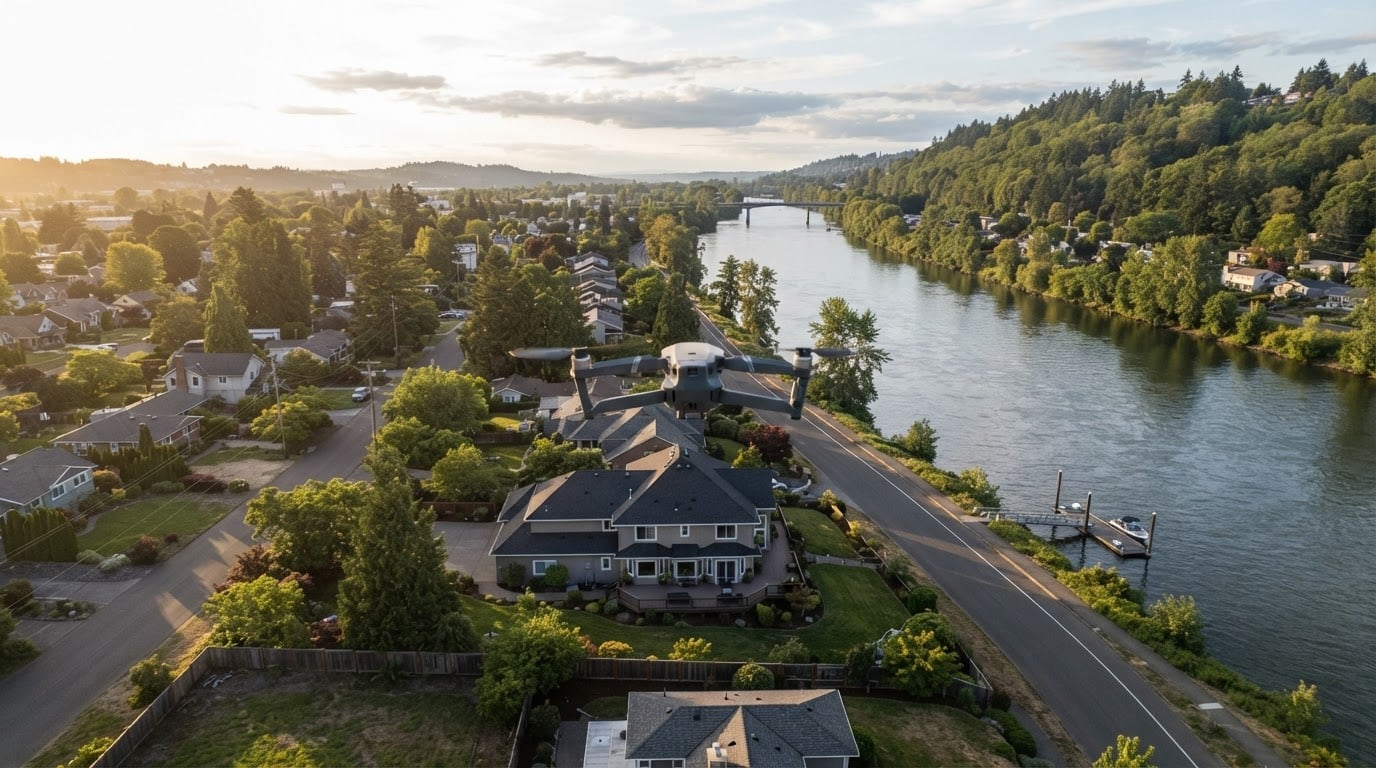
The clearest signal is that the subject only reads from above. A riverfront parcel, a venue footprint, a rooftop array, or a coastline does not show its scale, layout, or relationship to its surroundings from street level. If the story you need to tell is about position, access, or scale, a drone is the direct answer.
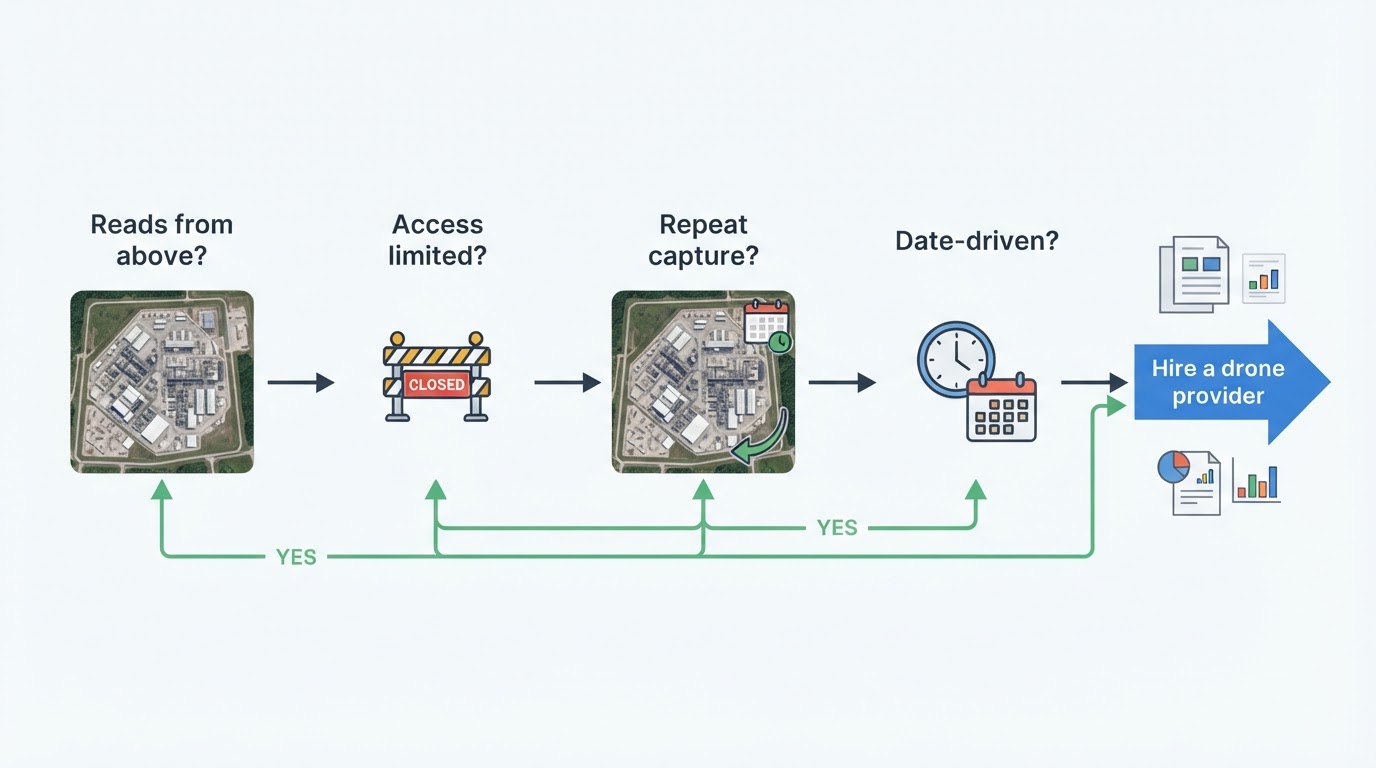
Beyond that, the usual triggers are:
- Ground access is unsafe, restricted, or disruptive. Flying avoids scaffolding, closures, and heavy equipment.
- You need repeatable views over time. The same altitude and angle on a schedule produces a record you can compare, which is difficult to reproduce casually.
- You need assets on a date. A launch, a season announcement, or a listing that goes live next week sets a deadline for footage.
- The location is the selling point. Water, elevation, and open land are hard to photograph well from the ground.
The reverse is worth saying plainly: hiring a drone for a small interior, fine detail, or a portrait is usually the wrong call. You are paying for a flight and a pilot, not for a replacement for ground photography. Treat aerial coverage as one layer of a shoot rather than the whole job.
Four practical examples
Documenting a riverfront property. A developer needs images that show the parcel's relation to the water, the road, and neighboring lots. The brief should name the property boundaries, the direction the water sits in, and whether the final images are for a listing, a planning document, or both, because those destinations change how the frames are composed and processed.
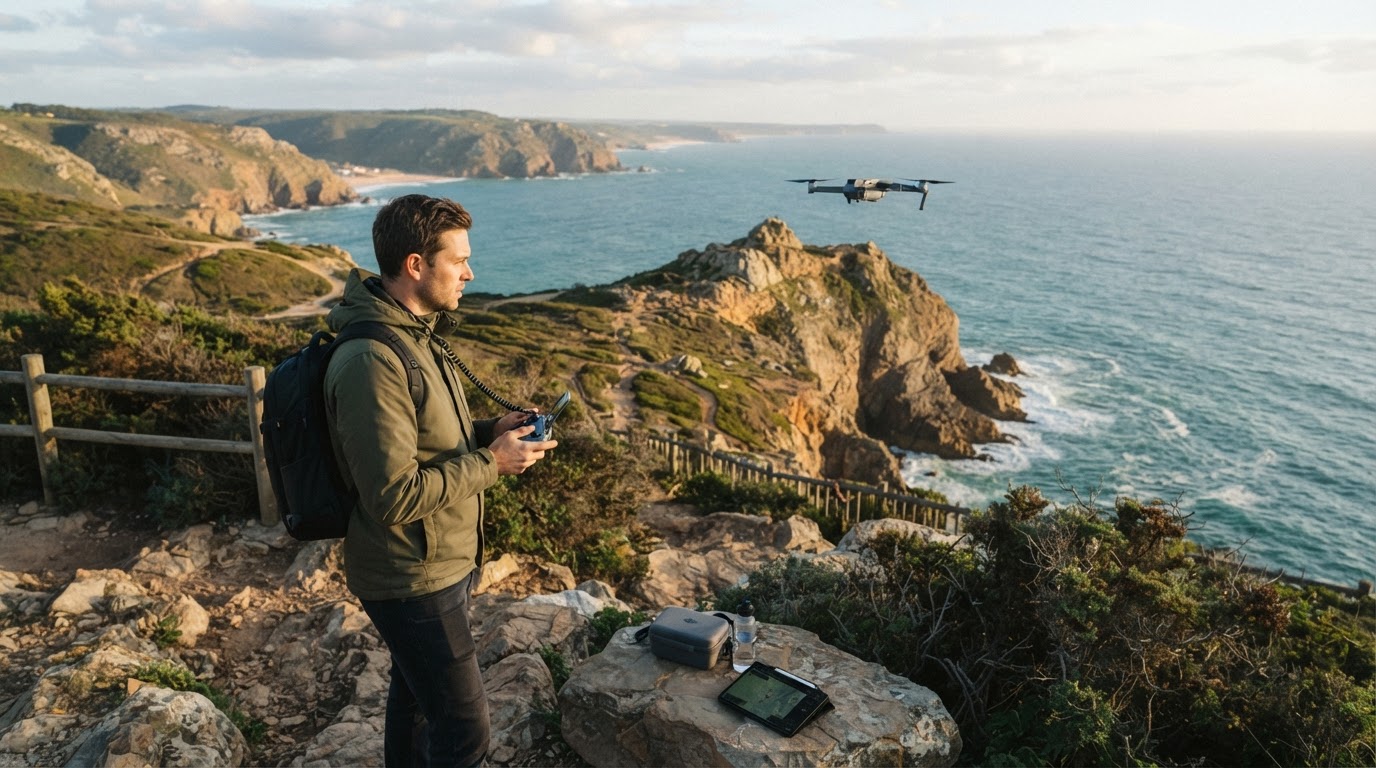
Promoting a coastal landmark or destination. A tourism campaign needs imagery that makes a place look worth a trip. Time of day carries most of the weight here — light falls differently on water and rock in the morning than in the evening — so book the flight around the light rather than around your calendar slot, and be ready for a weather backup.
An aerial overview of a business or facility. A facility video is a single wide establishing shot and a handful of supporting views. It benefits from a short shot list: the approach, the building in its industrial or commercial context, and one detail that identifies the work being done there.
Sourcing elevated perspectives for print or licensing. Landscape prints and licensed imagery for commercial, tourism, and real-estate use depend on angles that are not available from a tripod. If the images will be resold or reused, settle the usage terms before the flight, not after.
What a useful drone brief contains
Most disappointing drone jobs are briefing failures rather than flying failures. The flight goes fine; it just captures the wrong thing.
A brief that prevents that includes:
- The subject and its boundaries — what must be in frame, and what must stay out of it.
- The date and light window — a season, a time of day, or a specific event.
- A short must-have list — two or three frames you cannot come back without.
- Deliverable formats — stills, video, or both, plus the crops and dimensions your site or printer actually needs.
- Where the assets will be used — web, print, campaign, resale, or licensing. Usage drives both capture choices and rights.
- Site logistics — who the contact is, where the pilot can stand and launch, and any known restrictions.
If you cannot answer the usage question yet, ask the provider to quote the narrower option and price the wider one separately. Guessing wide creates costs you may not need; guessing narrow creates renegotiation later.
How to choose a drone services provider
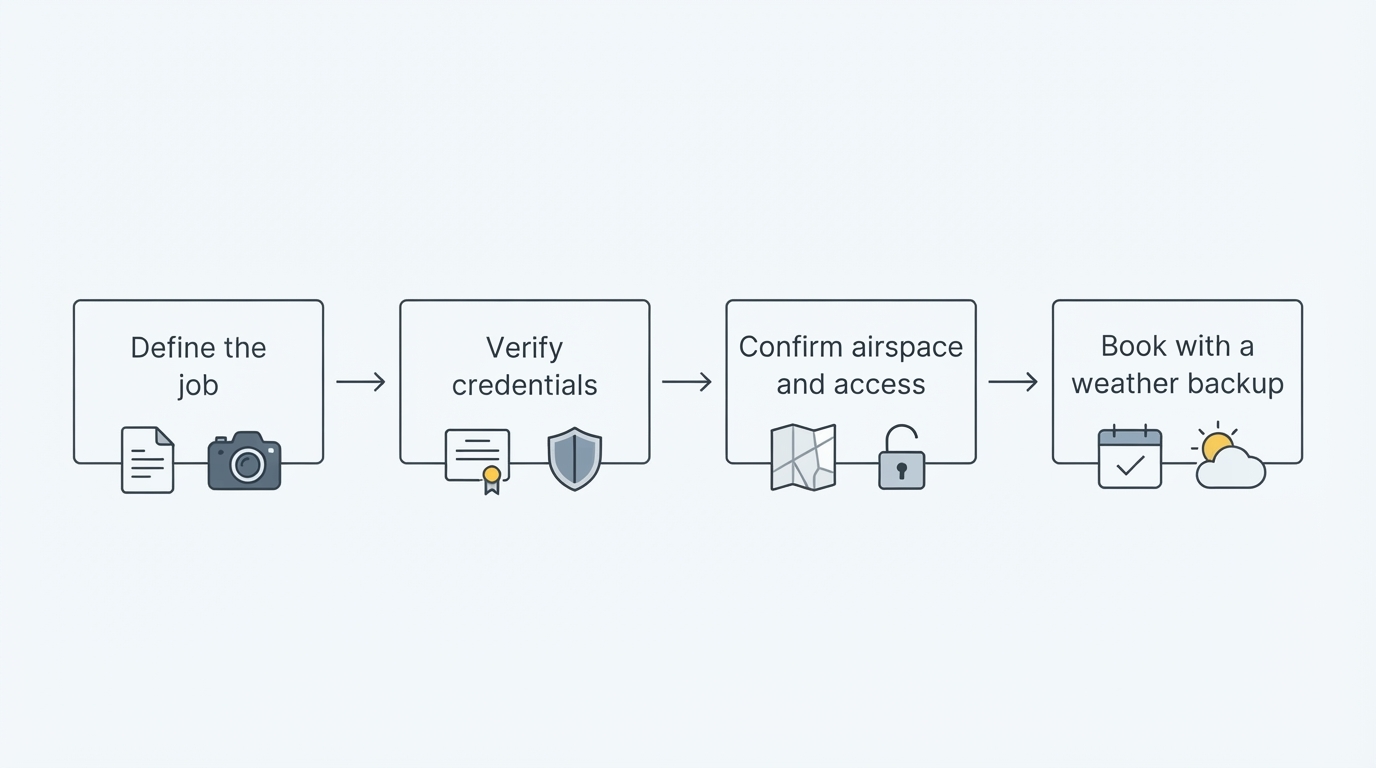
Verify the credentials first, because they are the easiest thing to check and the costliest to skip.
Certification. In the United States, commercial drone flights fall under the FAA's small unmanned aircraft rules, and the person flying needs a remote pilot certificate. Ask for the certificate rather than for an assurance that everything is licensed and insured.
Insurance. Ask what liability coverage the provider carries and request proof. A certificate of insurance is a document, and a document takes a minute to share.
Relevant portfolio. Look for the subject type you are hiring for, in conditions similar to yours. A provider who has flown the same kind of venue or terrain already knows the angles, the access points, and where the signal drops.
Airspace, permissions, and site coordination. A professional handles this side of the job: checking whether the location sits in controlled airspace, whether advance authorization is needed, and whether the property owner or venue has conditions for flying. If you are the one being asked to work out airspace, that is a warning sign.
Deliverables and rights in writing. Your agreement should state what you receive — how many frames, what formats, what resolution — and what you may do with it: which media, which territory, and for how long. Rights language is where aerial quotes most often turn out to be narrower than buyers assume.
Weather and contingency. Wind, rain, and low cloud change what is flyable. Ask how the provider handles a grounded day: reschedule, refund, or a split shoot.
Editing and revisions. Clarify who edits, how many rounds of changes are included, and what happens if a frame needs reworking.
Two red flags are worth stopping for: a provider who will not put usage rights in writing, and one who promises a specific result regardless of weather or site conditions. Neither is a working condition you can plan around.
Where drone coverage falls short
Aerial work has real limits, and planning around them is cheaper than discovering them on the day.
Flights are weather-dependent. Wind, rain, snow, and low visibility ground the aircraft, and no amount of scheduling changes that. Most aircraft also fly in short windows, so a multi-view project means several takeoffs and landings, which takes time on site. Drones cannot replace ground-level or interior photography; the two sets do different jobs. Privacy rules, permissions, and restricted locations can rule out specific angles or hours. And a missed light window is not something editing can repair.
The common mistake is treating the drone as an accessory to a ground shoot instead of planning the shot around it. Decide what the aerial frames must show, pick the light, and build the day around that.
Chris Sidoruk Media and aerial work
For readers working in the Northeast, Chris Sidoruk Media lists drone photography and video as a distinct service line alongside its ground-based photography, with availability across the same New England coverage footprint. The aerial work is already visible in its print catalog — river and coastline views from around Connecticut and southern Maine, including the Housatonic River, the Shelton riverfront, and the Marginal Way in Ogunquit — and it pairs with the landscape print line to supply commercial, tourism, and real-estate licensing imagery.
That is one example of how a regional provider positions aerial work: as a complement to a broader body of photography rather than a standalone hire. Compare it against the criteria above and against the other providers you are considering.
Common questions about drone services
Do I need to own a drone? No. You are hiring a certified pilot, the aircraft, and the processing.
How far in advance should I book? It depends on weather and the season — earlier if you have a fixed date. Ask about the provider's rescheduling policy.
Who owns the footage? Ownership and usage are not the same thing. Ask for the usage terms in writing: which media, which territory, how long.
Can you fly over a crowd or at night? These are constrained categories. Ask the provider directly; the answer depends on the operation and the location.
Do you need the property owner's permission? Plan on it. Takeoff and landing happen on someone's property, and venues and neighbors may have conditions.
What happens if it rains? Wind and rain ground the aircraft. Good providers build in a weather window; agree on the backup plan before the shoot day.
The bottom line
Hire drone services when the subject needs to be seen in its context, when access is difficult, or when a date is driving the work. Verify the pilot's certificate and insurance, review work on subjects like yours, and put the deliverables and the usage rights in writing. Get those three right, and the aerial layer of your project becomes a dependable part of the plan instead of a gamble.